King Charles ‘Profoundly Saddened’ After Hurricane Melissa Devastates Jamaica
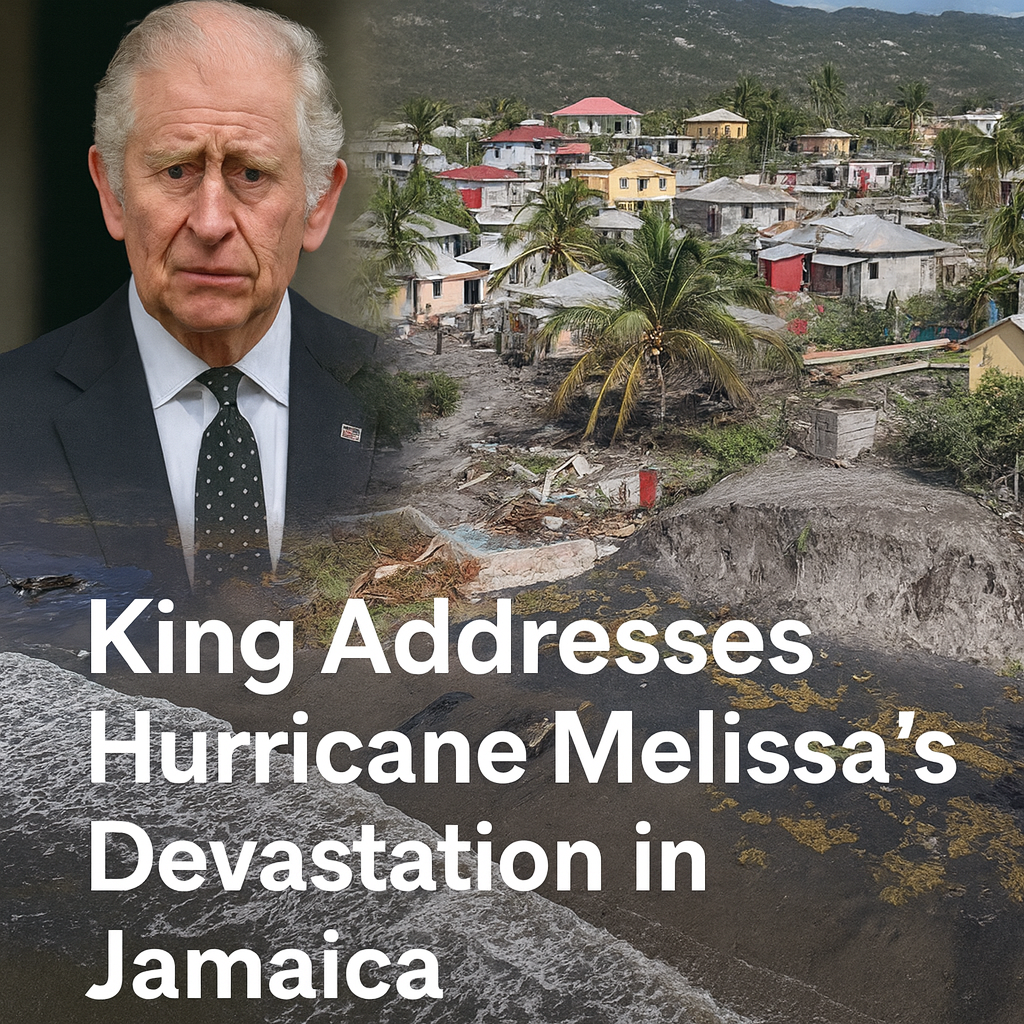
King Charles has said he is “profoundly saddened” by the destruction caused by Hurricane Melissa after the powerful storm tore across Jamaica and parts of the Caribbean, leaving communities flooded, homes damaged and thousands of people struggling to rebuild.
In a statement issued as rescue and recovery operations continued, the King expressed his sympathy to families who had lost loved ones, homes and livelihoods. He praised emergency workers, volunteers and local residents who have spent days helping those trapped by floodwaters and clearing roads blocked by debris.
The monarch described Hurricane Melissa as another stark warning of the growing danger posed by extreme weather and climate change. He said the storm underlined the need to better protect vulnerable communities and to restore what he called a “proper harmony” between people and the natural world.
“My wife and I are deeply concerned and profoundly saddened by the terrible devastation caused by Hurricane Melissa across Jamaica and the wider Caribbean,” the King said.
He added that his thoughts remained with all those who had been affected and with the emergency crews “working courageously and tirelessly in extraordinarily difficult circumstances”.
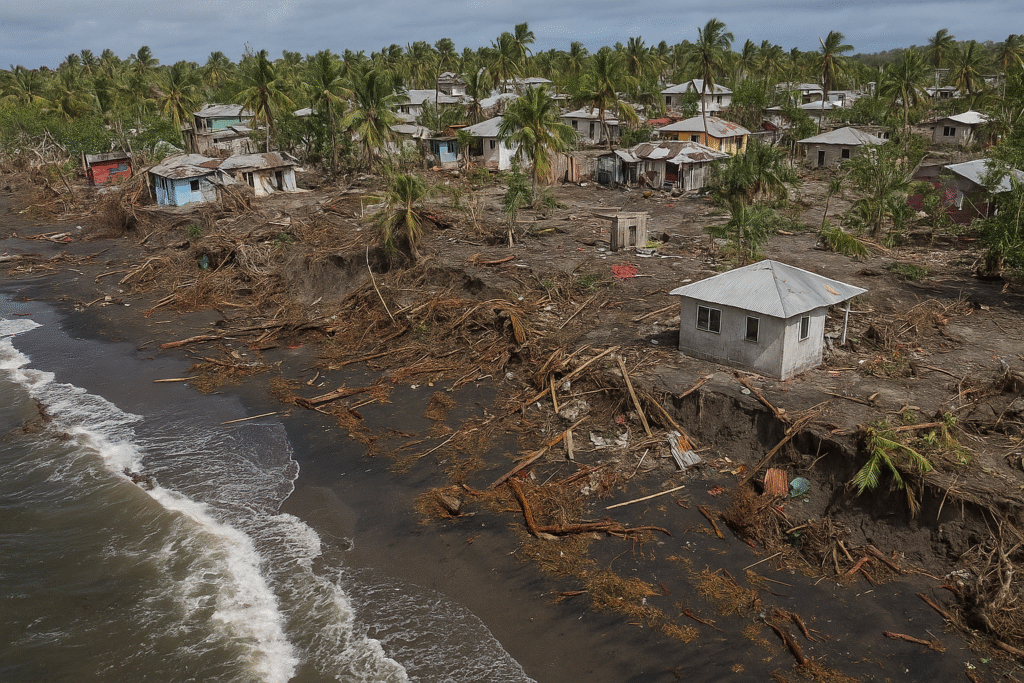
The statement came as drone footage from some of the worst-hit parts of Jamaica revealed the scale of the damage left behind. Coastal towns that only days earlier had been busy with residents, shops and fishing boats now appear covered in mud, broken timber and twisted metal.
Entire roads have been washed away in some areas. Beaches have disappeared beneath piles of debris. Trees lie uprooted across streets and electricity lines. Roofs have been torn from homes and businesses. In several communities, floodwater reached inside houses, forcing families to leave with only a few possessions.
A Storm That Grew With Unusual Speed
Hurricane Melissa developed in the Caribbean during an already active hurricane season. Meteorologists warned from an early stage that the storm had the potential to become dangerous because sea temperatures were unusually high.
Within a short period, Melissa intensified rapidly. By the time it approached Jamaica, the hurricane was bringing violent winds, torrential rain and powerful storm surges.
Officials said some parts of the island recorded several months’ worth of rainfall in less than two days. Rivers burst their banks and low-lying areas quickly flooded.
Residents in southern and western Jamaica described hearing roofs shaking through the night as strong winds swept through their neighbourhoods. Many said they had never experienced a storm of such force.
In some areas, people sheltered in schools, churches and emergency centres after being told it was no longer safe to remain in their homes.
The storm also affected other parts of the Caribbean, but Jamaica was among the countries hit hardest.
Government officials declared a national emergency in several parishes as roads became impassable and communication networks were disrupted.
Teenager Fights to Save Family Home
Among those caught in the middle of the hurricane was 14-year-old Alexander Medley.
As rain hammered his family’s home and floodwater began rising indoors, Alexander tried to stop the water from spreading through the house.
He gathered old clothes, towels and blankets and packed them tightly around doors and windows. The improvised barrier slowed the water enough to protect some of the family’s belongings.
Outside, the streets had already disappeared beneath muddy floodwater.
“We were watching the water coming in and it just kept rising,” he said.
“I started putting old clothes by the doors and windows because I didn’t know what else to do. I just wanted to stop it.”
Although part of the house was damaged, Alexander said his family considered themselves fortunate.
Nearby homes were hit much harder. Some lost roofs entirely. Others were left surrounded by deep water and debris.
“We got lucky compared with some people,” he said. “There are families here who lost almost everything.”
Alexander said he believes people in Jamaica may have to prepare for stronger and more frequent storms in future.
“It’s something we’ll have to get used to if storms like this keep coming,” he said.
His words reflect a growing concern among many island communities across the Caribbean, where hurricanes appear to be becoming more severe and less predictable.
Drone Footage Reveals the Extent of the Damage
As floodwaters began to recede, authorities used drones to inspect some of the areas that remained difficult to reach.
The images provided one of the clearest views yet of Hurricane Melissa’s destruction.
In Alligator Pond, on Jamaica’s southern coast, aerial footage showed stretches of beach covered in driftwood, uprooted trees and broken fragments of buildings.
Several fishing boats had been thrown inland by the storm surge. Roads near the shoreline were buried beneath sand, mud and rubble.
In some places, the sea appeared to have pushed several metres further inland than usual, damaging houses that stood close to the coast.
One row of homes had partially collapsed after waves and floodwater eroded the land beneath them.
Elsewhere in St Elizabeth parish, drone footage showed a building stripped completely of its roof.
Pieces of corrugated metal lay scattered across nearby fields. Fallen branches and power lines blocked access roads.
The surrounding area remained waterlogged, with pools of muddy water stretching across farmland and open ground.
Farmers in the region said the storm had destroyed crops including bananas, sugar cane and vegetables, threatening the incomes of families who rely on agriculture.
“We planted for months and in one night almost everything was gone,” one farmer said.
The damage is expected to have a significant economic impact, especially in rural areas where agriculture and fishing are central to local livelihoods.
Tourism operators have also reported damage to hotels, beaches and infrastructure, raising concerns about how quickly some areas can recover.
Emergency Services Race to Reach Isolated Communities
Emergency crews have been working around the clock to reach people cut off by the storm.
Rescue teams used boats and heavy vehicles to travel through flooded areas. In some communities, roads were blocked by fallen trees and landslides, forcing emergency workers to walk long distances carrying supplies.
The Jamaican government said priority was being given to restoring electricity and water, reopening roads and delivering food, medicine and fuel.
Several hospitals and shelters were operating with backup generators after power supplies failed.
Officials said thousands of households remained without electricity days after the hurricane passed.
In one town, residents formed human chains to carry bottled water and boxes of food to older people trapped inside damaged homes.
Church groups and local charities also joined the response effort, helping to distribute clothing and blankets.
Volunteers travelled from less affected parts of the island to support clean-up operations.
The King specifically praised these efforts in his statement.
He said he had been moved by the “extraordinary courage, compassion and resilience” shown by the people of Jamaica.
“Once again, we have seen communities come together in the face of terrible hardship,” he said.
Climate Change at the Centre of the Debate
King Charles has spoken for many years about environmental protection and the effects of climate change.
His statement about Hurricane Melissa placed those concerns at the centre of the discussion.
The King said the storm was a painful reminder that climate change is no longer a distant threat but a present reality.
Scientists have repeatedly warned that warmer ocean temperatures can make hurricanes stronger by providing more energy to developing storms.
Although no single storm can be directly linked to climate change alone, experts say rising temperatures are increasing the likelihood of more intense rainfall, stronger winds and more destructive hurricanes.
The Caribbean is considered especially vulnerable because many islands have large coastal populations and depend heavily on sectors such as tourism, fishing and agriculture.
Jamaica has experienced several major storms in recent years, but many residents said Hurricane Melissa felt different.
Some pointed to the speed at which the storm intensified. Others said they had never seen such severe flooding.
Environmental campaigners say the destruction should prompt governments to invest more in flood defences, stronger buildings and better emergency planning.
They also argue that wealthier nations must do more to help countries already facing the effects of climate change.
“The people suffering most are often those who contributed least to the problem,” one climate advocate said.
The King echoed that message by calling for greater international support for vulnerable communities.
He said countries must work together to reduce environmental damage and prepare for the extreme weather that many scientists expect to become more common.
Jamaica Begins the Long Process of Recovery
For many people across Jamaica, attention is now turning from survival to recovery.
Families are beginning to clean mud from homes, repair roofs and search through debris for belongings that can still be saved.
Schools in several areas remain closed because buildings have been damaged or are being used as shelters.
Some businesses may take weeks or even months to reopen.
Insurance companies have already received a large number of claims, while local authorities are carrying out surveys to estimate the total cost of the disaster.
Government officials have warned that the final figure could be enormous.
They have also urged residents not to become complacent.
The Atlantic hurricane season is not yet over, and forecasters say more storms could still develop in the coming weeks.
People living in damaged areas have been advised to remain cautious, especially near weakened buildings, flooded roads and unstable hillsides.
Health officials have also warned about the risk of contaminated water and disease in areas where floodwater has not fully cleared.
Despite the destruction, many communities have shown signs of determination.
In several towns, residents were seen clearing streets together and helping neighbours repair damaged homes.
Children played among piles of debris while adults worked nearby with shovels, wheelbarrows and salvaged materials.
For some, the clean-up itself has become a symbol of resilience.
“We have no choice but to keep going,” one resident said. “This is our home.”
King Charles Reaffirms His Support
As Jamaica begins the difficult process of rebuilding, King Charles said he wanted the people of the island to know they were not alone.
The King remains Jamaica’s head of state, and his message was intended to offer solidarity at a moment of grief and uncertainty.
He said his thoughts would remain with everyone affected by Hurricane Melissa.
He also expressed hope that the island would recover through the same strength and unity already shown by communities in the aftermath of the storm.
For many Jamaicans, however, the road ahead is likely to be long.
Homes must be rebuilt. Roads, schools and businesses will need repairs. Families who have lost everything will require support for months to come.
Yet amid the wreckage left by Hurricane Melissa, there are already signs of resilience.
The drone footage may show shattered coastlines and broken communities, but it also shows people beginning to rebuild.
Neighbours are helping one another. Volunteers are delivering supplies. Emergency workers continue to clear roads and reconnect power.
And in homes damaged by floodwater and wind, families are beginning again.
Hurricane Melissa has left deep scars across Jamaica, but for many of those affected, recovery has already begun.