
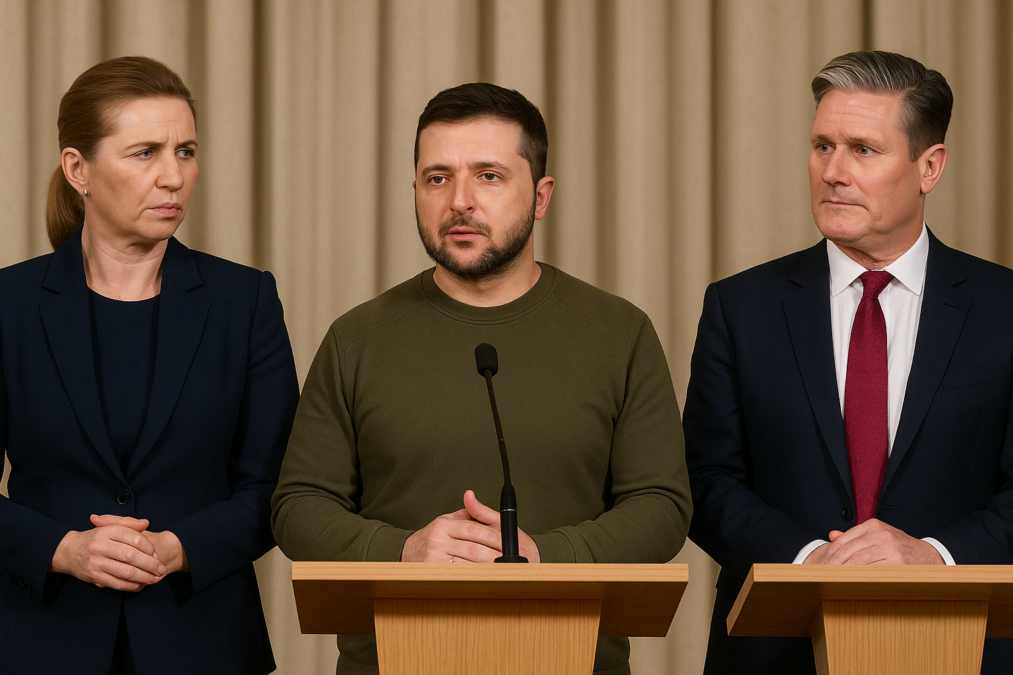
Ukraine Allies Unite to Cut Off Russian Oil and Gas from Global Markets at London Summit
More than 20 countries supporting Ukraine have agreed to intensify efforts to push Russian oil and gas out of global markets, as Western leaders attempt to deprive Moscow of the revenues that continue to fund the war in Ukraine.
The decision came at a summit in London hosted by British Prime Minister Sir Keir Starmer, who brought together what officials described as a “coalition of the willing” , a group of European and allied countries determined to increase economic pressure on Russia even as the conflict enters its fourth winter.
The gathering marked one of the most significant coordinated attempts yet to strike directly at the Russian energy sector, which remains the backbone of the Kremlin’s economy and the primary source of funding for President Vladimir Putin’s military campaign.
Speaking after the meeting, Starmer said the goal was simple.
“We must cut off the money fuelling Russia’s war machine,” he told reporters. “Every barrel of oil sold, every shipment of gas exported, helps finance further attacks on Ukraine. That cannot continue.”
London Summit Brings Together More Than 20 Nations
The meeting was attended by leaders and representatives from more than 20 countries, including Britain, France, Germany, the Netherlands, Denmark, Poland, the Baltic states and Canada.
Ukrainian President Volodymyr Zelensky travelled to London in person for the talks. NATO Secretary General Mark Rutte also attended, while French President Emmanuel Macron joined by video link.
The summit focused heavily on energy, sanctions and how to maintain support for Ukraine as the war continues with no immediate prospect of a ceasefire.
Officials said the countries present agreed in principle to work together to remove Russian oil and gas from international markets wherever possible.
That includes reducing purchases, tightening sanctions, targeting the shipping networks that transport Russian fuel and placing greater pressure on countries and companies still helping Moscow sell energy abroad.
The move follows a series of fresh measures introduced separately by Britain, the United States and the European Union.
UK, US and EU Increase Pressure on Russian Energy Exports
The London summit came only days after Britain and the United States imposed new sanctions on Russia’s two largest oil producers.
Although officials did not identify the companies during the summit, the measures are understood to target some of the biggest state-linked firms still earning billions of dollars for the Kremlin.
At the same time, the European Union announced an expansion of its sanctions regime to cover additional Russian liquefied natural gas exports.
For much of the war, Europe struggled to reduce its dependence on Russian energy. Several countries continued to import gas because they feared economic disruption and rising prices.
That position has changed significantly since 2022.
Most European countries have sharply reduced their purchases of Russian pipeline gas. However, Moscow has continued to earn substantial income through oil exports and LNG shipments sent to Asia, the Middle East and parts of Europe.
Western officials now believe cutting those remaining exports is essential if they want to weaken Russia’s ability to continue the war.
“Russia has adapted to previous sanctions,” one European diplomat said after the meeting. “The next step is to close the loopholes and make it much harder for Moscow to sell its oil and gas.”
Zelensky Says Economic Pressure Is the Only Way to End the War
President Zelensky used the summit to argue that continued pressure on Russia remains the only realistic path to ending the conflict.
“Pressure is the only way to stop this war,” he said. “Every sanction matters. Every restriction matters. Every step that weakens Russia’s ability to finance aggression brings peace closer.”
The Ukrainian leader thanked allies for continuing to support his country but warned that time was running short before winter.
Zelensky said Russia was preparing another campaign of strikes against Ukraine’s energy infrastructure, just as it had during previous winters.
“Russia wants to use the cold as a weapon,” he said. “They want to make winter another form of torment. They want to leave our people without electricity, without heating, without water.”
The Ukrainian president urged allies not only to increase sanctions but also to expand military support, particularly air-defence systems capable of protecting cities and power stations.
Despite his appeals, the summit did not produce any major new commitments on weapons.
No New Long-Range Missiles for Ukraine
One of the most closely watched questions before the London summit was whether Western countries would agree to provide Ukraine with more long-range missiles.
Zelensky has repeatedly argued that Ukraine needs weapons capable of striking military depots, oil refineries and command centres deep inside Russia.
He has specifically called for American-made Tomahawk cruise missiles and additional European long-range systems.
Ukrainian officials believe such weapons could damage the infrastructure Russia relies on to support the war.
However, there was no breakthrough in London.
According to officials familiar with the talks, US President Donald Trump remains reluctant to approve the transfer of Tomahawk missiles.
During meetings in Washington the previous week, Trump reportedly told Zelensky that he was not prepared to authorise such a step.
The American president is said to be concerned that allowing Ukraine to strike deeper inside Russia could lead to further escalation.
European leaders have also remained cautious.
Although Britain and France previously supported allowing Ukraine to use some Western missiles against military targets inside Russia, neither country announced any expansion of that policy during the summit.
The absence of new commitments disappointed some Ukrainian officials, who had hoped the meeting would produce stronger military backing.
Putin Warns of “Overwhelming” Response
As Western leaders met in London, the Kremlin issued a new warning.
President Vladimir Putin said that if Ukraine were ever allowed to use long-range Western missiles against targets inside Russia, Moscow’s response would be “overwhelming”.
Russian officials have repeatedly argued that any such attack would mean NATO countries were directly participating in the war.
The Kremlin has used similar warnings throughout the conflict whenever Western governments considered sending more advanced weapons to Ukraine.
So far, however, many of those earlier threats have not prevented further military aid.
Still, the risk of escalation remains one of the main reasons why some governments are reluctant to provide longer-range missiles.
Western officials fear that a major strike inside Russia could trigger a stronger response from Moscow and make the conflict even more dangerous.
Frozen Russian Assets Could Be Used to Support Ukraine
While military support dominated part of the discussion, much of the summit focused on money.
Britain, the EU and other allies are now exploring ways to use frozen Russian assets to finance Ukraine’s defence and reconstruction.
Since the start of the war, Western countries have frozen around €300 billion in Russian state assets held abroad.
Most of that money is held in Europe.
For months, governments have debated whether those assets should simply remain frozen or whether they should eventually be used to support Ukraine.
At the London summit, Starmer said allies had agreed to continue work on a plan to unlock billions of dollars from Russian sovereign assets.
He did not give details, but officials suggested that the money could be used either directly or through loans backed by frozen Russian funds.
The European Union has already agreed in principle to help meet Ukraine’s financial needs over the next two years.
However, European leaders have still not made a final decision on whether to seize and use the full €140 billion in Russian assets currently frozen in Europe.
Danish Prime Minister Mette Frederiksen said she hoped an agreement could be reached before Christmas.
“I believe we have a moral obligation to make Russia pay for the destruction it has caused,” she said. “I hope we can find a solution by Christmas Eve.”
Winter Brings New Fears Across Ukraine
For ordinary Ukrainians, the summit came at a time of growing anxiety.
As temperatures begin to fall, many people fear a repeat of the blackouts, heating failures and water shortages that struck large parts of the country during previous winters.
Russian forces have repeatedly targeted power stations, electricity substations and heating infrastructure.
Although Ukraine has repaired much of the damage, the system remains vulnerable.
In cities across the country, people are once again preparing for the possibility of long periods without electricity.
In the northeastern city of Kharkiv, local officials said a recent Russian strike hit a kindergarten, killing and injuring civilians.
The attack was one of several carried out this week.
In Odesa, resident Yana Kolomiets said people were increasingly worried about what lies ahead.
“We are already facing electricity, heating and water shortages,” she said. “Now they are launching more guided bombs in the south. Everyone is afraid of what winter will bring.”
In Kyiv, Tetiana Dankevych said daily life had become increasingly difficult.
“There are power cuts all the time,” she said. “Sometimes there is no water. We try to continue, but it is exhausting.”
She added that she no longer believes the war will end soon.
“Every month people say maybe peace is close,” she said. “But it never comes.”
Summit Produces Strong Words but Few Details
Although the leaders meeting in London used strong language, some observers noted that the summit produced few concrete announcements.
There were broad promises to intensify sanctions, support Ukraine through the winter and continue economic pressure on Russia.
But there were relatively few specifics about exactly how allies plan to force Moscow to change course.
No timetable was given for ending Russian oil and gas exports.
No major new military package was announced.
And there was no clear agreement on how frozen Russian assets would be used.
Some analysts argued that the summit reflected a wider problem facing Ukraine’s allies.
Western governments remain determined to support Ukraine, but there is growing uncertainty about how to bring the war to an end.
“The strategy is still pressure, pressure and more pressure,” one London-based analyst said. “The question is whether that pressure is enough.”
Others argued that the coalition’s unity is itself important.
After nearly four years of war, there had been concerns that support for Ukraine might weaken.
Instead, the London summit appeared designed to show that Ukraine’s allies remain committed.
Trump Proposal to Freeze Front Line Still Divides Opinion
The summit also briefly discussed President Trump’s proposal to freeze the fighting roughly along the current front line.
Trump has argued that such a move could create the basis for negotiations.
Ukraine and several Western governments have expressed cautious support for the idea as a possible first step toward ending the war.
However, Russia has rejected the proposal.
The Kremlin says any freeze in the conflict would simply allow Ukraine to regroup and would amount to recognition of what Moscow calls “illegitimate territorial claims”.
Russian officials have also insisted that any peace settlement must include recognition of Russian control over occupied territories.
Ukraine has rejected those demands.
Zelensky has repeatedly said that any final agreement must respect Ukraine’s sovereignty and territorial integrity.
For now, there is little sign that negotiations are close.
Zelensky Meets King Charles III
Earlier on Friday, before attending the summit, Zelensky met King Charles III at Windsor Castle.
It was the third time the two men had met this year.
The meeting was largely symbolic, but it underlined Britain’s continuing support for Ukraine.
Photographs released by Buckingham Palace showed the king and the Ukrainian president speaking privately before the summit began.
For Zelensky, the London visit was another reminder that Britain remains one of Ukraine’s strongest allies.
Yet despite the warm words and public displays of solidarity, the challenge facing Ukraine remains immense.
As winter approaches and the war continues, Kyiv is still waiting for stronger action from its partners , not only words, but measures capable of changing the course of the conflict.
The coming weeks may determine whether the latest attempt to squeeze Russia’s energy revenues can truly weaken the Kremlin’s war effort, or whether the conflict will continue into another difficult and dangerous year.