
Israel Claims Hamas Returned Body of Soldier Already Buried, Hamas Rejects Violation Allegation
Why This Matters
- A dispute over the identity of one of the bodies returned from Gaza has threatened to undermine the fragile ceasefire between Israel and Hamas.
- Israel says Hamas handed over the remains of an Israeli soldier whose body had already been recovered and buried in 2023.
- Hamas denies any deliberate breach, saying the remains were found during ongoing searches in heavily damaged parts of Gaza.
- The disagreement comes as both sides remain under pressure to complete the first phase of a ceasefire and hostage exchange deal.
- The controversy has intensified political divisions inside Israel and renewed concerns that the war could escalate again.
New Dispute Emerges Over Returned Remains
A new dispute has emerged between Israel and Hamas after Palestinian groups in Gaza handed over several bodies believed to be those of Israeli captives.
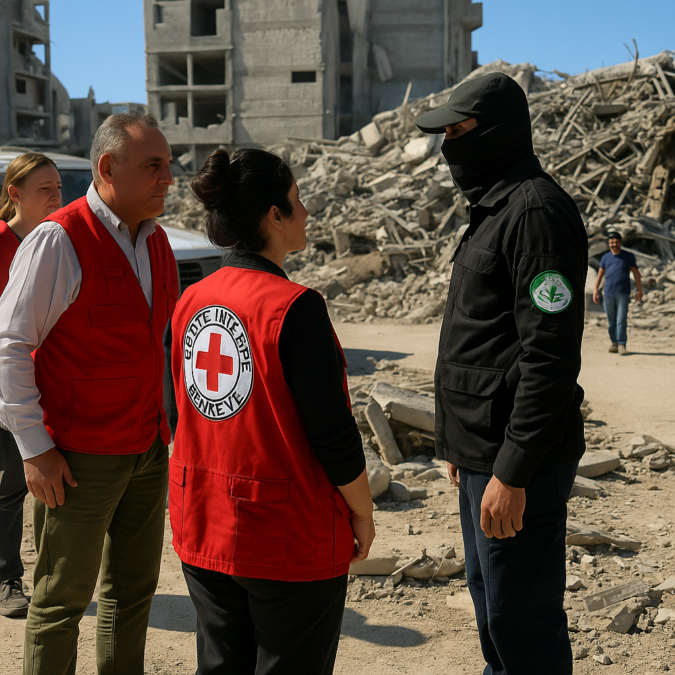
The remains were transferred to the International Committee of the Red Cross in the southern Gaza city of Khan Yunis on Monday evening, according to local reports and footage broadcast by regional media.
Hours later, Israeli officials said one of the bodies returned by Hamas appeared to belong to an Israeli soldier whose remains had already been recovered and buried more than a year earlier.
The allegation immediately raised questions over whether Hamas had violated the terms of the current ceasefire and hostage exchange agreement.
Israeli Prime Minister Benjamin Netanyahu’s office described the incident as “a clear violation of the agreement” and said senior defence and security officials would hold urgent discussions to determine Israel’s response.
The disagreement threatens to complicate an already fragile truce, which has remained under severe strain despite a temporary reduction in large-scale fighting.
Israel Says Body Had Already Been Recovered
Israeli Army Radio reported that one of the bodies transferred from Gaza was believed to be that of Ofir Tzarfati, an Israeli soldier whose remains Israel says were recovered in December 2023.
According to Israeli officials, Tzarfati’s body had already been identified, returned to Israel and buried.
“Tonight Hamas returned to Israel the remains of a kidnapped soldier who had already been repatriated and buried,” Army Radio reported.
The broadcaster added that the case did not involve the remains of 13 other Israeli soldiers who are still believed to be in Gaza.
Israeli officials did not immediately explain how the identification had been made or whether forensic tests had been completed.
However, the suggestion that the returned remains belonged to someone already buried caused outrage among some Israeli families whose relatives are still believed to be held in Gaza.
Several relatives of missing Israelis demanded clarification from the government, saying the latest development added to uncertainty and confusion.
For months, families of captives have accused both the Israeli government and Hamas of failing to provide clear and accurate information.
The latest controversy risks deepening those frustrations.
Hamas Denies Deliberate Violation
Hamas denied that it had intentionally violated the agreement.
The group’s military wing, the Al-Qassam Brigades, said one of the bodies recovered during searches in northern Gaza may have belonged to an Israeli soldier, but insisted the remains had only recently been discovered.
A source quoted by regional media said the remains were found in Gaza City’s Al-Tuffah neighbourhood during ongoing efforts to search for captives and missing persons.
The Al-Qassam Brigades later said the body had been discovered near a tunnel route in an area that had been heavily bombed.
The group said it had informed mediators and planned to transfer the remains at 8 p.m. local time.
Hamas officials argued that the condition of bodies recovered from destroyed buildings, collapsed tunnels and battle zones makes identification extremely difficult.
The group said months of bombardment, destruction and displacement had left many remains mixed together or buried beneath rubble.
In a statement, Hamas insisted that any mistake was not deliberate and reflected the difficult conditions in Gaza.
The group rejected Israeli accusations that it was “playing games” with the hostage issue.
Instead, Hamas accused Israel of using the dispute as a pretext to delay further negotiations and potentially resume military action.
Hamas Says It Is Still Committed to the Agreement
Hamas spokesperson Hazem Qassam said the group remained committed to carrying out the first phase of the ceasefire and exchange agreement.
“We are committed to completing the first phase of the agreement and handing over all the bodies in our possession,” he said.
Qassam argued that Hamas had no interest in creating a dispute because it wanted to prevent Israel from using the issue as justification for continuing the war.
He said 18 bodies had already been handed over under the current arrangement.
According to Hamas, the recovery process has been slowed by a severe lack of equipment and access.
Large parts of Gaza remain devastated after more than two years of war.
Roads, hospitals, rescue centres and civil defence infrastructure have been heavily damaged.
Many areas remain inaccessible because of destroyed buildings, unexploded ordnance and collapsed tunnels.
“Our people have the right to bring in the necessary tools and equipment to recover the bodies,” Qassam said.
He argued that thousands of Palestinian bodies also remain trapped beneath rubble across Gaza.
Hamas said nearly 10,000 Palestinians are still believed to be missing under collapsed buildings and destroyed neighbourhoods.
The group denied Israeli claims that it knows the exact location of every Israeli captive or every body still believed to be in Gaza.
The Wider Hostage Issue Remains Unresolved
The controversy highlights the continuing uncertainty surrounding Israeli captives and missing soldiers.
Israeli officials believe a number of hostages and soldiers remain in Gaza, either alive or dead.
Hamas and other Palestinian factions have repeatedly said they do not have complete information about every captive because some were held in different areas or by different groups before being killed or moved during the conflict.
The war, combined with repeated air strikes and the collapse of underground tunnel systems, has made it difficult to establish accurate records.
Israeli military officials have previously acknowledged that some captives may have died during Israeli bombardments.
At the same time, Hamas has accused Israel of refusing to provide sufficient pauses or humanitarian access to search for bodies.
The issue of missing hostages has become one of the most emotionally charged aspects of the conflict inside Israel.
Families have organised protests, vigils and demonstrations for months.
They have demanded that Netanyahu prioritise the return of hostages over further military operations.
Some relatives have openly criticised the government, arguing that repeated delays and military offensives have reduced the chances of bringing captives home alive.
The latest dispute is therefore likely to increase pressure on Netanyahu from both political allies and hostage families.
Netanyahu Faces Pressure From Both Sides
Netanyahu’s government now faces a difficult choice.
If it accuses Hamas of deliberately violating the agreement, it may come under pressure from right-wing ministers to suspend the ceasefire and restart military operations.
However, doing so could endanger the remaining hostages and draw criticism from families who still hope for a negotiated return.
The Israeli prime minister has faced increasing domestic pressure in recent months.
Some members of his coalition argue that Israel should continue military action until Hamas is completely dismantled.
Others believe Israel should prioritise a broader prisoner and hostage agreement even if it means accepting a temporary truce.
The latest controversy risks intensifying those divisions.
Senior Israeli officials are expected to review forensic evidence before making a final decision about whether the body returned by Hamas was in fact that of Ofir Tzarfati.
If Israeli investigators determine that a mistake occurred rather than a deliberate deception, the government may choose to continue the agreement while issuing a warning.
If, however, Israel concludes that Hamas knowingly transferred the wrong body, calls for retaliation are likely to grow.
Ben-Gvir Calls for Renewed Military Action
Israeli National Security Minister Itamar Ben-Gvir was among the first senior politicians to demand a tougher response.
Ben-Gvir accused Hamas of “playing games” and said the latest development proved the group remained operational despite months of military pressure.
He called on Netanyahu to abandon restraint and launch a new offensive.
“We must not continue with illusions,” Ben-Gvir said. “The time has come to give the order to destroy Hamas completely.”
Ben-Gvir has repeatedly opposed ceasefire agreements and has argued that military force is the only way to secure Israel’s long-term security.
His comments reflect the view held by some members of Israel’s right wing, who believe Hamas should not be trusted under any circumstances.
However, critics argue that renewed fighting would almost certainly place the remaining hostages at greater risk.
Families of captives have warned repeatedly that a collapse of the ceasefire could leave loved ones trapped in Gaza indefinitely.
Some Israeli opposition politicians also accused Ben-Gvir of using the dispute to advance his own political agenda.
Ceasefire Already Under Severe Strain
The disagreement comes during the first phase of a ceasefire that began on October 10.
The truce was reportedly based on a 20-point framework backed by the United States and promoted by President Donald Trump.
The agreement included a temporary halt in fighting, exchanges of captives and prisoners, and negotiations aimed at moving toward a broader settlement.
Despite the ceasefire, both sides have accused each other of repeated violations.
The Gaza Health Ministry says dozens of Palestinians have been killed and hundreds more injured during incidents since the truce began.
According to the ministry, at least 93 Palestinians have died and more than 300 have been wounded in what it describes as Israeli ceasefire violations.
Israeli officials, meanwhile, accuse Hamas of continuing to operate in certain areas, launch attacks and violate parts of the agreement.
The latest dispute over the returned body may therefore become another flashpoint in an already unstable process.
Diplomats involved in mediation efforts have been trying to prevent the situation from collapsing completely.
Qatar, Egypt and the United States are all believed to be in contact with both sides.
Mediators are likely to push for an independent forensic review and may attempt to separate the dispute from the wider ceasefire negotiations.
The Human Cost of the War Continues to Grow
The argument over the returned body comes against the backdrop of an enormous human toll.
According to Palestinian health officials, Israel’s military campaign in Gaza since October 2023 has killed more than 68,500 Palestinians and wounded more than 170,000.
Large areas of Gaza have been destroyed.
Entire neighbourhoods have been reduced to rubble.
Hundreds of thousands of people remain displaced.
At the same time, Israeli communities affected by the war continue to live with the trauma of the October 2023 attacks, the deaths of civilians and soldiers, and the continued uncertainty over missing relatives.
The dispute over a single body therefore carries enormous emotional and political significance.
For Israeli families, the return of remains is often the only chance for certainty and burial.
For Palestinians, the recovery of bodies from beneath destroyed buildings has also become an urgent humanitarian issue.
The conflict has left thousands of families on both sides without answers.
What Happens Next?
Israel is expected to carry out further forensic testing to confirm the identity of the returned remains.
The findings are likely to determine whether the ceasefire survives in its current form.
If mediators can persuade both sides that the dispute resulted from confusion rather than deliberate deception, the exchange process may continue.
However, if Israel concludes that Hamas intentionally returned the wrong body, political pressure for a military response could become difficult to resist.
The coming days may therefore prove critical.
The ceasefire remains fragile, the hostage issue remains unresolved and trust between the two sides is almost non-existent.
Even a disagreement over one set of remains now has the potential to derail wider negotiations and push the conflict toward another dangerous phase.
For now, both Israel and Hamas are continuing to accuse the other side of acting in bad faith.
Whether the dispute can be contained may determine not only the future of the current ceasefire, but also whether there is still any realistic path toward a broader agreement.