
Why Can’t You Visit Spirit Island Canada? The Truth Behind the Protected Landmark
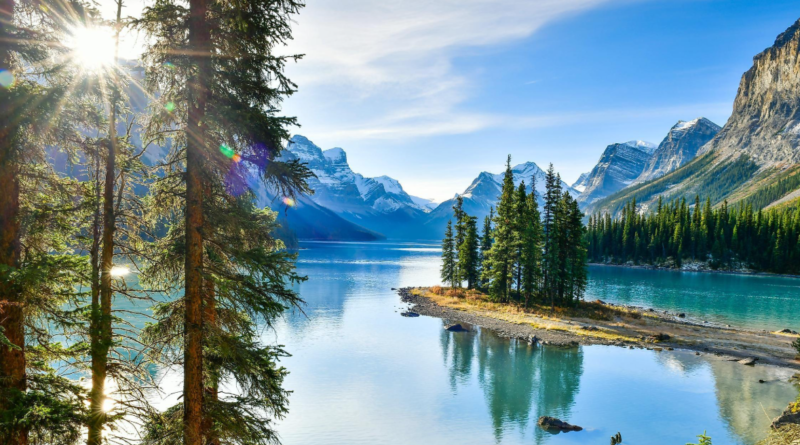
Spirit Island Canada is one of the country’s most iconic natural landmarks. Located on Maligne Lake in Jasper National Park, it attracts visitors from around the world, yet almost no one is allowed to set foot on the island itself.
Few landmarks in Canada are as photographed, and as rarely set foot on, as Spirit Island. Located roughly two-thirds of the way down Maligne Lake in Jasper National Park, Alberta, the small, tree-covered landform has become one of the most recognisable images of the Canadian Rockies, appearing in tourism campaigns, on postcards, and in a famous 1960s Kodak advertising display in New York’s Grand Central Terminal. Yet almost no visitor is permitted to walk on it.
That combination, global visual fame paired with strict, culturally rooted inaccessibility — makes Spirit Island an unusual case among natural landmarks. Understanding why requires looking at where it sits, who it belongs to in a cultural sense, and how Jasper National Park has tried, imperfectly, to balance tourism with respect for Indigenous heritage and ecological protection.
Where Is Spirit Island Canada Located?
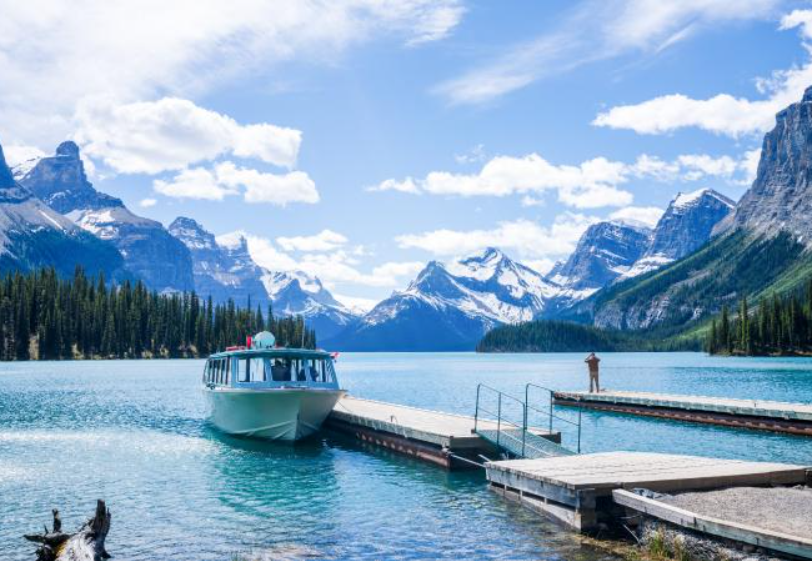
Spirit Island sits on Maligne Lake, the longest natural lake in the Canadian Rockies at roughly 22 kilometres, within Jasper National Park in west-central Alberta. According to Parks Canada, the island lies about 14 kilometres down the lake from the main boat launch at the lake’s northern end, which is itself the only road-accessible point on Maligne Lake.
For most of the year, Spirit Island is technically a “tied island” rather than a true island: a narrow spit of land connects it to the lakeshore. It only becomes fully surrounded by water when snowmelt and seasonal rainfall raise the lake’s level, typically in spring and early summer.
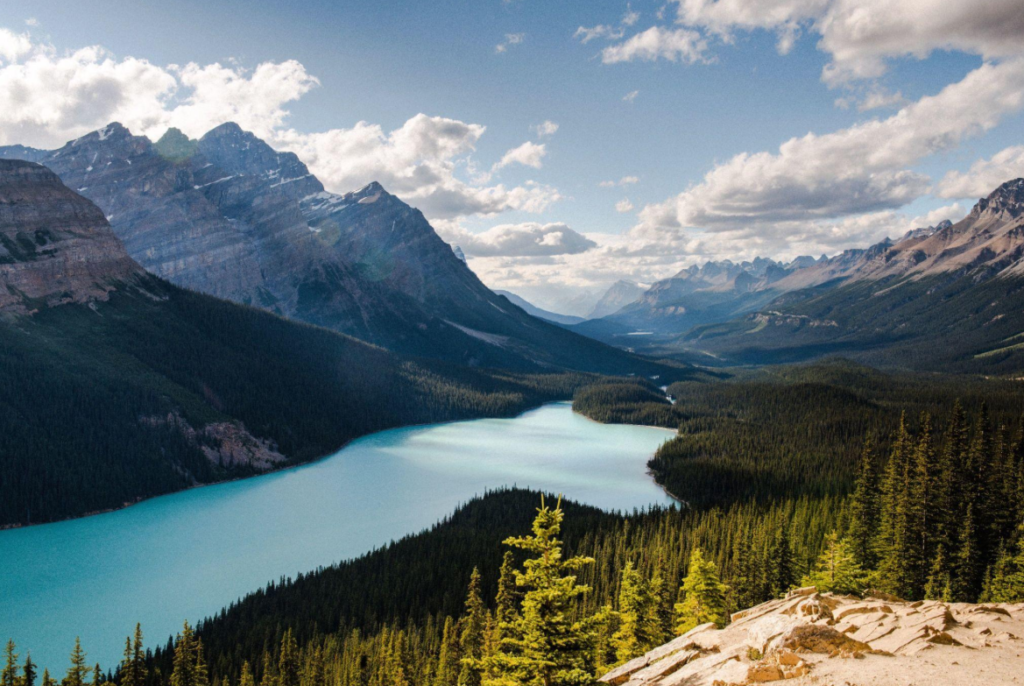
The island sits within a section of the lake sometimes described as a box canyon, framed on three sides by an unbroken chain of mountain peaks , a geographic rarity that contributes both to its visual drama and to its cultural significance, discussed below. The lake’s distinctive turquoise-blue colour comes from “rock flour,” fine sediment produced by glacial erosion that remains suspended in the water and scatters sunlight.
Jasper National Park itself is part of the Canadian Rocky Mountain Parks UNESCO World Heritage Site, a designation shared with Banff, Yoho, and Kootenay National Parks in recognition of the region’s mountain landscapes and geology.
Why Can’t You Visit Spirit Island Canada?
Access to Spirit Island is restricted for two related reasons: cultural protection and ecological fragility.
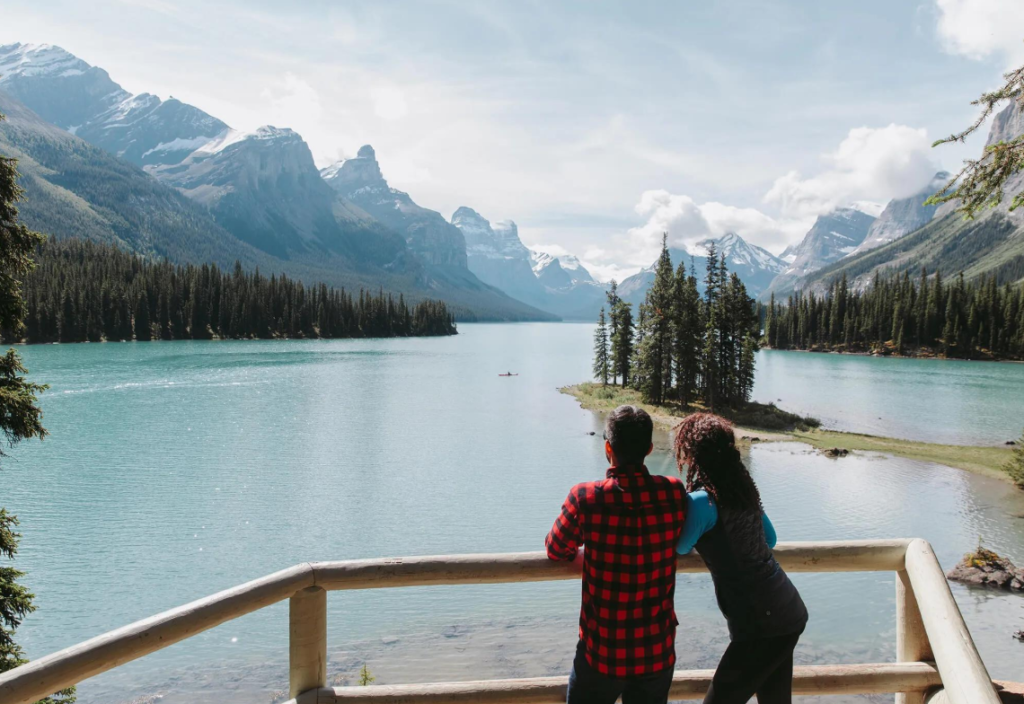
The island holds deep significance for the Stoney Nakoda (Ĩyãħé Nakoda) First Nation, for whom it has long served as a site of ceremony and reflection. Commercial boat tours that stop near the island do not permit passengers to disembark onto it, and Parks Canada guidance for independent paddlers asks visitors to view the island from the water rather than land on it. A nearby viewing platform, reached by a short trail, is the designated vantage point for photography.
The restriction also reflects the site’s ecological sensitivity. Small, wooded islands like this one, subject to constant boat and foot traffic, can see rapid degradation of root systems, vegetation, and shoreline soil if visitors are allowed to walk freely across them. Keeping the island off-limits protects both its physical condition and its cultural role at the same time.
The History of Spirit Island and Maligne Lake
Long before the lake appeared on any European map, it was known to the Stoney Nakoda as Chaba Imne, meaning “Beaver Lake.” According to the Samson Beaver family history documented by Parks Canada and corroborated in historical accounts of the area, Stoney Nakoda guides Job Beaver and his son Samson Beaver are recorded as having visited the lake at least a decade and a half before it became known to non-Indigenous explorers.
The lake’s introduction to a wider audience is usually credited to Mary Schäffer, an American-born explorer, botanist, and writer who made several expeditions through the Canadian Rockies in the early 1900s. In 1907, Samson Beaver drew Schäffer a hand-sketched map from memory, showing the route to the lake he and his father had visited as a boy. Using that map, Schäffer’s party — travelling with fellow explorer Mary Adams and guides Sidney Unwin and Billy Warren — reached the lake in 1908, describing the view, in her own later account, as resembling “an entire string of pearls.”
Schäffer went on to survey the lake formally for the Geological Survey of Canada in 1911 and named several surrounding geographic features after her travel companions, including Samson Peak and Leah Peak, honouring Samson Beaver and his wife. Her 1911 book, Old Indian Trails of the Canadian Rockies, introduced Maligne Lake to a broader public and helped establish the area as a destination.
Jasper National Park was formally established in 1907 — the same year Schäffer received Beaver’s map — and its creation involved the displacement of Indigenous communities, including Stoney Nakoda families, from lands they had used for generations, among them the area around Maligne Lake. In recent years, Parks Canada and Indigenous organisations have worked on reconciliation initiatives aimed at restoring Indigenous access to culturally significant sites within the park, including opportunities for ceremonial use of areas like Spirit Island.
Cultural and Historical Significance
For the Stoney Nakoda, the mountains that ring Maligne Lake are understood as physical representations of ancestors, and Spirit Island’s position — encircled by that unbroken mountain chain on three sides — is considered unusually significant within that worldview. The island is associated with the name Githni-mi-Makoche, sometimes translated as “Healing Island,” and has historically served as a site for ceremony.
This dimension of Spirit Island’s story is often reduced, in popular travel writing, to a brief mention of “sacred ground” alongside a scenic description. A more complete account recognises that the island’s cultural meaning predates its tourism fame by generations, and that its current legal protection is, in part, a response to that longer history — not simply a modern conservation rule.
Why Spirit Island Attracts So Many Visitors
Spirit Island’s visual fame is well documented. A photograph of the island by photographer Peter Gales was displayed in Kodak’s Colorama exhibit in New York’s Grand Central Terminal in 1960 — a large-format advertising showcase that reached millions of commuters and helped cement the island’s status as an iconic Canadian image. Decades later, Apple used a photograph of Spirit Island in marketing materials for an iPad model, citing it as an example of landscape photography.
Today, the island is widely cited by Canadian tourism bodies as one of the most photographed locations in the country. Its combination of turquoise water, dense mountain framing, and small scale — the island itself is little more than a compact stand of trees — creates an image that reads as both dramatic and intimate, which is part of why it has proven so durable in advertising and postcard photography for more than sixty years.
Practical Visitor Information
Getting there: Maligne Lake is reached by road from the town of Jasper, a drive of roughly 45 minutes to an hour along Maligne Lake Road, which follows the Maligne Valley past Medicine Lake and Maligne Canyon.
Reaching Spirit Island: There is no trail or road to the island itself. Visitors reach the area by one of two methods:
- Guided boat cruise: Licensed tour operators run narrated cruises from the main boat launch to a viewpoint near Spirit Island and back, with the full round trip typically taking a few hours including a stop for photography. These cruises are popular in the summer season and often sell out in advance during July and August.
- Independent paddling: Visitors with their own canoe or kayak can paddle the lake independently. The round trip to Spirit Island and back covers a significant distance — cited by outdoor guides as roughly 28 kilometres — and can take several hours each way in cold, glacially fed water, so this option is recommended only for experienced paddlers with appropriate cold-water safety preparation.
Motorised access: Parks Canada restricts Maligne Lake to paddlers and electric motors only; gas-powered motors are prohibited.
Best time to visit: The lake and its cruise operations are generally accessible in the warmer months, typically June through September, when ice-free conditions and daylight hours are longest. Morning visits are often recommended for calmer water and better light for photography.
Seasonal closures: Parts of the wider Maligne Valley backcountry are subject to seasonal closures — Parks Canada has, in past years, restricted certain routes from November through mid-May to protect caribou habitat. Visitors planning backcountry travel beyond the lake itself should check current Parks Canada notices before travelling, as closure dates and areas can change from year to year.
Nearby Attractions in the Maligne Valley
Visitors travelling to Maligne Lake typically combine the trip with several other stops along Maligne Lake Road:
- Maligne Canyon, a deep limestone gorge with a network of footbridges, located closer to the town of Jasper.
- Medicine Lake, known for its unusual seasonal water-level changes caused by an underground drainage system.
- The Mary Schäffer Loop, a short, family-friendly walking trail along the lake’s eastern shore near the boat launch, named for the explorer discussed above.
- The Skyline Trail, one of the best-known backcountry hiking routes in the Canadian Rockies, which begins near Maligne Lake and runs above the treeline for much of its length.
- Lakeside campgrounds, including Hidden Cove, Fisherman’s Bay, and Coronet Creek, available to backcountry paddlers and hikers with the appropriate permits.
Conservation and Environmental Protection
Maligne Lake and Spirit Island sit within a national park subject to Parks Canada’s conservation regulations, which include:
- A ban on walking on Spirit Island itself, to protect both its vegetation and its cultural significance.
- Restrictions on motorised watercraft, limiting the lake to paddling and electric-motor use only.
- Leave No Trace guidance for all visitors, including staying on designated trails and viewing platforms, packing out all waste, and not approaching or feeding wildlife, moose, bears, mountain goats, and deer are all regularly sighted in the surrounding valley.
- Seasonal habitat protections elsewhere in the Maligne Valley backcountry, aimed at species such as caribou.
These measures reflect a broader shift in how the park frames the site: not purely as a scenic backdrop, but as a landscape with an active cultural and ecological stewardship relationship, involving both Parks Canada and Stoney Nakoda representatives.
Verified Facts About Spirit Island
- Spirit Island is a “tied island,” connected to the shore by a land spit for most of the year.
- It sits roughly 14 kilometres down Maligne Lake from the main boat launch.
- Maligne Lake, at approximately 22 kilometres, is the longest natural lake in the Canadian Rockies.
- The lake was known to the Stoney Nakoda as Chaba Imne (“Beaver Lake”) long before Mary Schäffer’s 1908 expedition.
- Samson Beaver’s hand-drawn 1907 map guided Schäffer’s party to the lake.
- A 1960 photograph of the island appeared in Kodak’s Colorama display in New York’s Grand Central Terminal.
- Apple used an image of the island in marketing for an iPad model.
- Motorised boats with gas engines are prohibited on Maligne Lake; only paddling and electric motors are permitted.
- Jasper National Park is part of the Canadian Rocky Mountain Parks UNESCO World Heritage Site.
Frequently Asked Questions
Can you walk on Spirit Island? No. Visitors are not permitted to set foot on the island, in order to protect its ecological condition and its cultural significance to the Stoney Nakoda First Nation.
How do you get to Spirit Island? By water only — either on a licensed boat cruise from the main Maligne Lake boat launch, or by private canoe or kayak. There is no road or hiking trail to the island itself.
Is Spirit Island always an island? Not technically. For most of the year it is connected to the shore by a narrow spit of land, becoming a true island only when seasonal water levels rise.
Why is Spirit Island considered sacred? The Stoney Nakoda First Nation regard the surrounding mountains as representing their ancestors, and the island’s position within that mountain ring has made it a longstanding site for ceremony and reflection, referred to in some accounts as Githni-mi-Makoche, or “Healing Island.”
When is the best time to visit Maligne Lake? The lake is generally accessible from June through September. Morning visits are often recommended for calmer water conditions and clearer photography light.
Are gas-powered boats allowed on Maligne Lake? No. Parks Canada restricts the lake to paddling and electric-motor watercraft only.
Spirit Island’s fame rests on a photograph, but its significance runs considerably deeper than the image suggests. It is, at once, a geological curiosity, a site with a documented Indigenous history that predates its “discovery” by outside explorers by at least a generation, and a case study in how a national park can try to balance mass tourism interest with cultural respect and ecological limits. Visitors who take the time to understand that fuller context — rather than treating the island purely as a photo opportunity — are likely to find the short boat trip down Maligne Lake considerably more meaningful than the postcard image alone conveys.