
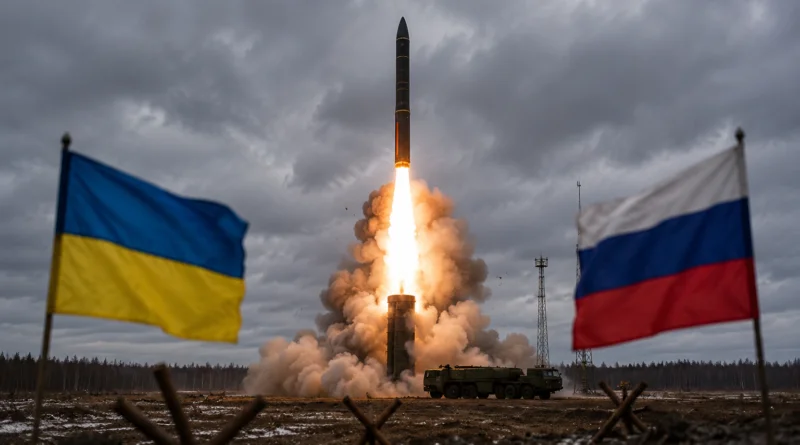
Ukraine Russia War Latest: Putin Tests Sarmat Missile
Ukraine Russia war latest developments took another dangerous turn on Tuesday, 12 May 2026, after Russia announced the successful testing of its Sarmat intercontinental ballistic missile.
The announcement came only hours after a temporary three-day ceasefire between Russia and Ukraine officially expired, reigniting concerns that the conflict could intensify further during the summer months.
Russian president Vladimir Putin declared that the missile system could be placed into active combat service before the end of the year, while Ukrainian officials accused Moscow of having “no real intention” of pursuing peace negotiations.
The developments mark another escalation in a conflict that has already reshaped global security, destabilised energy markets, and increased fears of a broader confrontation between Russia and NATO.
Ukraine Russia War Latest Updates
Speaking during a televised meeting with strategic missile forces commander Sergei Karakayev, Vladimir Putin was informed that Russia had completed another successful test of the Sarmat intercontinental ballistic missile.
The Sarmat missile, often referred to in Russian media as “Satan II,” is designed to carry multiple nuclear warheads and strike targets across continents. Russian military officials claim the weapon can evade modern missile defence systems and travel thousands of kilometres while carrying an extremely heavy payload.
According to Moscow, the missile is expected to become a central element of Russia’s strategic nuclear deterrent.
Putin praised the test during the meeting and stated that the missile could officially enter operational combat duty before the end of 2026.
The Kremlin released footage showing military officials monitoring the launch operation, while Russian state media described the test as a demonstration of the country’s “strategic strength” amid ongoing tensions with the West.
Military analysts believe the timing of the announcement was highly significant.
The test took place during renewed diplomatic discussions surrounding the war in Ukraine and only days after a fragile ceasefire initiative collapsed.
Experts say the Kremlin may be attempting to send a message not only to Kyiv, but also to NATO countries continuing to support Ukraine militarily.
Ceasefire Ends as Fighting Resumes
The missile announcement coincided with the expiration of a short three-day ceasefire that had briefly reduced fighting across parts of the front line.
Russia’s Defence Ministry announced that military operations had resumed after the pause officially ended. Moscow also claimed that Russian air defence systems intercepted more than 100 Ukrainian drones within a 24-hour period.
Ukraine, however, accused Russia of violating the ceasefire repeatedly even before it officially ended.
Ukrainian officials reported continued artillery strikes, drone attacks, and military assaults in several eastern regions during the supposed pause in combat.
President Volodymyr Zelensky said Russia had shown “no genuine intention” of ending the war and warned that Moscow was using ceasefires strategically while preparing for further military operations.
Kyiv also expressed concern that Russia could launch intensified attacks in the coming weeks as weather conditions improve and battlefield mobility increases.
Washington Pushes for New Diplomatic Efforts
Despite the renewed fighting, diplomatic efforts to revive negotiations are continuing behind the scenes.
Reports from Ukrainian and international media suggest that the United States has been exploring options for another temporary ceasefire framework aimed at slowing the conflict and reopening broader discussions between Moscow and Kyiv.
Sources familiar with the discussions claim Washington may also be considering limited sanctions relief proposals if Russia agrees to certain conditions related to battlefield de-escalation.
The reports have triggered debate among Western allies.
Some European officials reportedly fear that easing sanctions too early could strengthen Moscow economically while failing to secure meaningful concessions on the battlefield.
Others argue that diplomatic channels must remain open to avoid an even wider military confrontation.
So far, neither the White House nor the Kremlin has publicly confirmed details of the reported discussions.
NATO Warns About Long-Term Security Threat
NATO secretary general Mark Rutte addressed growing tensions during a press conference in Montenegro, where he said the alliance remained focused on strengthening European defence capabilities.
Rutte stated that NATO members were increasing military spending not only to support Ukraine but also to prepare for what he described as “long-term security challenges” posed by Russia.
He also referenced instability in the Middle East and the Strait of Hormuz, warning that global security threats were becoming increasingly interconnected.
“When it comes to the future of NATO, I remain extremely optimistic,” Rutte said, pointing to growing defence commitments by European countries and Canada.
The alliance has expanded military production, increased troop deployments in Eastern Europe, and accelerated discussions on missile defence systems since Russia launched its invasion of Ukraine in 2022.
Western intelligence agencies continue to monitor Russia’s nuclear rhetoric closely, particularly after repeated references to strategic weapons by Kremlin officials.
Ukraine Expands Drone Warfare Campaign
While Russia focuses on missile capabilities and heavy bombardment, Ukraine has increasingly relied on long-range drone operations to strike military targets deep inside Russian territory.
Over recent months, Ukrainian forces have expanded attacks on fuel depots, ammunition storage facilities, military airfields, and logistical infrastructure.
Military analysts say Ukraine’s growing drone capabilities have forced Russia to divert significant resources toward air defence operations far from the front lines.
Several Russian military bloggers and analysts have also acknowledged that Ukrainian drone operations are placing increasing pressure on infrastructure inside Russia.
According to some reports, Moscow is now investing heavily in additional electronic warfare systems and anti-drone technologies.
Ukrainian officials argue that drone warfare has become one of Kyiv’s most effective tools against a larger and better-equipped military opponent.
Putin Claims War Could Be Nearing Final Stage
One of the most controversial developments came after Vladimir Putin suggested that the war could be entering its final phase.
The comments surprised many observers given the continued intensity of combat operations and the absence of any major breakthrough in peace negotiations.
Some analysts interpreted Putin’s remarks as an attempt to reassure the Russian public after months of economic pressure and military losses.
Others believe the Kremlin may be preparing the domestic population for a prolonged frozen conflict rather than a decisive military victory.
Western intelligence assessments continue to indicate that neither side currently possesses the capability to achieve a rapid breakthrough on the battlefield.
The conflict has increasingly evolved into a war of attrition involving drones, artillery, long-range strikes, and economic endurance.
Russia Faces Economic Pressure Despite Kremlin Confidence
Although the Kremlin insists the Russian economy remains stable, new government forecasts suggest growth expectations have been lowered significantly.
Russia’s Economy Ministry reportedly reduced projected GDP growth for 2026 while acknowledging ongoing pressure from sanctions, military spending, and international isolation.
Kremlin spokesman Dmitry Peskov said the government had taken necessary steps to maintain macroeconomic stability despite volatility in global markets.
Russian officials continue to highlight energy exports and domestic industrial production as evidence that the economy remains resilient.
However, independent economists argue that sanctions are gradually limiting technological imports, investment opportunities, and long-term industrial growth.
The cost of maintaining military operations while sustaining economic stability is expected to remain one of Moscow’s biggest challenges moving forward.
Overnight Attacks Continue Across Ukraine
Meanwhile, attacks continued overnight across several Ukrainian cities.
In Kyiv, emergency services responded to drone strikes that damaged civilian infrastructure, including a kindergarten building.
Images released from the scene showed shattered windows, debris scattered across playground areas, and firefighters working to contain fires after explosions rocked parts of the capital.
Ukrainian air defence systems reportedly intercepted multiple incoming drones during the attack.
Residents described hearing explosions throughout the night as sirens sounded across the city.
Officials warned that Russia may continue targeting civilian infrastructure as part of its broader pressure campaign against Ukraine’s energy systems and urban centres.
Belarus Athletes Return to International Competition
Away from the battlefield, the political consequences of the war continue affecting international sports and diplomacy.
Modern pentathlon’s governing body announced that Belarusian athletes would once again be permitted to compete under their national flag following recent decisions by the International Olympic Committee.
Belarus has faced widespread international criticism since the beginning of the war due to its close alliance with Moscow and its role as a staging ground during the initial invasion.
The decision is expected to trigger debate among European governments and sports organisations over the gradual reintegration of Russian and Belarusian competitors into international events.
Growing Fears Over Nuclear Rhetoric
The testing of the Sarmat missile has once again intensified fears surrounding nuclear escalation.
Although military analysts stress that a missile test does not necessarily indicate imminent nuclear deployment, repeated references to strategic weapons continue to alarm Western governments.
Since the war began, Russia has repeatedly used nuclear rhetoric during periods of heightened tension with NATO and Ukraine.
Western officials have accused Moscow of using strategic weapons announcements as a form of political pressure designed to discourage deeper Western involvement.
At the same time, NATO governments remain cautious about actions that could trigger a direct confrontation between nuclear powers.
The result is a fragile and increasingly dangerous geopolitical balance.
What Happens Next?
As the ceasefire collapses and military operations resume, attention is now turning toward the possibility of a larger escalation during the second half of 2026.
Ukraine continues requesting additional Western military support, particularly advanced air defence systems and long-range weapons.
Russia, meanwhile, appears determined to demonstrate military strength while reinforcing its strategic nuclear posture.
Diplomatic efforts continue behind closed doors, but public trust between Moscow and Kyiv remains extremely low.
For millions of civilians living under the shadow of war, the latest developments offer little sign that peace is close.
Instead, the conflict appears to be entering another unpredictable phase, one defined by drone warfare, missile threats, economic pressure, and mounting fears that the confrontation between Russia and the West could continue for years to come.