
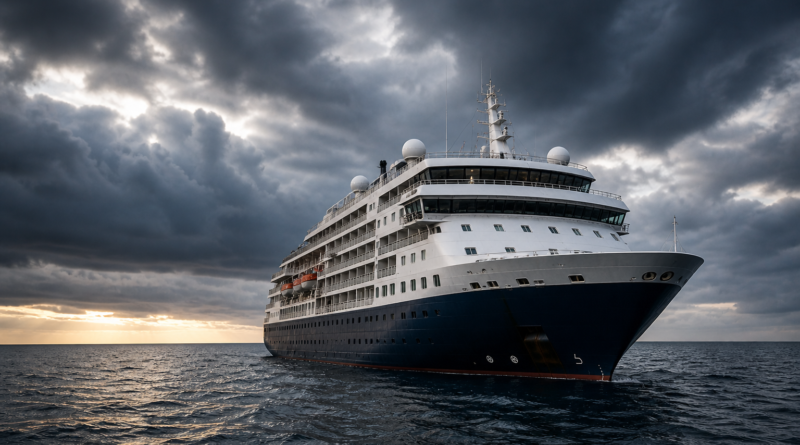
Three Dead as Rare Hantavirus Case Confirmed on Cruise Ship in Atlantic
A suspected outbreak of hantavirus aboard a cruise ship in the Atlantic Ocean has left three passengers dead and several others under investigation, raising urgent questions about how a rare rodent-borne disease may have emerged in a controlled maritime environment.
A developing health emergency at sea


A cruise journey across the Atlantic has turned into a complex public health incident after three passengers died following what international authorities describe as a suspected hantavirus outbreak. The vessel, the MV Hondius, had been travelling from Argentina toward Cape Verde when the situation began to unfold, prompting concern among health officials and triggering an ongoing investigation.
According to information confirmed by the World Health Organization, one case of hantavirus infection has been verified through laboratory testing, while several additional cases remain under investigation. The ship has remained offshore as authorities assess the situation and seek to understand whether further infections may occur.
Officials say the circumstances surrounding the outbreak are unusual and require detailed examination, particularly given the rarity of hantavirus transmission in environments such as cruise ships.
Understanding hantavirus and how it spreads


Hantavirus is not a single disease but a group of viruses primarily carried by rodents. Unlike more familiar respiratory illnesses, the virus is not typically spread through casual contact between people. Instead, infection most often occurs when individuals inhale microscopic particles contaminated with rodent urine, droppings, or saliva.
The Centers for Disease Control and Prevention explains that these particles can become airborne when disturbed, particularly in enclosed or poorly ventilated spaces. In rare instances, transmission may occur through direct contact with infected rodents or through bites.
This method of transmission is one of the key reasons the current incident is drawing attention. Cruise ships are generally subject to strict hygiene and safety controls, making exposure to rodent-borne pathogens highly unusual.
The illnesses linked to hantavirus
Hantavirus infections can develop into serious and potentially life-threatening conditions. In the Americas, the most commonly reported form is Hantavirus Pulmonary Syndrome, a disease that often begins with symptoms such as fever, fatigue and muscle aches. As it progresses, it can lead to severe respiratory distress, with fluid accumulation in the lungs making breathing increasingly difficult. Health authorities estimate that mortality rates for this condition can approach 38 percent in severe cases.
Another form of the disease, more frequently seen in parts of Europe and Asia, is haemorrhagic fever with renal syndrome. This variant affects the kidneys and may lead to complications including low blood pressure, internal bleeding and acute kidney failure. While the two forms differ in presentation, both require prompt medical attention and can escalate rapidly if not treated.
A highly unusual setting for infection


Outbreaks on cruise ships are typically associated with viruses that spread easily between people, such as norovirus. The suspected presence of hantavirus introduces a different kind of risk, one that is linked to environmental exposure rather than person-to-person transmission.
Experts suggest that several possibilities must be considered. It is possible that exposure occurred before passengers boarded the vessel, particularly if individuals had been in environments where rodents were present. Another possibility is that contamination may have occurred in storage areas or supply chains linked to the ship. At this stage, investigators have not confirmed a definitive source.
Passengers are believed to have been largely confined to their cabins as a precaution while medical teams carried out assessments. The aim has been to limit movement while determining whether additional cases may emerge.
Medical response and containment efforts


Medical personnel onboard have been working under challenging conditions, balancing the need for patient care with the uncertainty surrounding the outbreak. Protective measures have been implemented, and individuals displaying symptoms are understood to have been monitored closely.
While hantavirus is not typically considered highly contagious between humans, the seriousness of the illness means that containment measures remain essential. Health officials have emphasised that investigations are ongoing and that further laboratory testing is required to confirm suspected cases.
Global perspective and rarity of cases
Hantavirus infections are relatively uncommon in many parts of the world, but they are not unknown. Estimates suggest that tens of thousands of cases of related illnesses occur globally each year, particularly in regions of Europe and Asia. In contrast, cases in countries such as the United States remain rare, with fewer than a thousand recorded over several decades of surveillance.
Certain strains of hantavirus, including those carried by common rodent species such as the brown rat, are present worldwide. This global distribution means that while the virus is rare, it cannot be entirely ruled out in any environment where exposure to rodents is possible.
Treatment and clinical challenges


There is currently no specific cure for hantavirus infection. Treatment focuses on supportive care aimed at managing symptoms and maintaining vital functions. Patients with severe respiratory complications may require oxygen therapy or mechanical ventilation, while those experiencing kidney-related complications may need dialysis.
Medical professionals emphasise that early recognition of symptoms can significantly improve outcomes. However, because initial symptoms can resemble those of more common illnesses, diagnosis may be challenging in the early stages.
The challenge of managing an outbreak at sea


Managing a potential outbreak aboard a ship presents unique logistical challenges. Unlike land-based settings, access to advanced medical facilities is limited, and decisions must often be made with incomplete information.
The decision to keep the vessel offshore reflects a cautious approach by authorities seeking to minimise potential risk while investigations continue. Coordination between international health organisations and maritime authorities is ongoing as the situation develops.
What remains unknown
Despite the confirmation of one hantavirus case, key questions remain unanswered. Investigators are still working to determine how exposure occurred, whether additional cases will be confirmed, and whether the incident represents an isolated event or part of a broader risk.
Health officials have indicated that further updates will depend on the results of laboratory testing and environmental assessments. Until more information becomes available, caution is likely to remain the guiding principle.
The situation aboard the MV Hondius highlights how even rare diseases can present serious challenges when they emerge in unexpected environments. With three confirmed deaths and multiple cases under investigation, the incident has drawn international attention and prompted a careful, measured response from health authorities.
While hantavirus does not spread easily between people, its severity and the uncertainty surrounding this outbreak underscore the importance of vigilance and rapid response. As investigations continue, the focus remains on understanding the origin of the exposure and ensuring the safety of all those on board.
Sources
Information in this article is based on reporting from international health authorities including the World Health Organization and the Centers for Disease Control and Prevention, alongside global epidemiological data on hantavirus infections.