King Charles US Visit Historic Speech to Congress and White House Talks
King Charles III has delivered a landmark speech to the United States Congress, urging Britain and America to renew their partnership at what he described as a time of global uncertainty.
Speaking in the chamber of the House of Representatives at the US Capitol, the monarch praised the enduring ties between the two nations, saying the people of the United Kingdom held the United States in the “highest regard and friendship”.
The address marked a rare constitutional and diplomatic moment. King Charles became only the second British monarch to speak before a joint gathering of Congress, following Queen Elizabeth II’s historic appearance in 1991.
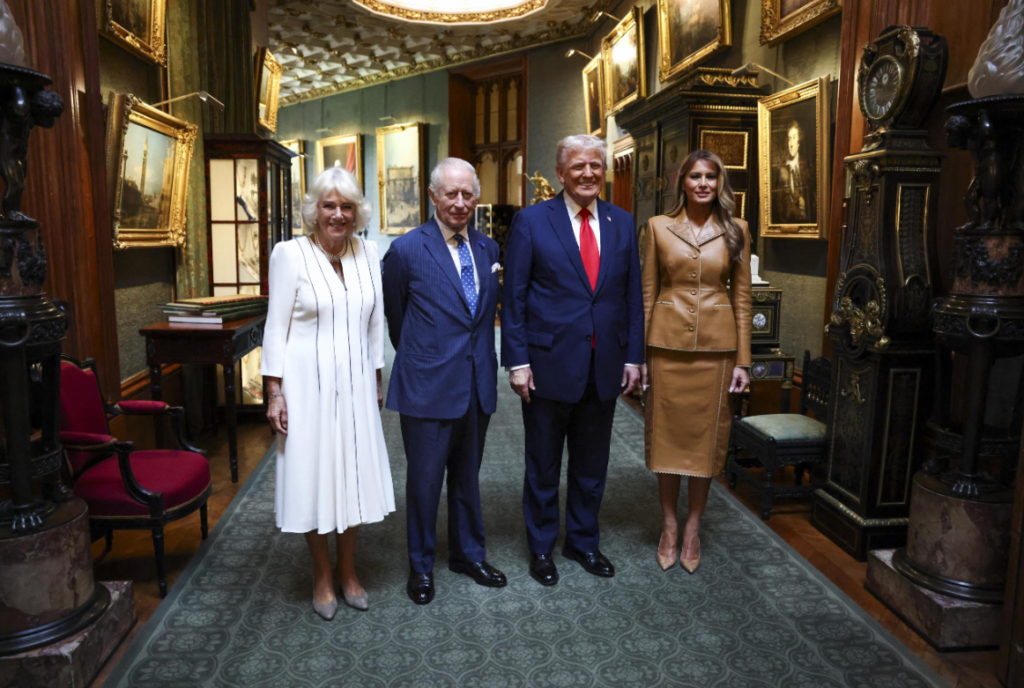
The speech came during the second day of a high-profile state visit to Washington, where the King and Queen Camilla were welcomed earlier by President Donald Trump and First Lady Melania Trump at the White House in a ceremony marked by military honours, formal greetings and symbolic displays of Anglo-American friendship.
The King’s remarks were closely watched on both sides of the Atlantic, with relations between London and Washington under fresh scrutiny amid tensions in the Middle East, divisions over international strategy and wider questions about the future direction of Western alliances.
A message of friendship and shared history
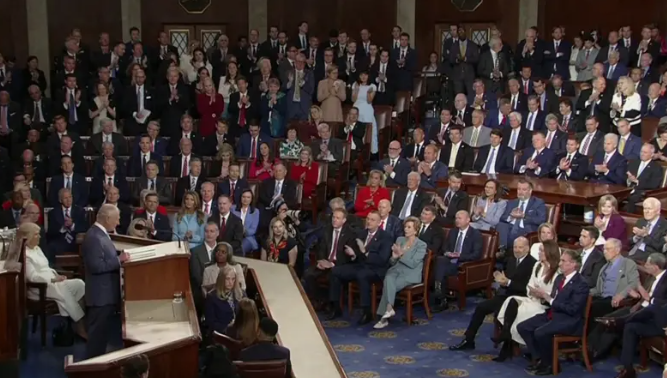
Opening his address, King Charles thanked lawmakers for the invitation and reflected on the long and often complex relationship between Britain and the United States.
He noted that while the two nations had not always agreed, they had repeatedly found common purpose through democratic values, trade, security cooperation and cultural exchange.
The monarch referred to America’s 250th anniversary commemorations surrounding the Declaration of Independence, drawing applause from members of Congress.
He acknowledged that the United States had been founded in opposition to British rule, but said that disagreement had ultimately evolved into one of the world’s most durable alliances.
“Our partnership was born out of dispute,” he said, before adding that it had grown stronger through mutual respect and shared ideals.
The chamber responded warmly to several moments in the speech, with lawmakers from both parties rising to applaud key lines praising liberty, democratic institutions and international cooperation.
Global uncertainty and political violence
The King also addressed current international tensions, warning that democracies faced serious tests from war, instability and political extremism.
Without entering party politics, he referred to recent violence in Washington after an armed suspect allegedly targeted an event attended by President Trump.
He said acts of violence must never be allowed to undermine democratic life or intimidate public institutions.
“Whatever our differences,” he said, “we stand united in our commitment to protect our people and uphold democracy.”
The intervention was seen as a carefully balanced message of solidarity at a sensitive political moment in the United States.
Officials in both capitals had expected the monarch to emphasise constitutional values and calm diplomacy, rather than engage directly in policy disputes.
Calls for reconciliation and renewal
One of the most significant themes of the speech was the need for “reconciliation and renewal” between allies facing a more unstable world.
The King said Britain and America had a duty not only to defend their own interests, but to support peace, compassion and international understanding.
He praised the long tradition of transatlantic cooperation in moments of crisis, saying history showed that progress was often greatest when Europe and America acted together.
Though symbolic in nature, the language was interpreted by analysts as encouragement for closer strategic coordination between the UK government and the White House.
Recent strains have emerged over military policy, trade priorities and the extent of support for ongoing conflicts abroad.
By invoking the deeper history of the alliance, Buckingham Palace appeared keen to project continuity above day-to-day political tensions.
Warm White House welcome from Trump
Before travelling to Capitol Hill, the King and Queen Camilla were formally welcomed at the White House by President Trump and Melania Trump.
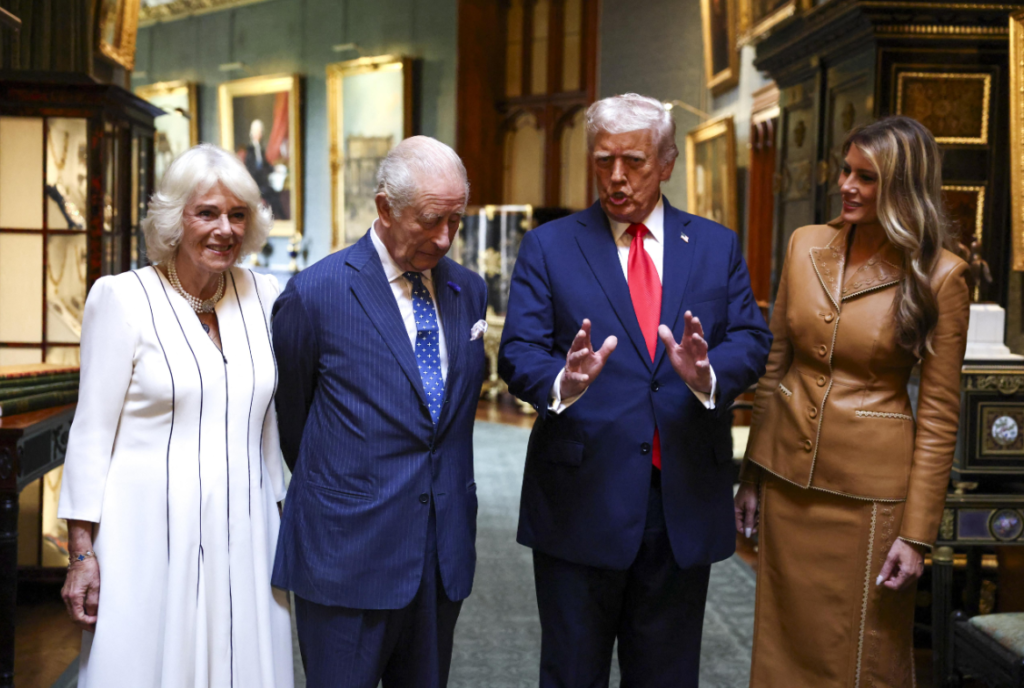
Images from the ceremony showed smiles, handshakes and extended conversation between the leaders.
Crowds gathered to watch as military honours were presented and aircraft performed a ceremonial flypast overhead.
President Trump used his remarks to celebrate what he called the exceptional closeness of the two nations.
“No closer friends have stood together than America and Britain,” he said.
The president also added several personal touches, praising the King’s “beautiful accent” and joking that his late Scottish-born mother had once admired the young Prince Charles.
The informal comments drew laughter and underlined the highly personalised style Trump often brings to state occasions.
Symbolic gift exchange
As part of the visit, gifts were exchanged between the two delegations in keeping with diplomatic tradition.
The King presented President Trump with a framed facsimile of historical plans linked to the Resolute Desk, one of the most recognisable items in the Oval Office.
In return, the president reportedly offered a historic letter connected to the early years of US-UK diplomatic relations.
Queen Camilla and Melania Trump also exchanged gifts, including jewellery and ceremonial silverware.
While largely symbolic, such gestures are often designed to reinforce continuity, mutual respect and the personal dimension of state relations.
Congress chamber atmosphere
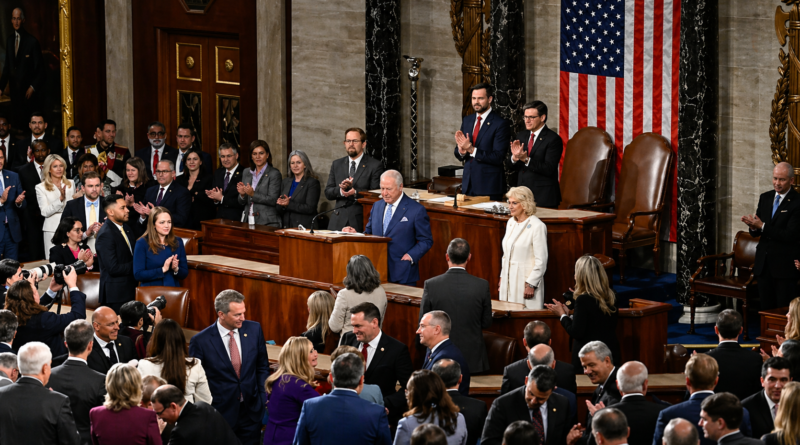
Inside the Capitol, the mood before the speech was described as unusually festive.
Lawmakers, officials and invited guests filled the House chamber well before the King’s arrival. Members were seen greeting one another, taking photographs and talking animatedly as anticipation built.
Several senior political figures from both parties joined the escort committee that formally accompanied the monarch into the chamber.
Vice President JD Vance and House Speaker Mike Johnson presided over proceedings.
Observers noted that while the atmosphere resembled a State of the Union address in scale and ceremony, it carried a different tone: less partisan confrontation, more diplomatic theatre.
When King Charles entered, he was met with sustained applause.
Following in Queen Elizabeth II’s footsteps
The moment inevitably invited comparison with Queen Elizabeth II’s speech to Congress in 1991.
Her address came in the aftermath of the Gulf War and focused heavily on peace, NATO unity and the importance of democratic institutions.
King Charles referenced his mother during his own remarks, saying he could not stand in the chamber without thinking of her historic appearance there more than three decades earlier.
For many in Washington, the speech represented not only continuity between reigns, but a defining moment for Charles as monarch in his own right.
Since succeeding to the throne, he has gradually shaped his public role around themes including sustainability, interfaith understanding and constitutional duty.
This speech, however, placed him at the centre of hard geopolitics.
A carefully balanced constitutional role
Unlike elected leaders, the British monarch does not make policy. Speeches on overseas visits are prepared with government advice and must remain politically neutral.
That creates a delicate challenge when global crises dominate headlines.
King Charles therefore used broad themes rather than detailed prescriptions: democracy, unity, peace, friendship and resilience.
Royal aides are understood to have worked closely with British officials to ensure the tone matched diplomatic priorities while preserving the monarchy’s non-partisan position.
The result was a speech rich in symbolism, but careful in substance.
Tensions behind the pageantry
Despite the polished public scenes, the visit unfolded against a more complicated diplomatic backdrop.
Questions remain over how closely Britain should align with Washington on security matters, particularly in relation to Iran and broader Middle East strategy.
There has also been attention on remarks attributed to the UK ambassador in Washington suggesting America’s closest strategic relationship may now be with Israel rather than Britain.
Those comments created awkward timing ahead of a visit explicitly designed to reinforce UK-US ties.
Neither side publicly addressed the controversy during the state events, but it added context to the King’s repeated emphasis on enduring partnership.
What the speech means
While no treaty or policy announcement emerged from the address, the symbolism matters.
State visits and congressional speeches are rare instruments of diplomacy used to signal political intent, reassure allies and influence public mood.
For Britain, the trip offers a chance to demonstrate continued relevance in Washington despite changing global power balances.
For the United States, hosting the monarch provides an opportunity to highlight historic alliances at a time of geopolitical competition.
For King Charles personally, the successful speech strengthens his international profile and shows he can carry major ceremonial moments with confidence.
Public reaction
Initial reaction in Washington was broadly positive.
Lawmakers praised the tone of dignity and unity, while commentators noted the King’s use of humour and historical references.
Several standing ovations punctuated the address, especially when he quoted President Trump’s previous remarks describing the bond between Britain and America as “priceless and eternal”.
Supporters of the visit said it showcased soft power at a time when conventional diplomacy often struggles.
Critics, however, questioned whether ceremonial warmth can overcome real policy disagreements.
What happens next
The royal visit is expected to continue with further engagements involving veterans, cultural institutions and bilateral meetings.
Attention will now turn to whether the public symbolism of the trip leads to practical improvements in relations between Downing Street and the White House.
For now, the image of a British king speaking beneath the great seal of the United States in a packed House chamber has provided a memorable moment in modern diplomacy.
At a time of division and uncertainty, King Charles used one of the most visible stages in American politics to argue that old alliances still matter.
Whether that message translates into renewed political momentum remains to be seen.