
Russia Oil and Gas Sanctions: London Summit Pledge 2025
More than 20 countries backing Ukraine agreed on 24 October 2025. They will work toward taking Russian oil and gas off the global market. This follows Western allies intensifying economic pressure on Moscow four years into the war.
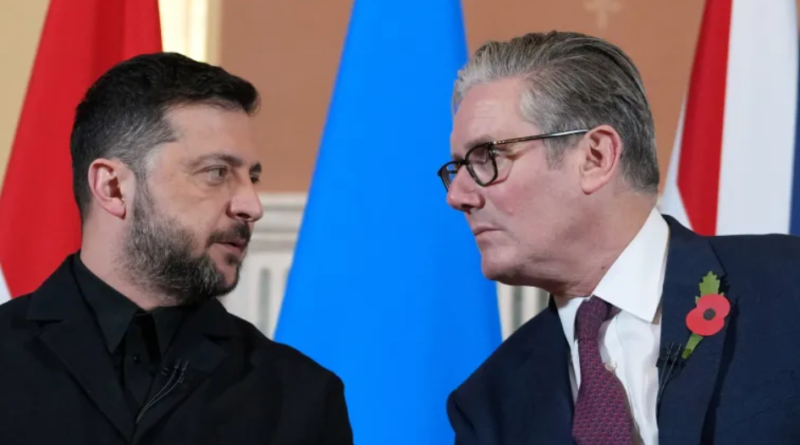
The commitment emerged at a London summit hosted by UK Prime Minister Sir Keir Starmer. It united Europe and allied nations in a coalition aiming to constrain revenues funding President Putin’s war.
Speaking after the talks, Starmer said the aim was to choke off money. This would stop money that keeps Russia’s military machine running. It would frame every barrel of oil and every gas shipment sold abroad as fuel for attacks on Ukraine. The summit was billed by organisers as one of the most coordinated attempts. It aimed to strike directly at the Russian energy sector. This sector remains the single largest source of revenue funding Moscow’s military campaign.
Over 20 Nations Gather in London
The summit brought together leaders and representatives from Britain, France, Germany, the Netherlands, Denmark, Poland, the Baltic states, Canada and beyond. Ukrainian President Volodymyr Zelensky attended in person, alongside NATO Secretary General Mark Rutte, Danish Prime Minister Mette Frederiksen and Dutch Prime Minister Dick Schoof, while French President Emmanuel Macron joined remotely.
Talks centred on energy, sanctions enforcement and how to sustain support for Kyiv with no ceasefire in sight. Officials said the group agreed in principle to reduce purchases of Russian fuel, tighten sanctions, target the tanker networks moving Russian oil, and pressure third countries still buying it.
The format itself reflected how the coalition has evolved since it first came together earlier in the year. What began as a small circle of European leaders discussing possible troop deployments to underwrite any future ceasefire has grown into a much broader forum spanning finance ministries, defence departments and energy regulators, all coordinating on a single strategic goal: shrinking the revenue base that sustains Russia’s war economy.
UK, US and EU Ramp Up Sanctions
The gathering followed fresh sanctions announced earlier that week by Britain and the United States targeting Russia’s two largest oil producers, alongside an EU move to expand sanctions covering additional Russian liquefied natural gas exports.
Europe struggled for years to wean itself off Russian energy, but pipeline gas imports have fallen sharply since 2022. Moscow, however, has kept earning heavily from oil and LNG shipments to Asia, the Middle East and parts of Europe — income Western officials now say must be cut to weaken Russia’s war-fighting capacity.
Officials familiar with the discussions said the coalition intends to focus in particular on the so-called shadow fleet of ageing tankers that Russia has relied on to keep exporting oil despite sanctions. These vessels, often uninsured and flagged to third countries, have allowed Moscow to keep barrels moving even as traditional shipping and insurance markets have pulled back. Closing off access to ports, insurance and financing for this fleet is now seen as one of the more practical levers available to allies, even without new legislation.
One European diplomat, speaking after the meeting, said Russia had adapted to previous rounds of sanctions and that the next phase of work would focus on closing loopholes rather than announcing headline-grabbing new measures. That assessment captured the tone of much of the summit: incremental, technical, and aimed at enforcement rather than dramatic new gestures.
Zelensky: Pressure Is the Only Path to Peace
Zelensky told the summit that sustained economic pressure remains the only realistic route to ending the conflict, thanking allies for their support while warning that Russia is preparing fresh strikes on Ukraine’s energy grid as winter approaches.
He pressed allies to pair sanctions with expanded air-defence support to protect Ukrainian cities and power stations through the cold months ahead, arguing that financial pressure and battlefield protection needed to move together rather than separately. Zelensky also used the platform to repeat calls for accelerated weapons deliveries agreed earlier in the year, saying delays in implementation were undermining the psychological effect that sanctions were meant to have on Moscow’s calculations.
Ukrainian officials travelling with the president said the country’s energy operators had already begun preparing backup generation capacity and dispersed repair crews ahead of the coming months, a response to the pattern of strikes seen in previous winters. But they cautioned that infrastructure repairs can only do so much if attacks on the grid continue at the same intensity as in past years.
No Breakthrough on Long-Range Missiles
One of the summit’s central questions was whether the West would supply Ukraine with more long-range missiles — including US-made Tomahawks — capable of striking military depots and refineries deep inside Russia.
No breakthrough emerged. US President Donald Trump had, in talks the previous week, declined to authorise Tomahawk transfers, reportedly citing concerns about escalation, and European leaders likewise stopped short of expanding permissions for Ukraine to strike inside Russian territory.
Some officials briefed on the discussions suggested the missile question would resurface at future coalition meetings, particularly if Russian strikes on civilian infrastructure continue through the winter. Others cautioned that any decision was unlikely before further talks between Washington and Moscow play out, given the White House’s stated preference for exploring a negotiated freeze in the fighting before escalating the West’s own weapons posture.
Putin Warns of an “Overwhelming” Response
As leaders met in London, Putin warned that any use of long-range Western missiles against targets inside Russia would trigger what he called an overwhelming response — language the Kremlin has used repeatedly whenever the West has weighed supplying more advanced weapons.
Russian officials have argued that Ukraine striking deep inside Russian territory would amount to direct NATO involvement. This would occur if Western-supplied systems enabled such strikes. Similar warnings have accompanied earlier decisions to supply Ukraine with tanks, fighter jets and other systems. None of these moves has triggered the scale of response the Kremlin previously threatened. Yet Western officials say the risk of miscalculation remains a genuine concern shaping their caution.
Frozen Russian Assets Back on the Table
Much of the summit’s focus fell on finance. Western nations have frozen roughly €300 billion in Russian state assets since the invasion began. Allies are exploring how to use those funds to finance Ukraine’s defense and reconstruction.
Starmer said work would continue on unlocking funds tied to Russian sovereign assets, though he offered no firm details. Danish PM Mette Frederiksen said she hoped for an agreement before Christmas 2025. She framed it as a moral obligation to make Russia pay for the destruction it has caused.
The debate over frozen assets has proven legally delicate. It has also been politically delicate in Western support for Ukraine. Some governments favour direct asset use for reconstruction. Others propose collateral for loans. Ukraine would repay only after Russia agrees to pay reparations. Legal officials in several European capitals raised concerns about the precedent such a move might set for sovereign immunity. This has slowed final agreement despite broad political appetite for using the funds.
Winter Fears Grow Across Ukraine
Ukrainians faced rising anxiety as the summit arrived. They fear a repeat of past winters’ blackouts and heating failures, since Russian strikes target power infrastructure. A strike on a Kharkiv kindergarten the same week killed civilians. The strike also injured civilians, underscoring the human cost as the cold season sets in.
Residents in cities including Odesa and Kyiv described daily disruptions to electricity and water supply. They also reported a growing fatigue after repeated cycles of damage and repair. Regional authorities said they were pre-positioning generators, fuel, and mobile boiler units. This work targeted hospitals, schools and residential blocks. The practice is a now-familiar routine heading into the fourth winter of full-scale war.
Strong Words, Few New Commitments
Despite the show of unity, the summit produced no timetable for ending Russian energy exports. It offered no new major weapons package, and no firm decision on how frozen assets will be deployed. Analysts note the coalition’s core strategy remains sustained pressure. The open question is whether that pressure is enough to change the Kremlin’s calculus.
The summit briefly touched on President Trump’s proposal to freeze the front line as a negotiation step. Russia has rejected the idea, insisting any settlement recognise claims over occupied Ukrainian territory. Kyiv continues to reject that demand. Several officials at the summit described the freeze proposal as a starting point for discussion. They viewed it as not a settled Western position, and Europe remains divided on how much territorial compromise to entertain.
Earlier the same day, 24 October 2025, Zelensky met King Charles III at Windsor Castle. Additionally, it was their third meeting of the year and symbolized Britain’s continued backing. Ukraine heads into another uncertain winter. They are understood to have discussed humanitarian support for displaced Ukrainian families. They also discussed reconstruction efforts, which have featured in each of their previous meetings.
Officials suggested the coalition would reconvene by year-end to review sanctions enforcement progress. They would also review the status of talks over frozen assets. The coming winter is likely to test whether the London pressure strategy can shift Moscow’s approach to the war.