King Abdullah Warns No Country Will Send Troops to Enforce Peace in Gaza
Why This Matters
- Jordan’s King Abdullah II has warned that no country is likely to send troops to enforce a peace agreement in Gaza.
- His comments raise serious doubts about one of the most difficult parts of the proposed US-backed peace plan.
- Jordan and Egypt say they are willing to help train Palestinian police, but not to deploy soldiers inside Gaza.
- The remarks come as Gaza remains devastated by war, with Hamas still armed and Israeli strikes continuing despite a ceasefire.
- The debate highlights a wider international dilemma: how to secure Gaza after the war without triggering another cycle of violence.
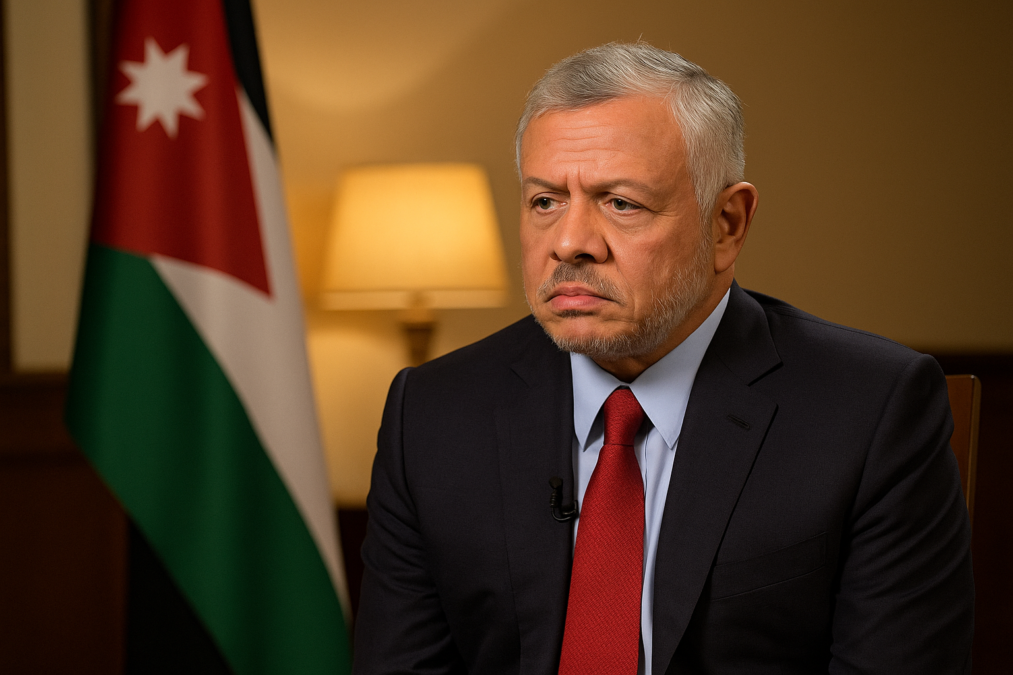
Jordan’s King Abdullah II has warned that foreign governments are highly unlikely to send troops into Gaza to enforce a future peace agreement, arguing that such a mission would risk making the conflict even worse.
In an interview discussing the future of Gaza after the current war, the King said there is a major difference between peacekeeping and peace enforcement.
According to Abdullah, many countries might support a limited international mission designed to help stabilise Gaza and assist Palestinian institutions.
However, he said very few – if any – would be willing to send soldiers into a hostile environment where they could be forced to fight Hamas, other armed groups or even local civilians.
“If the mission is peacekeeping, that is one thing,” King Abdullah said. “But if it is peace enforcement, no one will want to be part of that.”
His comments are among the clearest warnings yet from a key Arab ally of the United States that the proposed international role in Gaza may not be realistic.
For months, diplomats have discussed the possibility that Arab countries and international partners could help secure Gaza if a ceasefire eventually leads to a political agreement.
But Abdullah’s remarks suggest that behind closed doors, many governments are far more reluctant than publicly acknowledged.
Peacekeeping Versus Peace Enforcement
The distinction made by King Abdullah is crucial.
A peacekeeping mission usually takes place when both sides in a conflict have already agreed to stop fighting and are willing to cooperate.
Peacekeepers generally monitor a ceasefire, protect civilians and support local institutions.
They do not normally engage in active combat except in self-defence.
Peace enforcement is very different.
It involves sending troops into an unstable environment where there is no full agreement, where armed groups may still be active and where soldiers may be required to use force.
That is the situation many analysts believe exists in Gaza today.
Although a ceasefire has reduced some fighting, Hamas remains armed, Israeli forces continue to operate in parts of Gaza and other Palestinian groups remain active.
The result is that any foreign soldiers sent into Gaza could quickly find themselves caught in the middle.
“Running around Gaza with weapons is not something any country wants to do,” King Abdullah said.
His comments reflect growing fears that an international force could become trapped in a long and dangerous mission with no clear end.
The experience of previous international interventions in the Middle East has made many governments deeply cautious.
Countries that once participated in missions in Iraq, Afghanistan or Lebanon now fear repeating those mistakes.
Several diplomats have privately warned that sending foreign troops into Gaza without a clear political settlement could leave them vulnerable to attack and undermine any chance of lasting peace.
Jordan and Egypt Offer Support – But Not Troops
King Abdullah made clear that Jordan is willing to help in other ways.
Jordan and Egypt, he said, are prepared to assist in training Palestinian police officers and security personnel.
The goal would be to strengthen Palestinian institutions so that local forces, rather than foreign troops, could eventually take responsibility for maintaining order.
Jordan has long played a role in training Palestinian security services.
The country has experience working with Palestinian police and officials in the West Bank and has close ties with both Palestinian and international institutions.
However, Abdullah warned that rebuilding a functioning Palestinian security force in Gaza would take considerable time.
The destruction caused by the war has left much of Gaza’s infrastructure in ruins.
Police stations, government offices and security facilities have been destroyed.
Many experienced officials have been killed, displaced or cut off from their workplaces.
At the same time, Hamas still exerts influence in large parts of the territory.
That means any effort to create a new Palestinian security structure would be politically and practically difficult.
“It is going to take time,” Abdullah said.
Jordan itself has ruled out sending troops.
The King explained that Jordan is “too close politically” to the conflict to take on such a role.
Jordan has one of the world’s largest Palestinian populations.
Millions of Jordanians are either Palestinian refugees or descendants of refugees from previous wars.
As a result, any direct Jordanian military role inside Gaza could become politically explosive.
Jordanian officials fear that if their soldiers were deployed in Gaza, they could be accused by Palestinians of serving Israeli interests or, conversely, accused by Israel of failing to act strongly enough.
That would place Jordan in an impossible position.
Egypt has expressed similar concerns.
Cairo has made clear that it is willing to assist diplomatically and provide training, but has no intention of sending Egyptian troops into Gaza.
The US Peace Plan Faces Major Obstacles
King Abdullah’s comments come as the United States continues to promote a broad peace proposal first outlined during Donald Trump’s presidency.
The current plan is based on a 20-point framework designed to end the war and create a new system of governance in Gaza.
Under the proposal, Hamas would disarm and give up political control of the territory.
Palestinian police units, trained and vetted with the support of Arab countries and international partners, would take over security responsibilities.
The plan also envisages a role for foreign experts, aid agencies and potentially a limited international mission.
However, there are major doubts about whether the proposal can succeed.
The most serious obstacle is Hamas.
Despite months of war and repeated Israeli attacks, Hamas remains active.
The group still controls parts of Gaza and continues to maintain armed fighters and tunnel networks.
Hamas has repeatedly rejected demands to surrender or disarm.
Its leaders argue that giving up weapons while Israeli forces remain nearby would leave Palestinians defenceless.
Israeli officials insist that no long-term peace is possible unless Hamas is removed from power.
That disagreement lies at the heart of the problem.
If Hamas refuses to disarm, then any international force entering Gaza would risk becoming responsible for enforcing that demand.
King Abdullah believes that no country will accept such a mission.
“There is no appetite internationally for sending troops into an active conflict zone where they may have to fight,” one regional diplomat said.
Gaza Remains Unstable Despite the Ceasefire
The challenge is made even greater by the fact that Gaza remains highly unstable.
Although the current ceasefire has reduced the scale of the fighting, violence has not completely stopped.
Israeli air strikes continue in some areas.
Clashes between Hamas and rival Palestinian groups have also been reported.
There have been repeated accusations from both sides of violations of the ceasefire.
The result is that Gaza today remains an environment of fear, destruction and uncertainty.
Large sections of the territory have been reduced to rubble.
Roads, schools, hospitals and government buildings have been destroyed.
Electricity, clean water and communications remain limited in many areas.
For any international mission to work, there would first need to be a much more stable and secure environment.
Analysts say that without a stronger political agreement, no amount of foreign involvement will be enough.
“Security cannot be imposed from outside,” one Middle East expert said. “There has to be a legitimate Palestinian structure inside Gaza that people are willing to accept.”
At present, there is little sign that such a structure exists.
Jordan Intensifies Humanitarian Efforts
While Jordan has ruled out a military role, it has become one of the most active countries in providing humanitarian assistance to Gaza.
Jordanian aircraft have carried out repeated aid drops over the territory.
The country has also organised medical evacuations for injured and sick Palestinians.
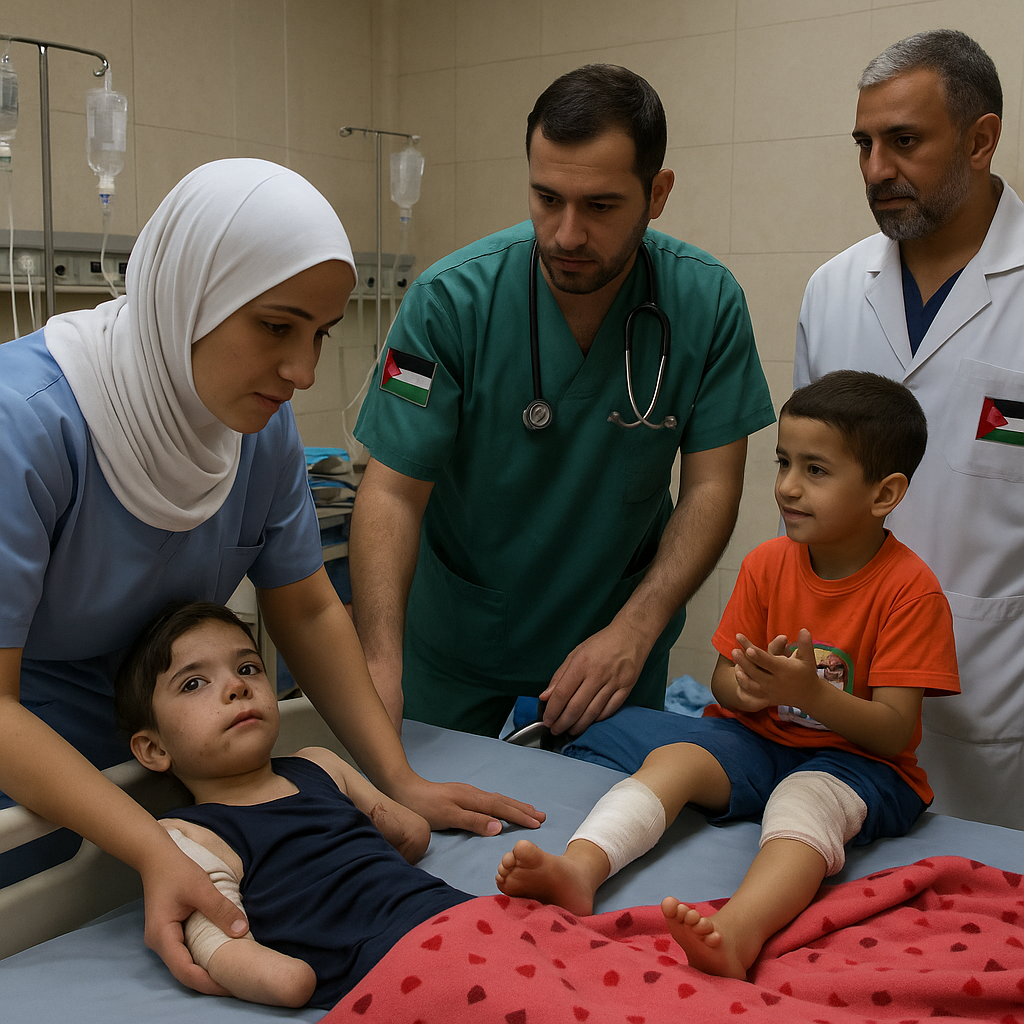
According to Jordanian officials, 253 Palestinian children from Gaza have already been brought to Jordan for treatment.
Many of them suffer from serious injuries, cancer or other conditions that can no longer be treated in Gaza because hospitals have been destroyed or overwhelmed.
Thousands more children are still waiting.
The World Health Organization estimates that more than 15,000 people in Gaza need urgent medical evacuation.
Among them are around 3,000 children.
However, the process has been extremely slow.
Every evacuation requires security checks, travel permits and agreement from Israel, Jordan and other host countries.
King Abdullah said the scale of the suffering in Gaza had shocked him.
He has personally taken part in several humanitarian aid-drop missions.
“It is heartbreaking to see how much suffering people are enduring while the world watches,” he said.
Jordanian officials say they are doing everything possible, but warn that aid alone cannot solve the crisis.
The destruction in Gaza is now so severe that many areas remain almost impossible to reach.
Entire neighbourhoods have been flattened.
Food, water and medicine remain in short supply.
Queen Rania Speaks Out
In a separate interview, Queen Rania also spoke about the situation in Gaza.
The Queen, who has Palestinian roots, delivered one of her strongest criticisms yet of the international response.
“For two years, parents in Gaza have watched their children suffer,” she said.
“They have seen their children starve. They have seen them live in fear. All the while, the world did nothing.”
Queen Rania said the failure of the international community to stop the violence earlier had left deep scars.
She argued that governments around the world had spent too much time debating and too little time acting.
Her comments are likely to resonate strongly across the Arab world, where there is widespread anger at the level of destruction in Gaza.
The Queen also acknowledged that President Trump had used diplomatic pressure on Israel to help secure the current ceasefire.
She described that as “a significant change” in the way the United States had approached the conflict.
However, she warned that a ceasefire alone would not be enough.
Without a serious political process, she said, the region would simply drift toward another war.
Can Palestinians and Israelis Still Live Side by Side?
Despite the devastation, Queen Rania said she still believes peace remains possible.
“Hope is not naïve – it is an act of defiance,” she said.
She argued that Palestinians and Israelis can still live side by side, but only if there is real international support and a genuine commitment to a political solution.
For years, Jordan has supported a two-state solution based on an independent Palestinian state alongside Israel.
King Abdullah and Queen Rania continue to argue that this remains the only realistic path to lasting peace.
However, they also recognise that the idea appears more difficult than ever.
Trust between Israelis and Palestinians has collapsed.
The war in Gaza has deepened anger and trauma on both sides.
Political divisions inside Israel and among Palestinians have become more severe.
At the same time, many people in the region now doubt whether international powers are willing or able to help.
The debate over foreign troops reflects that wider crisis of confidence.
Governments may support peace in principle, but few appear willing to risk becoming directly involved.
What Happens Next?
The coming months are likely to determine whether the current ceasefire becomes the start of a broader settlement or merely a pause before more fighting.
The United States will continue to push for its peace plan.
Arab governments will continue to insist that Palestinian institutions must take the lead.
Israel will continue to demand that Hamas disarm.
Hamas is likely to resist.
That means the central question remains unanswered: who would actually keep order in Gaza if an agreement is reached?
King Abdullah’s answer is blunt.
No country wants to send troops into Gaza to enforce peace by force.
Instead, Jordan believes the only realistic solution is to strengthen Palestinian institutions, support humanitarian recovery and build a political agreement that local people are willing to accept.
Whether that can happen while Gaza remains devastated and deeply divided remains uncertain.
For now, the King’s warning serves as a reminder that even if the war ends, securing the peace may prove even harder.