
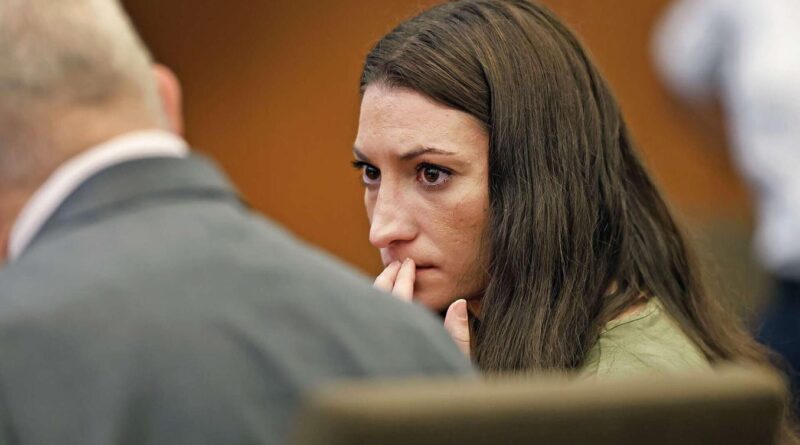
Lindsay Clancy Trial Ends in Mistrial: What Happens Next?
The Lindsay Clancy trial has ended in a mistrial after jurors were unable to reach a unanimous verdict over whether the Massachusetts mother was criminally responsible for the deaths of her three children. The case has attracted widespread attention because of the defence’s argument that Clancy was suffering from severe postpartum psychosis.
The night three children died
On the evening of January 24, 2023, in Duxbury, a coastal suburb south of Boston, three siblings died at the hands of their mother. Cora Clancy was five, her brother Dawson was three, and their baby brother Callan was eight months old.
Their parents, Lindsay and Patrick Clancy, had been married for several years and were, by all accounts, devoted to their children. Patrick worked from home and would come upstairs periodically to check on his family. That evening, prosecutors say, Lindsay Clancy asked him to go out to collect dinner and a prescription; he left the house for roughly 20 to 25 minutes.
While he was gone, Lindsay Clancy strangled her three children with elastic exercise resistance bands in the basement, then cut her own wrists and neck and jumped from a second-floor window in an attempt to end her own life. Patrick Clancy returned to find his wife semi-conscious on the ground outside and called 911. Still on the phone with dispatchers, he went inside and found his children in the basement. A responding officer later testified that Patrick could be heard screaming that his wife had killed them (CNN).
Cora and Dawson were pronounced dead that evening; Callan died three days later. Lindsay Clancy survived, but the fall left her permanently paralysed from the waist down.
These facts are not seriously disputed. What has been contested for nearly four years, and what a jury could not resolve this September, is whether Lindsay Clancy was criminally responsible for what she did.
Who is Lindsay Clancy?
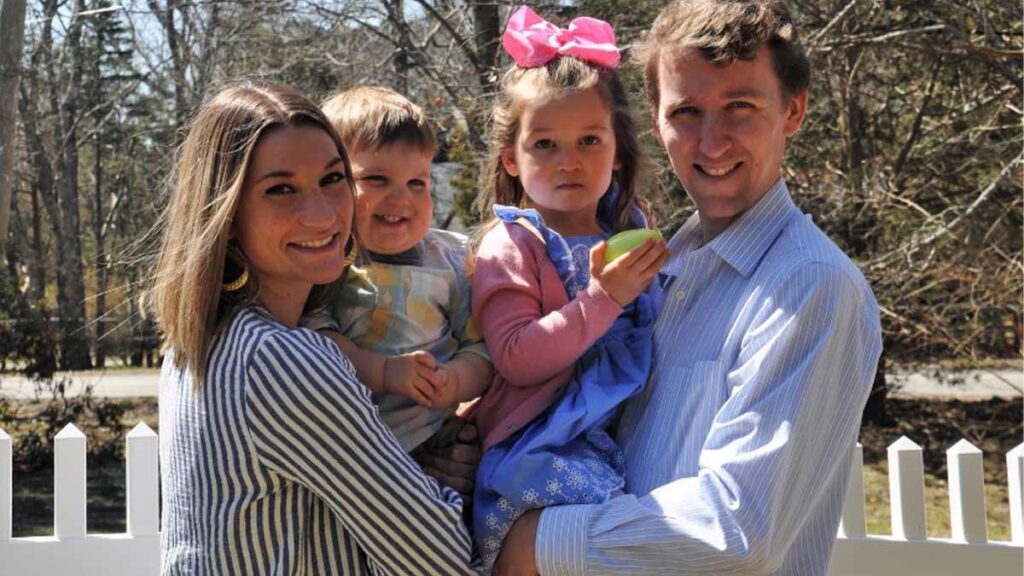
Before the killings, Clancy, then 32, worked as a labour and delivery nurse at Massachusetts General Hospital. She trained as a nurse after a biology degree from Quinnipiac University, and colleagues and friends who later testified described her as a caring, attentive mother.
She and Patrick had three children in quick succession: Cora in 2017, Dawson in 2019 and Callan in 2022. Court records from a subsequent civil lawsuit say she experienced mild anxiety after Cora’s birth and more after Dawson’s, though nothing treated as a psychiatric emergency at the time.
It was after Callan’s birth that her mental health deteriorated seriously. The first twelve weeks of maternity leave were described as calm, but as she prepared to return to work that autumn her anxiety intensified sharply. She was diagnosed with generalised anxiety disorder and, according to testimony, began taking the antidepressant Zoloft in September 2022, telling her husband she believed it would help her cope with going back to work.
The months before the killings
What followed was a rapid decline. According to a timeline compiled from court records by the Boston Globe, Clancy was prescribed thirteen psychiatric medications over the four months before the killings, by psychiatrists, nurse practitioners, emergency-room doctors and inpatient staff. They included antidepressants such as Zoloft and trazodone, the antipsychotic Seroquel, the sedative Benadryl, benzodiazepines including Valium, Klonopin and Ativan, and the mood stabiliser Lamictal.
Her psychiatrist, Dr Jennifer Tufts, testified she saw Clancy fourteen times between September 2022 and January 2023, repeatedly adjusting prescriptions as her patient struggled with worsening anxiety, depression and insomnia. In early December, Clancy reported that Zoloft had left her awake for 48 straight hours, a reaction her nurse practitioner called unusual and potentially concerning.
By mid-November she was sleeping around three hours a night. She went to the emergency room, called a suicide hotline, and, according to Patrick Clancy’s testimony, reported thoughts of harming herself and, at times, her children. She was evaluated at a Rhode Island hospital but not admitted, and was later discharged after a brief stay at McLean Hospital, a Boston-area psychiatric facility, when clinicians did not judge her an imminent danger. Patrick Clancy testified it did not seem she was receiving substantial treatment there.
This medical history sits at the centre of the case. The defence argues Clancy was severely over-medicated and failed by a healthcare system that never properly diagnosed her. Prosecutors, without denying the volume of medication, argue she was non-compliant with treatment, was not fully honest with doctors about her symptoms, and had more access to care than most patients.
January 24, 2023

Both sides agree on the broad chronology: Clancy sent her husband on an errand, killed her children during his absence, then attempted suicide. Beyond that, their accounts diverge sharply.
Prosecutors call the killings deliberate and “well planned,” pointing to phone and search history they say shows Clancy calculating how long her husband’s errand would take, and a call she made adding an item to his shopping list, which they characterise as an effort to buy herself more uninterrupted time. They also stress that Clancy sounded composed on a phone call from her husband partway through the errand, which they argue is inconsistent with someone acting on hallucinated voices.
Defence attorney Kevin Reddington disputes this, arguing the searches reflected anxious efforts to manage a short window of time, not premeditation, and that Clancy killed her children in under twenty minutes after that phone call, not before it. The two sides also clashed, in closing arguments, over whether the exercise bands were left knotted around the children’s necks, which the defence says points to a prolonged, disturbed act, or unknotted, which prosecutors say means Clancy held them in place herself.
The investigation and charges
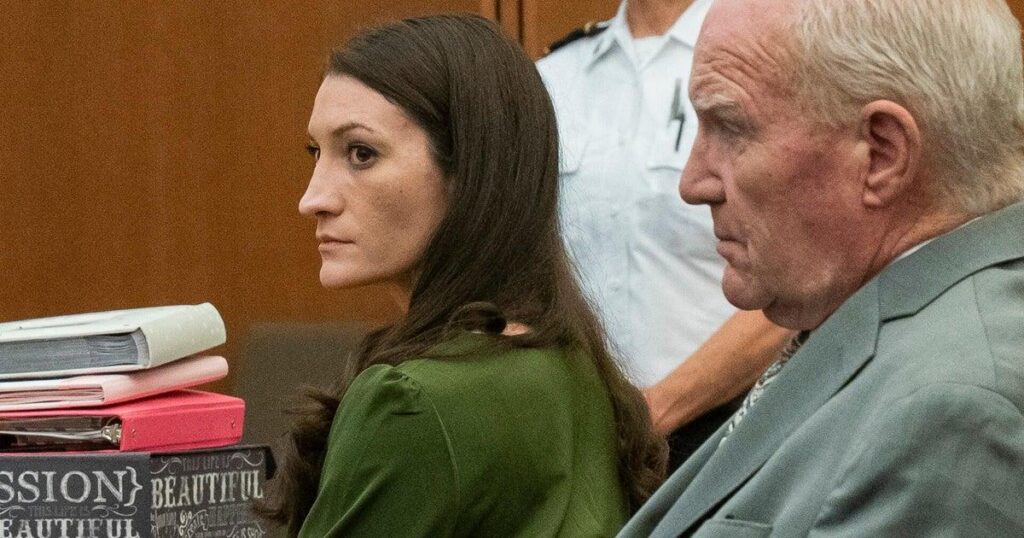
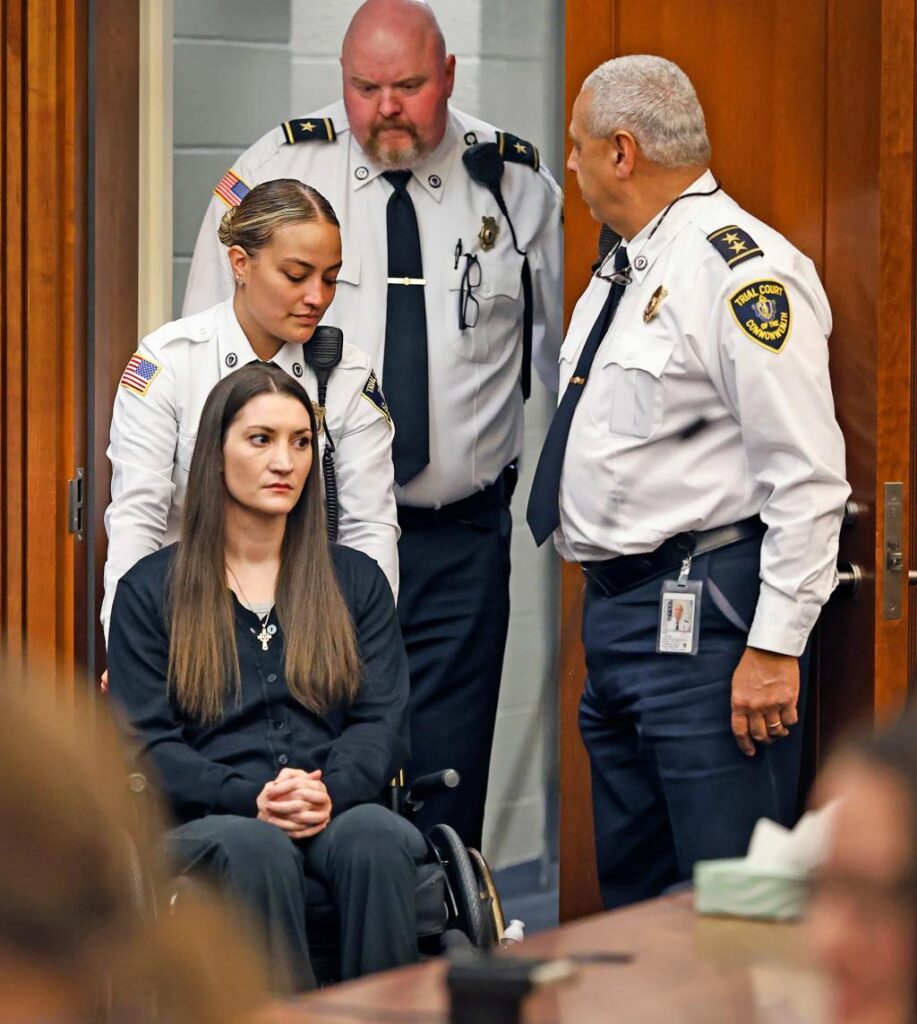
Clancy was arraigned from her hospital bed on February 7, 2023, and pleaded not guilty. A grand jury indicted her in September 2023 on three counts of murder and related strangulation charges. Investigators executed eleven search warrants, collecting the exercise bands, medications, phones and other items from the home. Clancy remained under state custody, largely in hospital settings, throughout a pre-trial period stretching more than three years amid disputes over expert reports and medical records.
The case drew national attention in part because it defied familiar narratives: Clancy had no criminal history, was widely described as a loving mother, and had actively sought psychiatric help in the months before the killings.
The central question: murder or severe mental illness?

Under Massachusetts law, the case turned on “criminal responsibility” — whether Clancy could appreciate the wrongfulness of her actions and control her conduct at the time. Her defence argued she could not, because she was suffering postpartum psychosis.
Postpartum psychosis is a rare, severe psychiatric emergency that can develop after childbirth, affecting roughly one to two mothers per thousand births, according to a 2017 systematic review in BMC Psychiatry cited in ABC News’ coverage of the trial. It is distinct from far more common postpartum depression and anxiety, typically involving rapid-onset delusions, hallucinations, severe confusion and loss of touch with reality, alongside dramatic mood disturbance.
Forensic and reproductive psychiatrists, including Dr Susan Hatters Friedman of Case Western Reserve University, stress the condition is treatable — often with lithium, antipsychotic medication or electroconvulsive therapy — and that the vast majority of women who experience it never harm themselves or their children. Experts caution strongly against conflating postpartum psychiatric illness generally with violence, noting the condition is frequently misdiagnosed and that sufferers often cannot recognise, because of the illness itself, that anything is wrong.
What the defence argued
Clancy’s lawyers did not dispute that she killed her children. They argued she should not be held responsible because she was suffering postpartum psychosis, compounded by what they called chaotic psychiatric treatment involving more than a dozen medications in four months — in effect, a woman failed by the system she repeatedly turned to for help.
Central to their case was Clancy’s account, relayed through medical staff and family, that she began hearing a male voice in the days after the killings directing her to kill her children and herself. A defence forensic psychiatrist diagnosed her afterward with postpartum psychosis and bipolar disorder. Friends, relatives and former colleagues testified she had shown no prior signs of being a danger to her children, describing attentive, future-oriented parenting inconsistent, they said, with psychosis. Prosecutors disputed elements of this account, particularly noting the reported hallucinations were not documented until after the children were already dead.
What prosecutors argued
Led by Assistant District Attorney Jennifer Sprague, prosecutors called more than 70 witnesses and argued Clancy “acted intentionally, rationally and swiftly,” describing her in closing arguments as a “functioning mom” who knew right from wrong.
Their case rested heavily on what they characterised as planning: the timing of the errand, the phone calls made during it, and Clancy’s alleged searches regarding how long it would take. A government psychiatrist, Dr Gregory Saathoff, testified Clancy could still distinguish right from wrong and control her behaviour, citing what he called “preparatory planning,” including that the killings occurred specifically when no witness was present. Sprague urged jurors not to treat the trial as, in her words, a public debate about women’s mental health and the medical system, but a question of what happened on one specific night.
The psychiatric experts
The trial featured extensive, directly conflicting expert testimony — common in cases turning on a defendant’s mental state years in the past. Defence experts concluded Clancy suffered from postpartum psychosis and bipolar disorder severe enough to impair her responsibility. Prosecution experts concluded that whatever distress she experienced did not meet the legal threshold, pointing to evidence of awareness and self-control.
Both sides accepted Clancy was in some form of psychiatric distress; the dispute was over whether it met the specific legal bar Massachusetts sets for excusing criminal responsibility, a distinction experts said the jury, not the psychiatrists, ultimately had to weigh.
Patrick Clancy’s testimony and response
Patrick Clancy, who divorced Lindsay after the deaths, testified for the prosecution over two days in July 2026, describing his wife’s decline, her treatment, and the events of the day. He testified it “didn’t really seem like she was getting any treatment” during her McLean stay, and described discovering the children after the 911 call; he left the courtroom when the recording was played and did not return for the rest of the trial.
From days after the killings, Patrick Clancy has said publicly he does not view Lindsay as morally culpable. In a GoFundMe post four days afterward, he asked people to “find it deep within yourselves to forgive Lindsay, as I have.” In an October 2024 New Yorker interview he said he had not been married to someone evil, but to someone who became sick. He has since remarried and moved to New York. Analysts described his testimony as significant for the defence, since his account went directly to Clancy’s state of mind — though his personal forgiveness is a moral position, not a legal finding, and does not itself resolve the question of criminal responsibility.
The trial begins in 2026
Jury selection began in July 2026 at Plymouth Superior Court before Judge William Sullivan. The trial ran roughly five weeks, with testimony from more than 80 witnesses — 74 for the prosecution, 10 for the defence — including clinicians, forensic psychiatrists, relatives and police.
Clancy pleaded not guilty to first-degree murder, charged under theories of deliberate premeditation and, alternatively, extreme atrocity or cruelty, with manslaughter available as a lesser option. Jurors were instructed they could weigh evidence of mental impairment or prescription-drug effects in deciding whether she had the capacity to form murderous intent. Clancy did not testify.
The jury deliberations
Jurors began deliberating in late August after closing arguments lasting roughly two hours. Reddington called his client “a nurse, daughter, wife” and “a darned good mother”; Sprague argued the killings were calculation, not delusion.
Deliberations stretched over seven days, totalling around 38 hours, without a unanimous verdict. The jury foreperson sent the court at least two notes describing difficulty with one juror, whom the defence said was refusing to follow instructions on weighing the psychosis defence. On September 3, Reddington asked Judge Sullivan to dismiss that juror, then filed an emergency appeal to the Massachusetts Supreme Judicial Court arguing the juror’s reasoning reflected “a bias against those who suffer from debilitating mental illness.” The court declined the request on the morning of September 4.
That afternoon the jury sent a final note: “It is with a heavy heart that we report we are unable to come to a unanimous decision, and we will not be able to.” Reporting on the breakdown has described an 11–1 split, though that specific figure has not been independently confirmed beyond accounts attributed to the defence and reporters covering the case.
September 4, 2026: the mistrial
With the jury deadlocked and the Supreme Judicial Court declining to intervene, Judge William Sullivan declared a mistrial that afternoon at Plymouth County Superior Court.
It is important to be precise about what this means. A mistrial is not a conviction and not an acquittal. It is a recognition that this jury could not reach the unanimous verdict Massachusetts law requires, either way. The original charges remain legally unresolved — Clancy has neither been found guilty nor cleared of responsibility. Under double jeopardy protections, a mistrial from a genuine deadlock does not bar prosecutors from bringing the same charges again before a new jury.
What happens now?
Judge Sullivan told both sides he wanted the case retried “sooner rather than later,” though he said he was not yet sure exactly when, and set a status conference for later in September. Reddington said he wanted a retrial to begin quickly and indicated he would ask, unusually, for the next jury to be sequestered given the case’s extensive coverage. Prosecutors have given no indication they intend to abandon the charges. Whether and precisely when a retrial proceeds remains to be determined at the status conference scheduled for September 29, 2026; no new trial date had been confirmed as of this writing.
The wider debate over postpartum psychosis
The trial has already had an effect beyond the courtroom. Reproductive psychiatrists, including Dr Hatters Friedman, have used the attention to press for greater awareness of postpartum psychosis among obstetricians, midwives and paediatricians, noting warning signs are often subtle — unusual paranoia, confusion or irritability, particularly alongside severe sleep deprivation — rather than dramatic hallucinations alone.
Specialists emphasise that, properly identified, postpartum psychosis responds well to treatment and that most women who experience it recover fully without harming anyone. Several drew comparisons to Andrea Yates, the Texas mother who killed her five children in 2001 and was later found not guilty by reason of insanity, though they caution each case turns on its own facts and legal standard. The case has also renewed scrutiny of how the healthcare system manages complex, fast-evolving postpartum psychiatric symptoms when multiple providers prescribe and adjust medication without close coordination, as appears to have happened here.
A case that raises difficult questions
Nearly four years after Cora, Dawson and Callan Clancy died, the question of their mother’s criminal responsibility remains unanswered. A jury heard weeks of testimony from physicians, forensic psychiatrists, family and police, and still could not agree.
The case sits at the intersection of hard, unresolved questions: how the legal system should weigh severe psychiatric illness against evidence read as planning; how reliably experts can reconstruct a defendant’s state of mind years later; and how a healthcare system might better manage mothers in psychiatric crisis. None were settled by the mistrial, and none will necessarily be settled by whatever jury hears the case next.
As of September 6, 2026, Lindsay Clancy has not been convicted of any crime and has not been acquitted. She remains under court-ordered care, the original charges stand, and the case is expected to return to court later this month for the status conference that will determine what comes next.
This article discusses child deaths, suicide and severe mental illness. If you or someone you know is struggling with thoughts of suicide or self-harm, in the US you can call or text 988 to reach the Suicide and Crisis Lifeline. For support with postpartum mood or anxiety disorders, Postpartum Support International can be reached at 1-800-944-4773.