
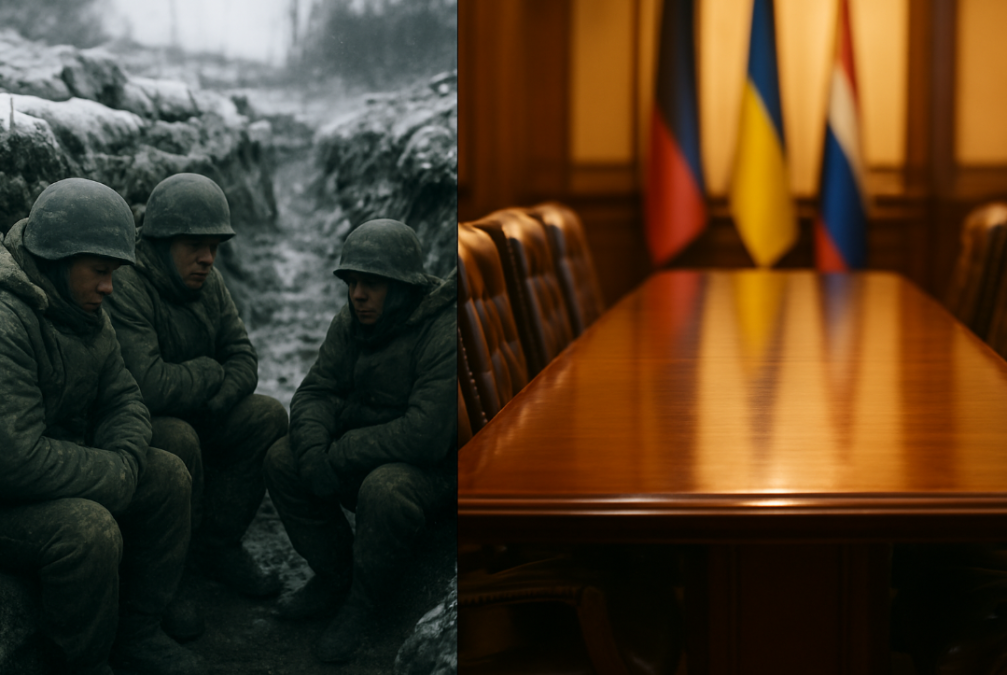
Ukraine War 2026 Forecast: Why Putin Wants Conflict, Not Peace
The diplomatic world focuses on high-profile summits in Moscow, London, and Alaska. However, the reality on the ground in Ukraine tells a much darker story. The Trump administration pushed to bring the war to a close. Despite this, the signs from the frontline suggest that Vladimir Putin is preparing for expansion, not resolution.
As we look toward the new year, the gap between political rhetoric and military reality is widening. For the UK, it raises uncomfortable questions about the honesty of our leadership with the public.
The “Peace” Smokescreen
Casualty rates are currently exceeding a thousand men a day, killed or wounded. The situation is not winding down. Ukrainian military leadership believes that the Kremlin is using the current focus on negotiations as strategic cover.
While diplomats shake hands, Russian forces are attempting to seize more territory. The logic is brutal but simple: use the distraction of peace talks to maximize leverage before any potential ceasefire freezes the lines.
Russia’s Permanent War Economy
The most telling indicator that Putin is not planning for a long-term peace lies in Russia’s industrial posture. Over the last few years, Moscow has fundamentally rewired its economy, directing massive portions of state spending toward the military and mobilizing its workforce for ammunition production.
Dismantling a war economy takes almost as much effort as building one. The fact that Moscow has made no move to slow down its weapons manufacturing or reduce its 710,000-strong troop deployment suggests that any upcoming “peace” is merely a pause. It is a chance for Russia to rest and rearm before the next offensive.
The European Dilemma
With the Trump White House prioritizing “American interests” over traditional alliances, the ironclad guarantee of NATO’s Article 5—an attack on one is an attack on all—feels increasingly fragile. This has forced European nations to face a terrifying reality: they may soon have to deter Russia without the full backing of the United States.
However, the reaction across Europe has been uneven:
- France has adopted a grim candour, with officials openly warning that French families must be prepared for the possibility of losing children in a conflict with Russia.
- Germany has reintroduced medical checks for all 18-year-old men, a precursor to potential national service.
The Silence in London
This brings us to the United Kingdom. While Paris and Berlin are psychologically preparing their populations for the worst-case scenario, the conversation in London remains strikingly muted.
Prime Minister Keir Starmer has yet to have the frank, difficult conversation with the British public that the times demand. While UK military chiefs speak of “warfighting readiness,” this technical jargon fails to resonate with the average citizen.
There is a fundamental difference between an army being ready and a nation being ready. As the security landscape shifts, the UK risks being caught off guard—not because our soldiers aren’t capable, but because the public has been shielded from the reality that, ultimately, countries fight wars, not just armies.
If a peace deal forces Ukraine to surrender land in the Donbas without credible security guarantees, it invites a future where Russia tests NATO’s borders next. The question remains: is the UK public prepared for what that actually means?