
Israeli Air Strike Destroys Strategic Qasmiyeh Bridge in Lebanon, Escalating Regional Tensions
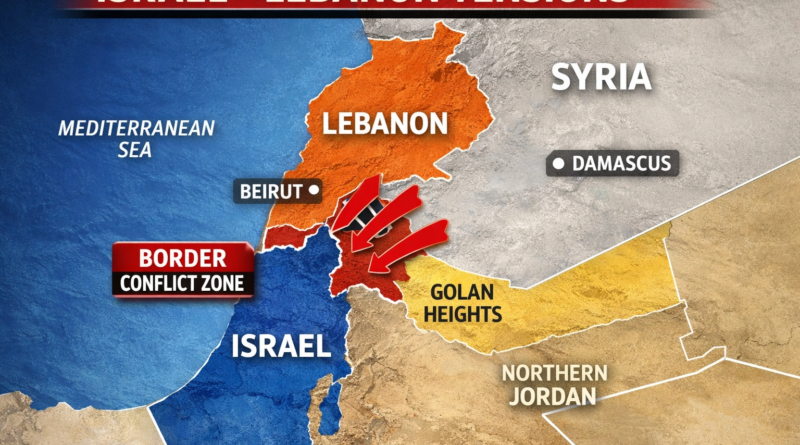
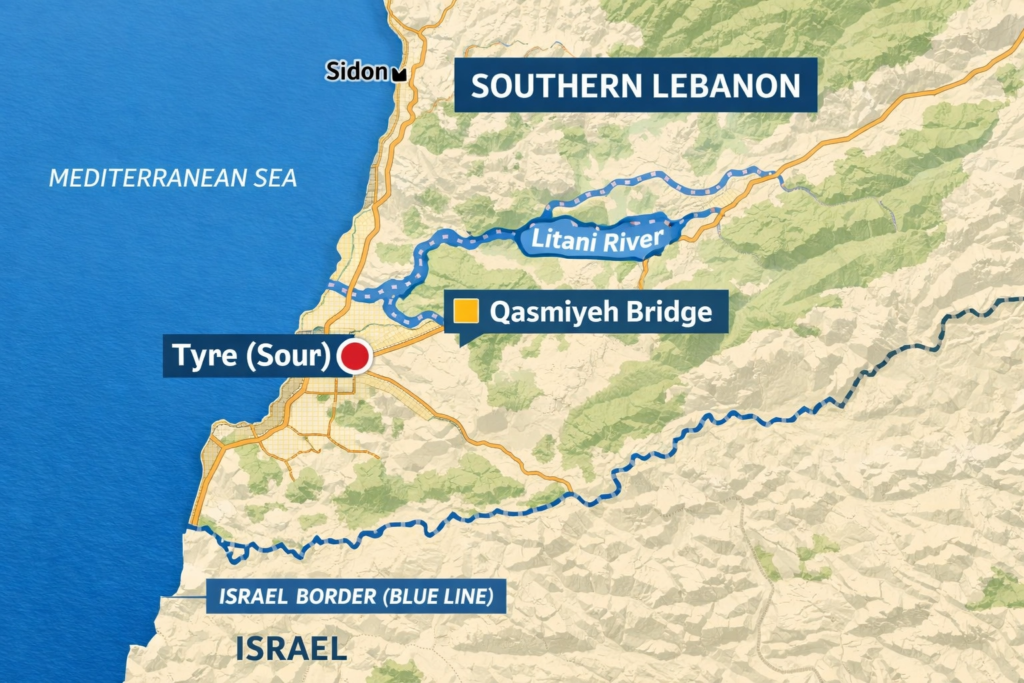
An Israeli air strike on Sunday, March 22, 2026, destroyed the Qasmiyeh Bridge over the Litani River in southern Lebanon, a critical artery connecting the country’s south to its central regions. The strike, near the coastal city of Tyre (Sour), has been condemned by Lebanese authorities as an act of collective punishment and a potential precursor to a ground invasion, further escalating already volatile regional tensions.
The Strike and its Immediate Aftermath
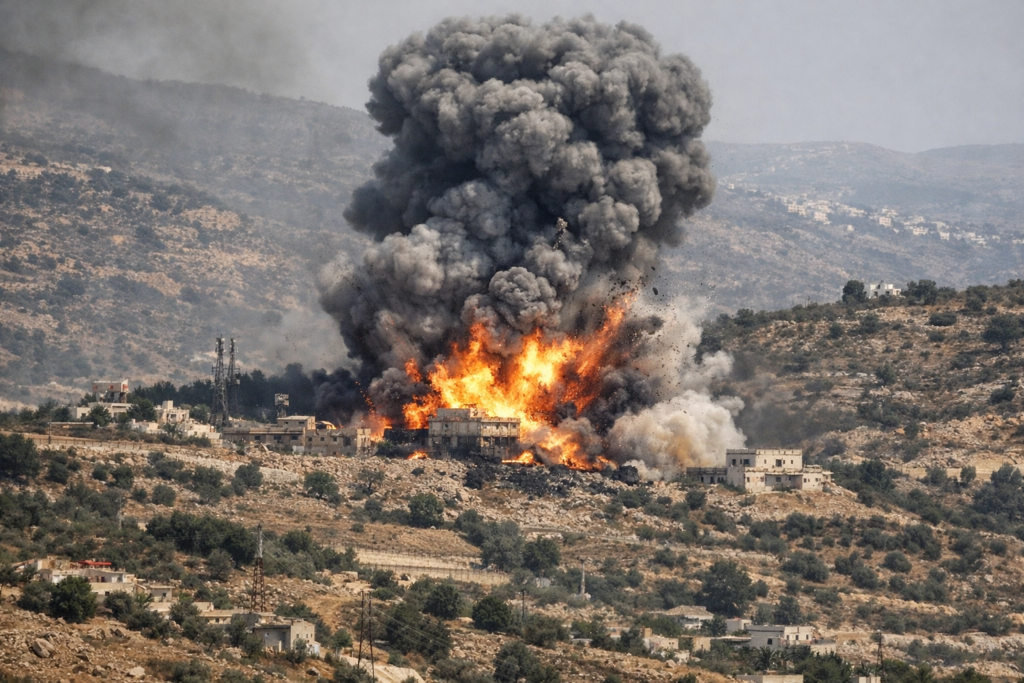
The Qasmiyeh Bridge, a significant structure along the coastal highway (M51), was targeted in a precision air strike by the Israeli military. Eyewitness accounts and initial reports indicate substantial damage, rendering the bridge impassable. Plumes of smoke and debris were seen rising from the site following the explosion, effectively severing a key transportation link. The timing of the strike followed renewed clashes between Israeli forces and Hezbollah, with a barrage of missiles reportedly launched towards Israel from Lebanese territory.
Strategic Importance of the Qasmiyeh Bridge
The Qasmiyeh Bridge holds immense strategic value, serving as a primary conduit for movement between Sidon to the north and the southern cities of Tyre and Naqoura. Its destruction not only disrupts civilian travel but also significantly impacts logistical routes in the region. For years, the Litani River and its crossings have been points of contention, with Israel frequently accusing Hezbollah of utilizing these routes for the movement of fighters and weaponry. The Israeli Defense Minister, Israel Katz, explicitly stated that the military was ordered to destroy all bridges over the Litani River that are allegedly used by Hezbollah for “terrorist activity.”
Military Context and Israeli Objectives
The strike on the Qasmiyeh Bridge is part of a broader Israeli military campaign in southern Lebanon. This campaign, according to Israeli statements, aims to prevent Hezbollah militants from maneuvering and to establish a buffer zone south of the Litani River. Israeli officials have indicated a strategy of isolating southern Lebanon from the rest of the country, accusing Hezbollah of using these crossings to smuggle weapons and personnel. Defense Minister Katz also controversially mentioned accelerating the destruction of Lebanese homes in border areas, drawing parallels to the “Beit Hanoun and Rafah models” in Gaza – a reference to heavily bombarded areas during the Gaza War. This approach suggests a concerted effort to reshape the security landscape along the Israel-Lebanon border.
Human Impact and Humanitarian Concerns
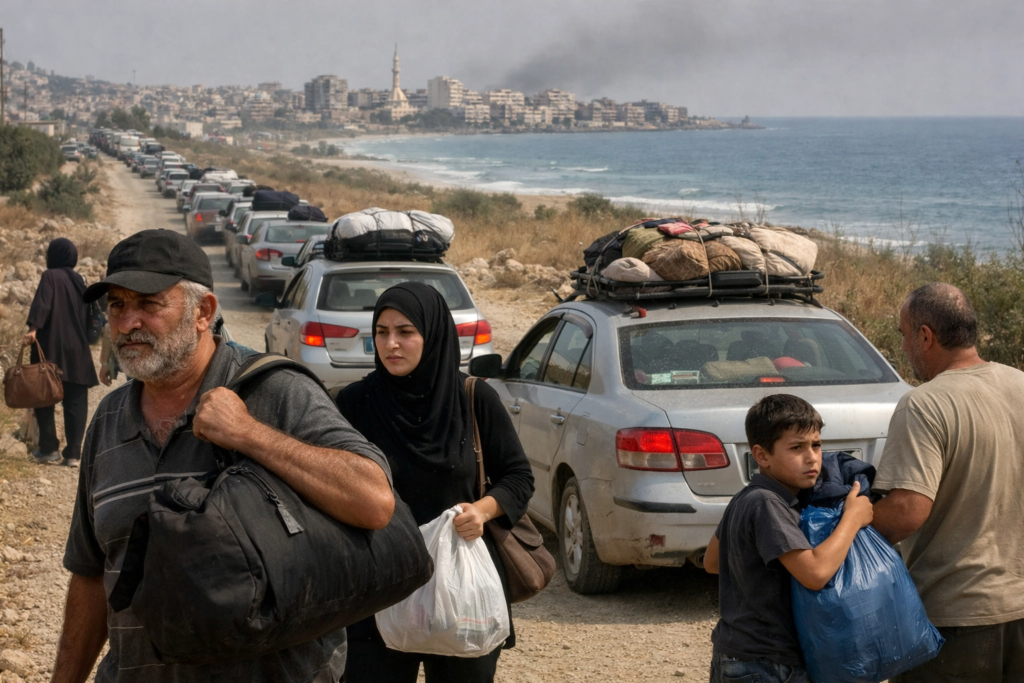
The destruction of the Qasmiyeh Bridge carries severe humanitarian implications. By isolating southern Lebanon, the strike directly affects evacuation routes for civilians attempting to flee the conflict zone. Furthermore, it significantly impedes the delivery of crucial humanitarian aid to a region already grappling with a dire crisis. The ongoing conflict has led to the displacement of over a million people in Lebanon, with more than 1,000 fatalities, including a significant number of children and medical personnel. The latest Israeli actions, particularly the targeting of infrastructure, exacerbate the challenges faced by aid organizations and the civilian population, raising concerns about collective punishment and violations of international humanitarian law.
Regional Implications and Risk of Escalation
Lebanese President Joseph Aoun vehemently condemned the Israeli strike, characterizing it as a “dangerous escalation” and a “blatant violation of Lebanon’s sovereignty.” President Aoun warned that such actions could be a “prelude to a ground invasion,” a prospect Lebanon has consistently cautioned against through diplomatic channels. He further asserted that targeting bridges and other infrastructure is an attempt to sever geographical connections and establish a buffer zone, which he views as part of “suspicious schemes to establish a buffer zone, solidify the occupation, and pursue Israeli expansion within Lebanese territory.” The strike intensifies fears of a wider regional conflict, potentially drawing in other actors, including Iran, which backs Hezbollah. The international community remains on edge, closely monitoring developments for any signs of further destabilization.
International Reactions
International responses to the escalating situation have been marked by concern and calls for de-escalation. The United States, while a staunch ally of Israel, has issued global security warnings to its citizens, acknowledging the potential for increased volatility in the region. Both the US and Israel have previously warned of severe consequences should Iranian-backed groups launch attacks against Israel. The United Nations has criticized the destruction of civilian infrastructure in conflict zones, reiterating the importance of protecting non-combatants and ensuring humanitarian access. However, a unified and strong international condemnation specifically regarding the Qasmiyeh Bridge strike has yet to fully materialize, reflecting the complex geopolitical dynamics at play.
Why This Matters Now and What Could Happen Next
The destruction of the Qasmiyeh Bridge is more than just a military tactic; it represents a significant escalation in the ongoing shadow war between Israel and Hezbollah, and by extension, Iran. The Israeli military’s explicit mention of applying “Gaza models” to Lebanon suggests a potential shift towards more aggressive and destructive tactics aimed at dismantling Hezbollah’s operational capabilities and infrastructure. This strategy, however, risks catastrophic humanitarian consequences and could further radicalize the local population. The isolation of southern Lebanon could lead to increased civilian suffering and displacement, creating a fertile ground for resentment and prolonged instability.
Furthermore, President Aoun’s warning of a ground invasion cannot be dismissed lightly. The systematic targeting of key infrastructure could be interpreted as an attempt to soften the ground for a larger military incursion, aiming to create a buffer zone that Israel believes will enhance its security. Such an invasion would undoubtedly trigger a fierce response from Hezbollah and potentially draw in other regional powers, transforming the current conflict into a full-scale regional war. The international community’s muted response thus far may embolden parties to pursue more aggressive actions, believing there will be no significant repercussions.
The Israeli air strike on the Qasmiyeh Bridge marks a dangerous turning point in the Israel-Lebanon conflict. While Israel asserts its right to self-defense and aims to neutralize threats from Hezbollah, the methods employed carry a heavy cost for the civilian population and the stability of the entire region. The destruction of vital infrastructure, coupled with the rhetoric of applying tactics seen in Gaza, paints a grim picture for the future. The international community faces a critical challenge in de-escalating tensions, protecting civilians, and preventing the conflict from spiraling into a wider, more devastating regional conflagration. The coming days will be crucial in determining whether diplomacy can prevail or if the region is destined for further bloodshed and instability.