
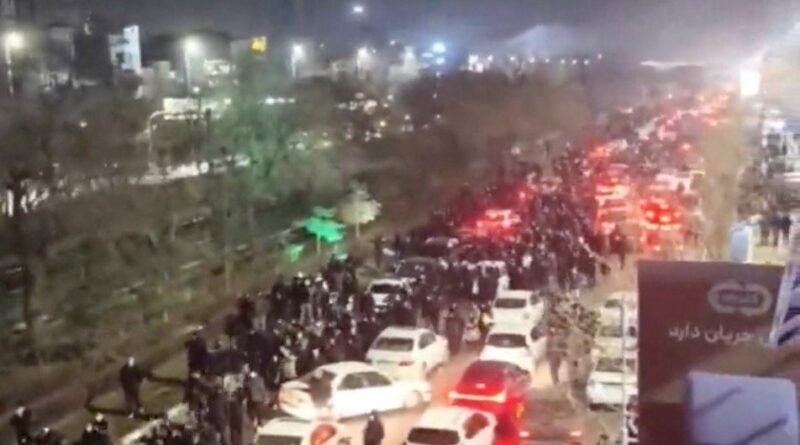
Iran warns of retaliation as protests continue despite deadly crackdown
Iran has warned it will respond forcefully if attacked by the United States, as fresh protests erupted across the country despite an intensified security crackdown that activists say has left hundreds dead.
Demonstrators returned to the streets late on Saturday, defying warnings from authorities. Iran’s police chief said on state television that security forces had escalated their response as unrest entered its second week.
Medical staff at two hospitals told international journalists that more than 100 bodies were received over a 48-hour period. Human rights monitors believe the nationwide death toll is significantly higher. The US-based Human Rights Activists News Agency says it has confirmed the deaths of at least 490 protesters. They also confirmed 48 members of the security forces have died. More than 10,000 people are detained.
US pressure and Iranian warnings
Washington has warned Tehran over the killing of protesters. Donald Trump said the United States “stands ready to help” and suggested Iran was facing a moment of historic change, though he did not specify what action might be taken.
US officials have confirmed that military options have been discussed. They have also considered alternative measures like cyber operations. Expanded sanctions and support for anti-government communications are included among these measures.
In response, Iran’s parliamentary speaker warned that any US military action would trigger retaliation. He stated that American forces and shipping in the region, as well as Israel, would become legitimate targets.
Roots of the unrest
The protests began in Tehran, initially driven by soaring inflation and economic hardship. They have since evolved into broader calls for an end to clerical rule and the removal of Ayatollah Ali Khamenei.
Iran’s attorney general declared that participation in protests would be treated as an offence against God, a charge that can carry the death penalty. Khamenei has dismissed demonstrators as “vandals” acting in the interests of foreign powers.
President Masoud Pezeshkian accused the US and Israel of orchestrating the unrest, alleging without evidence that foreign-backed groups had carried out attacks on mosques and markets.
Hospitals overwhelmed and information blackout
Hospital staff across several cities said they were struggling to cope with the scale of casualties. One health worker in Tehran said many of the injured had suffered gunshot wounds to the head or chest, with some dying shortly after arrival.
International media access inside Iran remains severely restricted. Authorities imposed a near-total internet shutdown, limiting connectivity even on the country’s domestic network. Experts say the blackout is more extensive than during the 2022 “Women, Life, Freedom” protests.
Despite restrictions, verified footage has emerged showing clashes between protesters and security forces in cities including Mashhad, Ilam, and Tehran. Videos analysed by independent investigators show live ammunition being fired towards crowds and hospital areas.
Exiled royal issues message
Reza Pahlavi, the US-based son of Iran’s last shah, issued a message urging protesters to continue demonstrations while prioritising safety. He claimed that parts of Iran’s security apparatus were refusing orders to suppress the protests , a claim that could not be independently verified.
Human rights organisations, including Amnesty International, said they were reviewing reports of intensified and unlawful use of lethal force against civilians.
The current unrest is the most widespread since protests in 2022 following the death of Mahsa Amini while in morality police custody, when hundreds were killed and tens of thousands detained.