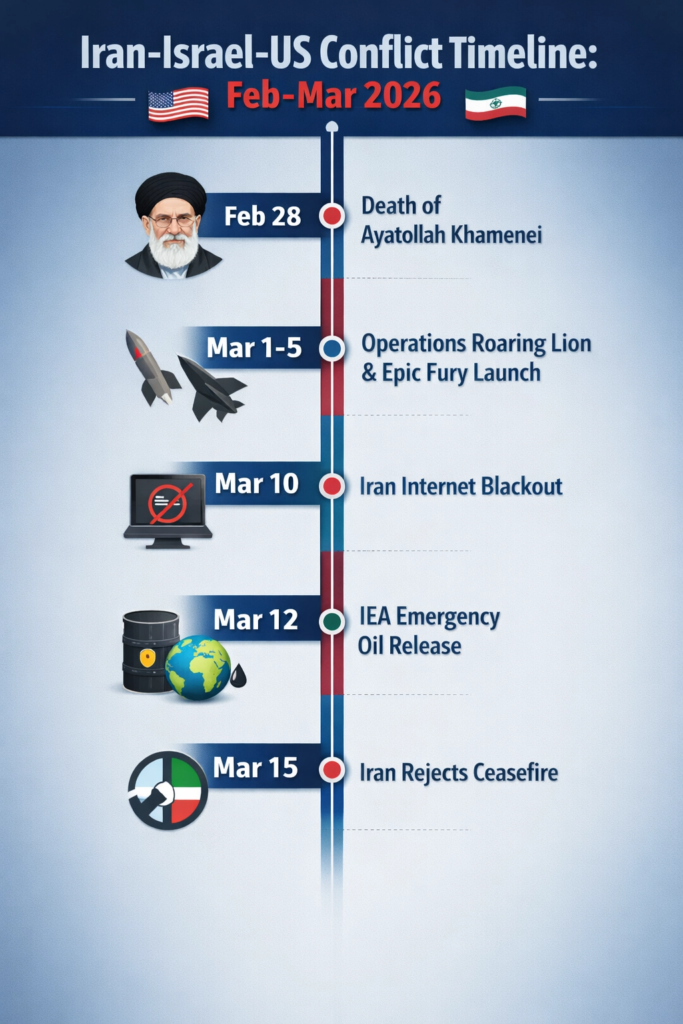

Iran Rejects Ceasefire Talks as Conflict with Israel and US Escalates
The conflict between Iran, Israel, and the United States is escalating. It has reached a critical juncture. Recent statements from Iranian Foreign Minister Abbas Araghchi underscore Tehran’s firm stance against de-escalation. Araghchi stated clearly that Iran has not requested a ceasefire. He also said negotiations with the United States are “no longer on the agenda.” This assertion opposes claims by US President Donald Trump. He suggested Iran desires a deal. However, he believes the current terms are insufficient. The diplomatic deadlock highlights the deep-seated mistrust and divergent objectives driving the current hostilities.
The military situation remains highly volatile. Israel has intensified its military operations with the United States. Meanwhile, Iran has responded with a series of missile attacks. The joint US-Israeli offensive has two codenames. The US calls it “Operation Roaring Lion.” Israel uses “Operation Epic Fury.” These operations aim to dismantle Iran’s military infrastructure. They also target its security apparatus. This has been met with significant Iranian retaliation, pushing the region closer to a full-scale war .
Expanding Israeli Military Operations
Israel’s military actions have been characterized by precision airstrikes deep within Iranian territory. These operations have primarily targeted sites linked to the Islamic Revolutionary Guard Corps (IRGC), a key component of Iran’s military and political power. Reports indicate that Israeli air strikes have hit locations in western and central Iran, including critical infrastructure . The strategic objective behind these strikes is to weaken Iran’s military capabilities and degrade its ability to project power regionally.
Of particular significance are the attacks on Iranian nuclear facilities. Satellite imagery confirms damage to sites like Natanz. Reports from international watchdogs, such as the International Atomic Energy Agency (IAEA), also confirm the damage. While the IAEA has stated that no radiological consequences are expected, the strikes have reportedly damaged entrances and several buildings at the underground facility. This aggressive targeting underscores Israel’s long-standing security concerns regarding Iran’s nuclear program, which it views as an existential threat. Israel maintains that Iran’s nuclear ambitions extend beyond peaceful purposes, a claim Tehran consistently denies. The intensity of these operations, involving advanced aircraft like the F-35I “Adir” jets, signals a determined effort to neutralize perceived threats.
Iranian Military Response
Iran has not hesitated to retaliate, launching a series of missile attacks towards Israel. These responses have included ballistic missiles and, reportedly, hypersonic projectiles, targeting major Israeli urban centers such as Tel Aviv. Videos and news reports from mid-March 2026 confirm that these attacks have affected various areas within Israel, raising the specter of widespread civilian casualties and infrastructure damage . The Islamic Revolutionary Guard Corps (IRGC) has claimed successful launches, indicating a readiness to escalate the conflict.
The military balance between the two sides is complex. Israel possesses a technologically advanced military supported by the United States. Iran, on the other hand, has developed a significant arsenal of missiles and drones. They also have a large and well-trained ground force. The exchange of strikes shows each side’s capabilities. It also reveals their willingness to use these capabilities. This situation increases the risk of further, uncontrolled escalation. The sheer volume of Iranian projectiles, over 2,000 missiles and drones launched by mid-March, highlights the scale of Tehran’s response.
Civilian Impact Inside Iran
The conflict has had a devastating impact on ordinary citizens within Iran. Cities like Tehran have experienced significant damage from Israeli airstrikes, leading to widespread fear and disruption. Beyond the immediate physical destruction, the war has exacerbated an already precarious economic situation. Iran was grappling with high inflation. The country faced food insecurity even before the current escalation. The conflict has pushed Iran closer to economic collapse.
Reports from residents paint a grim picture of daily life under siege. Interviews reveal widespread uncertainty. Anxiety is pervasive, with citizens facing shortages of essential goods. They are also experiencing a rapidly deteriorating quality of life. The economic consequences are not merely theoretical. They present tangible realities for millions of Iranians. These individuals are now confronting the dual challenges of military conflict and severe economic hardship.
Internet Blackout and Information Control
In a move that has drawn international condemnation, Iran has implemented a near-total internet shutdown across the country. This blackout severely curtailed communication. Information flow was drastically reduced. Connectivity dropped by an estimated 97-99%. It lasted for over 240 hours in some areas. The shutdown has deeply affected journalists, activists, and ordinary citizens. It is now exceedingly difficult for them to report on events. They also face challenges in communicating with the outside world.
Despite the government’s efforts to control information, reports have emerged of individuals using satellite internet services. Services such as Starlink help them bypass the restrictions. Starlink reportedly waived subscription fees for users inside Iran. It has become a vital lifeline for some seeking to access uncensored information. It also helps them maintain contact. This digital cat-and-mouse game highlights the regime’s determination to manage the narrative surrounding the conflict. It also reflects the public’s strong desire for unfiltered news. The internet blackout significantly hinders global understanding of the true extent and impact of the conflict within Iran.
Regional Spillover of the War
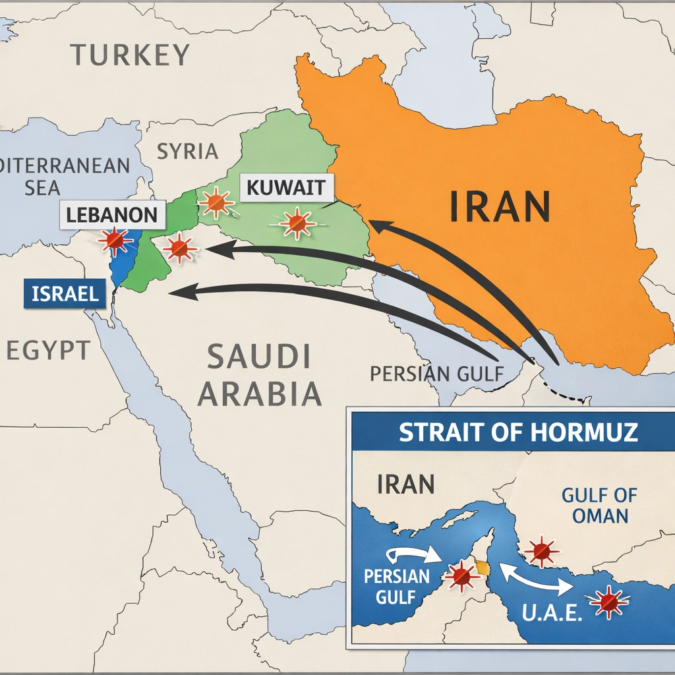
The conflict’s repercussions extend far beyond the borders of Iran and Israel, threatening to engulf the wider Middle East in a regional conflagration. Lebanon has experienced strikes and casualties, with reports of UN peacekeepers (UNIFIL) being fired upon, likely by non-state armed groups . This highlights the fragility of the security situation in neighboring countries and the potential for proxy conflicts to ignite.
Further afield, a drone attack targeted the Ali Al Salem base in Kuwait. This base houses US and Italian forces. The attack resulted in the destruction of an Italian remotely piloted aircraft. This incident directly implicates external actors and demonstrates the broadening scope of the hostilities. Various regional and international players are involved. Iran threatens retaliation against Gulf nations seen as aiding the US and Israel. These factors significantly increase the risk of the conflict becoming a wider regional war. The consequences are unpredictable.
Global Energy and Economic Impact
The conflict has sent shockwaves through global energy markets, primarily due to the critical role of the Strait of Hormuz. This narrow waterway, through which approximately 20% of the world’s oil passes, has seen significant disruptions to shipping. The flow of oil has reportedly slowed to a “trickle.” This has led to a substantial drop in global supply. It is estimated at 8 million barrels per day (bpd) in March.
The International Energy Agency (IEA) responded to the escalating crisis. It announced its largest-ever emergency oil release. They deployed 400 million barrels to stabilize markets. Despite these efforts, oil prices have risen sharply, impacting economies worldwide. The disruption to a vital global trade artery highlights the global economy’s interconnectedness. It also shows the far-reaching consequences of regional instability. The longer the conflict persists, the greater the threat of sustained high energy prices and broader economic downturns.
Nuclear Programme Tensions
The issue of Iran’s nuclear program remains a central and highly contentious aspect of the conflict. Israel and the United States assert that Iran is pursuing nuclear weapons. Tehran vehemently denies this claim. The Iranian government insists its program is for peaceful energy purposes. The recent Israeli strikes on Iranian nuclear facilities, particularly Natanz, have brought this issue to the forefront once again.
The full extent of the damage to these facilities is still being assessed. However, the attacks signal a clear intent by Israel and its allies. They aim to prevent Iran from developing nuclear weapons capabilities. The destruction of key infrastructure, even if not immediately leading to radiological consequences, sets back Iran’s nuclear advancements. This ongoing tension over the nuclear program acts as a constant flashpoint. It fuels the broader conflict. It complicates any potential diplomatic resolutions.
Possible Future Scenarios
The future trajectory of the Iran-Israel-US conflict is fraught with uncertainty, with several possible scenarios emerging. The prospect of negotiations, while currently dismissed by Iran, remains a potential path to de-escalation. However, the deep mistrust and maximalist positions held by all parties make a swift diplomatic resolution unlikely.
Conversely, the risk of a prolonged regional war is substantial. Proxy groups become involved. They target international assets. Additionally, economic pressures on various nations lead to a prolonged and devastating conflict across the Middle East. The economic consequences for the region, and indeed for global markets, would be severe, triggering a worldwide recession. The international community faces the daunting challenge of navigating this complex geopolitical landscape. They hope to find a balanced outlook that can avert further catastrophe.