
Iran Yet to Confirm Islamabad Talks as US-Iran Ceasefire Nears Expiry
Tehran Holds Back as Washington Presses for New Round of Negotiations in Pakistan
Iran has not yet decided whether it will send a delegation to Islamabad for a fresh round of talks with the United States, raising new doubts over efforts to prevent a return to open conflict.
With the current ceasefire due to expire on Wednesday, officials in Pakistan, Washington and Tehran are racing to keep diplomacy alive. Yet the atmosphere surrounding the proposed meeting has become increasingly tense after the United States tightened its naval blockade, intercepted vessels linked to Iran and warned that military action could resume within days.
Iranian foreign ministry spokesman Esmail Baghaei said Tehran had still not reached a decision on whether its representatives would travel to the Pakistani capital.
Speaking amid growing uncertainty, Baghaei accused Washington of undermining negotiations through military pressure and shifting demands.
“We entered these talks seriously and in good faith,” he said. “But the other side has repeatedly changed its position and combined diplomacy with threats.”
The remarks underline how fragile the ceasefire has become after two weeks of indirect diplomacy, military incidents and increasingly aggressive public statements.
Trump Signals Time Is Running Out
US President Donald Trump has insisted that Iran must attend the talks, while at the same time warning that he is prepared to resume strikes if negotiations fail.
In an interview with CNBC, Trump said he believed Iran had “no choice” but to send delegates to Islamabad. But he also indicated that he did not want to extend the ceasefire beyond Wednesday.
“I don’t want to do that,” he said when asked whether he would prolong the truce if talks were still making progress.
Trump went further, suggesting that renewed bombing remained likely unless Tehran accepted a deal.
“I expect to be bombing, because that would be a better attitude,” he said.
The comments have added urgency to diplomatic efforts in Islamabad, where Pakistan has been attempting to arrange a second round of direct talks between the two sides.
American officials had been expected to arrive in Pakistan on Tuesday. US media reports suggested Vice-President JD Vance could once again lead the American delegation after attending earlier talks in Islamabad this month.
However, by Tuesday afternoon no senior American delegation had publicly arrived, while Iran had yet to announce whether it would participate.
The uncertainty has left the future of the negotiations hanging in the balance.
Pakistan Tries to Keep Diplomacy Alive
Pakistan has played an increasingly important role as a mediator since the ceasefire was announced on 8 April.
Officials in Islamabad had hoped that a second round of talks could take place before the truce expires. Preparations appeared to be under way in the heavily guarded diplomatic district of the Pakistani capital, where roads around major government buildings and hotels have been blocked off for days.
But Pakistan has now publicly acknowledged that Iran may refuse to attend.
Information Minister Attaullah Tarar said his government remained in constant contact with Tehran but had not yet received confirmation that Iranian representatives would travel.
“Pakistan has made sincere efforts to convince the Iranian leadership to participate in the second round of talks and these efforts continue,” he said.
The Pakistani foreign ministry has also urged both sides to give diplomacy more time.
Deputy Prime Minister Ishaq Dar held talks with senior US diplomats in Islamabad on Tuesday and stressed that dialogue remained “the only viable means” of achieving lasting stability.
Pakistan is now facing one of its most difficult diplomatic tests in years.
For Islamabad, successfully hosting talks between the United States and Iran would strengthen its standing on the world stage. Failure, however, could leave Pakistan trapped between two increasingly hostile powers.
Seizure of Vessel Deepens Iranian Anger
One of the main reasons for the latest uncertainty appears to be a US operation at sea over the weekend.
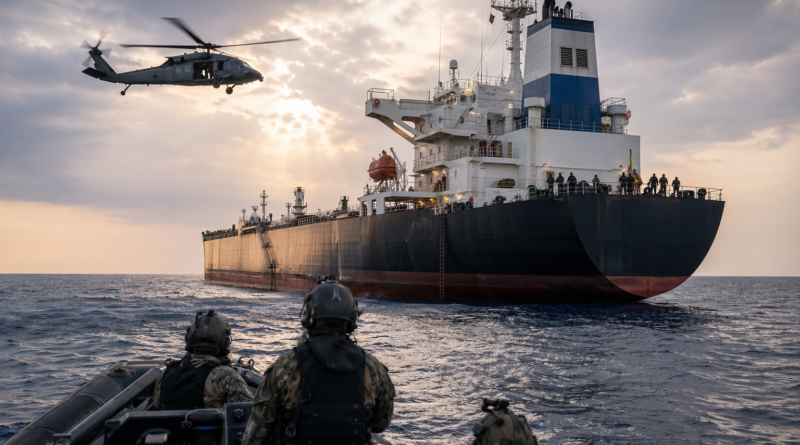
The Pentagon confirmed that American forces boarded a sanctioned tanker in the Indo-Pacific region overnight. According to US officials, the vessel was linked to Iranian networks and was intercepted “without incident”.
The US military said the operation formed part of wider efforts to disrupt Iranian oil shipments and sanction-busting activities.
American officials have also accused Iran of allowing sanctioned ships to continue moving through the Strait of Hormuz and the Gulf of Oman despite the ceasefire.
But Tehran sees the operation differently.
Iran has accused the United States of violating the ceasefire by targeting Iranian-linked shipping. Iranian military officials described the interception as an act of “armed piracy” and warned that there would be consequences.
An Iranian source said Tehran had been preparing to attend talks in Islamabad, but that plans changed after the incident at sea.
According to the source, the interception convinced many inside the Iranian leadership that Washington was using negotiations only to increase pressure rather than to reach a genuine compromise.
That perception appears to have hardened Iranian resistance.
The Ceasefire Is Fraying
The ceasefire between the United States and Iran was announced on 8 April after days of escalating confrontation in the Gulf.
Under the terms of the agreement, Iran was expected to allow ships to move freely through the Strait of Hormuz for two weeks. In return, the United States paused further strikes and agreed to enter negotiations.
The Strait of Hormuz is one of the world’s most important shipping routes. Around a fifth of the world’s oil passes through the narrow waterway, making any disruption a major threat to global markets.
Initially, there were signs that the ceasefire might hold.
Trump said on 17 April that Iran had assured the United States the strait would remain open. He even declared that Tehran had agreed never again to use the route as leverage.
But within days the situation deteriorated.
On Sunday, Trump accused Iran of breaching the truce by firing in the Strait of Hormuz and threatening once again to disrupt shipping.
In a series of messages on social media, he warned that if Iran rejected a deal the United States would target major Iranian infrastructure.
“We are offering a fair and reasonable deal,” he wrote. “If they do not take it, the United States is going to knock out every power plant and every bridge in Iran.”
The language has alarmed diplomats and analysts, who fear the ceasefire is now close to collapse.
Trust Between the Two Sides Has Nearly Vanished
Even before the latest crisis, trust between Tehran and Washington was extremely limited.
The United States and Iran have spent decades locked in hostility, with failed negotiations, sanctions and military incidents repeatedly derailing attempts at diplomacy.
The current talks were already taking place against the backdrop of war, a naval blockade and deep suspicion.
Iranian officials argue that Washington cannot claim to support diplomacy while simultaneously threatening new strikes and intercepting Iranian-linked ships.
Tehran’s government has said its military remains on full alert.
Government spokeswoman Fatemeh Mohajerani said Iran had two options before it: war or diplomacy.
“We do not want to be attacked again,” she said. “But if it happens, we will respond more strongly than before.”
She added that Iran would not compromise on what it sees as its national interests.
Meanwhile, the Iranian parliament speaker suggested Tehran could soon unveil what he described as “new cards on the battlefield”, hinting at possible military or strategic responses if the talks fail.
Security analysts believe this could include greater pressure on shipping routes, new missile deployments or cyber operations.
A New Era of Diplomacy Conducted in Public
Another feature of the current crisis is the way negotiations are being shaped by social media.
Trump has repeatedly used his Truth Social account to comment on the talks, sometimes issuing threats and promises within the same message.
Over the past week he has alternated between claiming that a breakthrough is close and warning of overwhelming military force.
Iranian officials have also responded publicly, using interviews, television appearances and social media to criticise the United States.
The result is a diplomatic process unfolding almost in real time before a global audience.
Analysts say that can make compromise harder.
Leaders on both sides are aware that they are speaking not only to negotiators but also to domestic audiences at home. Public pressure may leave little room for concessions.
There is also a danger that statements made for political reasons could be misunderstood by the other side and lead to miscalculation.
Diplomacy has rarely been conducted with such little privacy.
Daily Life Continues in Iran Despite the Uncertainty
While politicians argue and military tensions rise, ordinary people inside Iran are trying to continue with their daily lives.
Residents in several cities have described a sense of exhaustion after weeks of uncertainty.
Many say they are struggling to focus on work, family and routine as fears of renewed conflict continue.
One resident said people were trying to distract themselves from the crisis simply to cope.
“Our minds need to engage with other things at times, so we do not fall apart,” she said.
In Tehran and other major cities, shops, cafes and schools remain open, but there is widespread concern about what could happen if the ceasefire collapses.
The possibility of new air strikes, further sanctions and greater economic hardship is hanging over daily life.
For many Iranians, the decision on whether their government sends a delegation to Islamabad is no longer simply a diplomatic question. It may determine whether the country moves back toward war or steps away from the brink.
World Watches as Deadline Approaches
As Wednesday’s deadline approaches, mediators are continuing efforts to bring both sides to the negotiating table.
Diplomats in Islamabad are believed to be exploring possible compromises, including a temporary extension of the ceasefire or reciprocal steps to reduce pressure in the Gulf.
One possible option under discussion is a mutual easing of restrictions on shipping, allowing both Washington and Tehran to claim a limited success.
But with only hours remaining, there is still no certainty that talks will happen.
The United States says it is ready to negotiate, but is also preparing for further military action. Iran says it is open to diplomacy, but only if it believes the process is genuine.
For now, the streets of Islamabad remain heavily guarded and waiting.
The conference rooms are prepared, the mediators are ready and the deadline is closing in.
Whether the delegations arrive may decide not only the future of the ceasefire, but the next phase of one of the world’s most dangerous confrontations.