
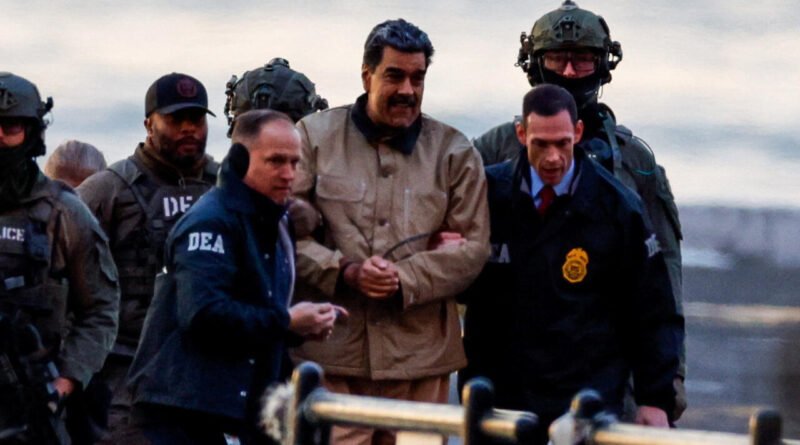
Handcuffed Nicolás Maduro Appears in New York After Dramatic US Transfer
Former Venezuelan president Nicolás Maduro arrived at a federal courthouse in New York on Monday. He was brought under heavy security. This marked one of the most extraordinary moments in the country’s modern political history.
Maduro was seen in handcuffs. Armed US officers escorted him. He arrived in Manhattan alongside his wife, Cilia Flores. A high-profile operation removed the couple from their Caracas residence over the weekend. Both are facing multiple US charges related to alleged drug trafficking and weapons offences.
A historic reversal of power
Images of Maduro under arrest have sent shockwaves through Venezuela and beyond. He was transferred by armoured convoy and helicopter across New York City. For many Venezuelans, the scenes represent an unprecedented reversal. He ruled the country with near-total authority for more than a decade.
Political analysts say the symbolism of the moment is impossible to ignore. The man, formerly surrounded by loyalists and state power, now seems guarded. He is silent and physically restrained. This striking contrast has dominated global headlines.
From Caracas to Manhattan
US officials confirmed that a coordinated special forces operation took place at Maduro and Flores’ compound in Caracas late Saturday. During this operation, Maduro and Flores were seized. They were flown to the United States shortly after. Then, they were transferred from a detention facility in Brooklyn to the Daniel Patrick Moynihan United States Courthouse in Manhattan.
The pair are expected to appear before Alvin Hellerstein, where prosecutors will formally outline the charges and request initial pleas during a brief arraignment hearing.
International reaction grows
The transfer has triggered immediate diplomatic backlash. China and Iran, long-time allies of Maduro’s government, condemned the US action and called for his release, accusing Washington of breaching international law.
Meanwhile, Western leaders have urged caution and stability. UK Prime Minister Keir Starmer said the priority must be a “peaceful transition to democracy” in Venezuela, stressing that international law should guide the country’s future.
“It remains a complex and sensitive situation,” Starmer said, adding that stability for Venezuelans must come before political retaliation.
A country in transition
Back in Caracas, daily life resumed cautiously on Monday. Shops reopened, public transport returned to operation, and streets slowly filled after a tense weekend. However, security was tightened around the National Assembly, where Vice President Delcy Rodríguez is expected to be sworn in as interim president.
Residents expressed mixed emotions. They felt relief along with uncertainty. Anxiety over rising food prices and economic instability was also present. Venezuela enters an unpredictable new chapter.
Economic ripples beyond politics
Markets have also responded to the dramatic developments. While global oil prices showed little immediate movement, shares in US energy companies rose in early trading amid expectations of potential changes to Venezuela’s oil sector.
Analysts caution, however, that rebuilding the country’s oil infrastructure would require years of investment and political stability before any meaningful recovery could take place.
A defining moment
Maduro’s appearance in a US courtroom represents more than a legal proceeding. It marks a turning point with consequences that reshape Venezuela’s political future. This event also impact its relationship with the international community.
As the world watches the next steps unfold, one reality is already clear: a chapter of Venezuelan power politics has closed, and what follows remains uncertain.