
UK Rejects US Pressure on Greenland as Nandy Backs Self-Determination
The UK will not shift from its position. Greenland’s future must be determined by those who live there. The culture secretary has said this as tensions rise over renewed pressure from Washington.
Lisa Nandy spoke on Sunday morning. She said threats of trade tariffs linked to Greenland were “deeply unhelpful.” These threats risked escalating a dispute that should be handled through diplomacy.
“The future of Greenland is a matter for the people of Greenland. It is also for the people of the Kingdom of Denmark,” she said. She added that the UK’s stance was “non-negotiable”.
Her comments come after Donald Trump’s recent intervention. He has revived calls for the US to take control of Greenland. Trump argues it is vital to American and allied security. He has suggested tariffs on a range of European countries. This includes the UK. He proposed these measures if negotiations do not move in Washington’s favour.
The prime minister has not yet spoken to Trump since the latest announcement. Nandy said he expected contact “at the earliest opportunity”. Keir Starmer has already described the proposal as “completely wrong.” He said the UK would raise the issue directly with the US administration.
Ministers believe the matter will be discussed on the sidelines of the World Economic Forum in Switzerland this week. Several Western leaders are expected to meet there.
The White House has intensified its rhetoric recently. It portrays Greenland, an autonomous territory within the Kingdom of Denmark, as strategically essential because of its Arctic location. Trump has not explicitly ruled out using force, a suggestion that has alarmed European allies.
The US president has outlined new proposals. Under these proposals, tariffs of up to 10% will be imposed on imports from a number of European nations. This will start in early February. These tariffs rise further if no agreement is reached.
Nandy said Trump often sets out hardline positions before moving into negotiations. However, she warned that this was “a really serious issue.” It requires “a far more adult debate than mutual threats.”
Across the UK’s political spectrum, senior figures have lined up behind the government’s position. Conservative and Reform UK politicians alike said that Greenland’s security matters to all Nato allies. However, they believe the approach being taken by Washington is misguided.
Opposition leaders have also warned that any attempt to seize territory from a Nato ally would undermine the alliance itself. Greenland’s status, they insist, cannot be dictated by external powers.
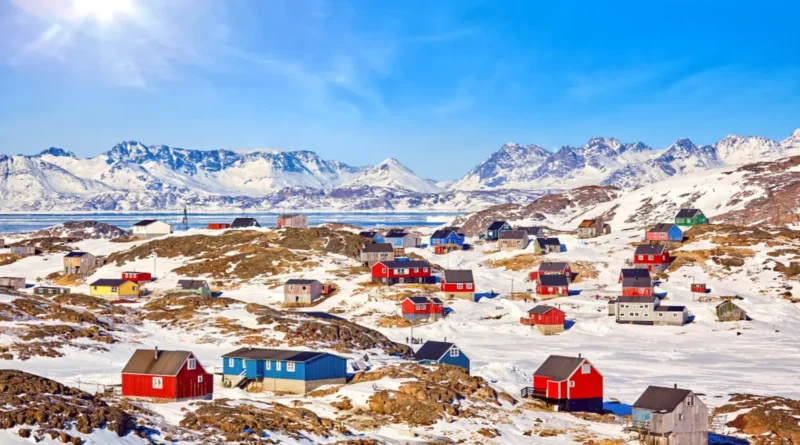
Greenland is a vast and sparsely populated island. It is located between North America and Europe. The island is rich in minerals. It occupies a key position in the Arctic. It plays a role in missile early-warning systems. It also helps monitor naval movements as melting ice opens new shipping routes.
Denmark has repeatedly said Greenland is not for sale. Politicians in Greenland have stressed that any change in status would require the clear consent of its population. European governments have rallied behind Copenhagen as the dispute has intensified.
For the UK, Nandy said, the red line is clear. “The sovereignty and future of Greenland must be a decision made by Greenlanders.
Greenlanders must decide for themselves. That is the starting point, and the end point of our position.”