
EU foreign policy chief dismisses Russian claims of Ukrainian cyber and drone attacks
The European Union’s top diplomat has rejected Russian allegations. Russia claims that Ukraine carried out attacks on Russian government targets. The diplomat described the claims as an attempt to divert attention. They are also seen as efforts to undermine ongoing peace efforts.
Kaja Kallas, the EU’s High Representative for Foreign Affairs and Security Policy, advised caution regarding the accusations coming from Moscow. She said they should not be taken at face value. Writing on social media, she said Russia was seeking to distract from its own actions in Ukraine. It was also trying to derail diplomatic momentum.
“No one should accept unfounded claims from the aggressor,” Kallas said. The aggressor has systematically targeted Ukraine’s infrastructure and civilians. Kallas was referring to Russia’s conduct during the war.
Her comments came after the Kremlin’s statements. They claimed that Ukraine had tried to strike one of Vladimir Putin’s residences near Lake Valdai. This location is in north-west Russia. The attack was attempted using drones. Moscow warned that it would reassess its stance in ongoing peace discussions as a result of the alleged incident.
Escalating rhetoric in Moscow
The accusations were first raised by Russian Foreign Minister Sergei Lavrov. Since then, state media and senior politicians have amplified the claims. Some of them have used highly charged language. Andrei Kartapolov, head of the Russian parliament’s defence committee, described the alleged incident as an attack “on the heart of Russia.” He said it should not go unanswered.
After initially declining to publish evidence, Russia’s defence ministry later released material it said supported its account. This included a map showing supposed drone flight paths from Ukraine’s Sumy region. It also showed paths from the Chernihiv regions, and footage of wreckage in a snow-covered wooded area. A serviceman in the video claimed the drone was a Ukrainian-made Chaklun.
Independent verification has not been possible. Analysts note that while the drone’s shape resembles Ukrainian designs, the components shown are commercially available and cannot conclusively be linked to Ukraine’s armed forces.
Russian officials also circulated a video interview with a local resident who said he heard a loud noise during the alleged attack. However, one Russian investigative outlet reported that residents living near the Valdai area said they heard nothing unusual and questioned claims that dozens of drones had been intercepted.
Ukraine rejects allegations
Ukraine has strongly denied any involvement. Foreign ministry spokesperson Heorhii Tykhyi dismissed the Russian material as unconvincing, saying the evidence did not stand up to scrutiny.
President Volodymyr Zelensky has also linked the accusations to diplomatic developments, arguing they were designed to disrupt talks led by the United States aimed at securing a ceasefire.
Zelensky said recent discussions between Ukrainian and American officials had been constructive and accused Russia of trying to break the “positive momentum” ahead of further negotiations, including meetings involving US President Donald Trump.
He also warned that the alleged incident could be used by Moscow as a pretext for renewed strikes on Kyiv and other government sites. While air raid alerts briefly sounded in the capital overnight on Wednesday, no damage was reported there.
Continued attacks on Ukraine
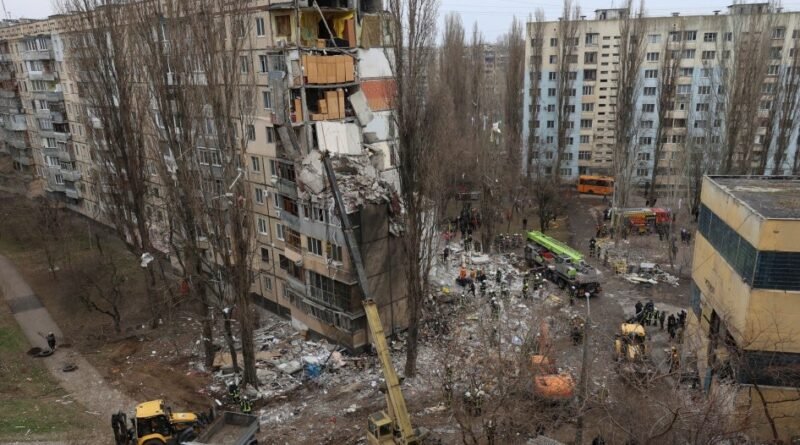
Instead, Ukrainian authorities reported drone strikes across several regions. The southern port city of Odesa was hit by a large-scale attack that damaged an apartment block and injured six civilians, including three children. Officials said more than 170,000 people were left without electricity as temperatures hovered around freezing.
Odesa has faced sustained attacks in recent weeks. Ukrainian officials say the escalation follows threats by Putin earlier this month to restrict Ukraine’s access to the Black Sea, after drone attacks on vessels linked to Russia’s so-called “shadow fleet”.
Hopes and uncertainty as the year ends
As another year of war draws to a close, many Ukrainians say they are clinging to the hope that 2026 could bring an end to the fighting.
In central Kyiv, 26-year-old Mariya said her wish was simple: “We want this to end and to live as we did before. Ukraine is a beautiful country with enormous potential, and our strength is in our people.”
Nearby, teenage carollers sang traditional songs while collecting donations for the armed forces. “We all want victory and peace in 2026,” one of them said.
Zelensky has said he wants peace negotiations to intensify early in the new year with the involvement of both European and American partners. However, any agreement would require Russia’s participation — something that appears increasingly uncertain, particularly after the latest accusations.
Asked whether peace might finally come next year, Mariya paused before answering: “We truly hope so, but we cannot be sure. We are doing everything we can.”
Standing beside her, Ksenia looked upward and added quietly: “Only God knows.”