Iran Warns Ceasefire Could Collapse as Israeli Strikes Continue in Lebanon
Israeli strikes continued across Lebanon as Iran warned the fragile ceasefire could collapse, raising concerns about renewed fighting across the region.
The fragile ceasefire between Iran, the United States and Israel is facing its most serious test yet, after Israel launched new strikes across Lebanon and Tehran warned that the agreement could soon unravel.
Although the truce announced earlier this week brought a pause to direct attacks between Iran and the US, the fighting has not truly stopped across the wider region. Israeli operations in Lebanon have continued, the Strait of Hormuz remains partly blocked, and urgent talks are now being planned in Pakistan in an attempt to prevent the conflict from escalating once again.
For now, the Middle East is caught between war and diplomacy.
Fresh Israeli Strikes Hit Lebanon
On Friday, Israeli aircraft carried out fresh strikes in southern Lebanon and near Beirut, targeting what Israeli officials described as Hezbollah infrastructure.
The attacks came after two days of some of the heaviest fighting in Lebanon since the broader regional crisis began.
Local officials in Lebanon said at least 14 people were killed in the latest strikes on Friday alone. Over the past 48 hours, the death toll has risen above 300, with hundreds more injured.
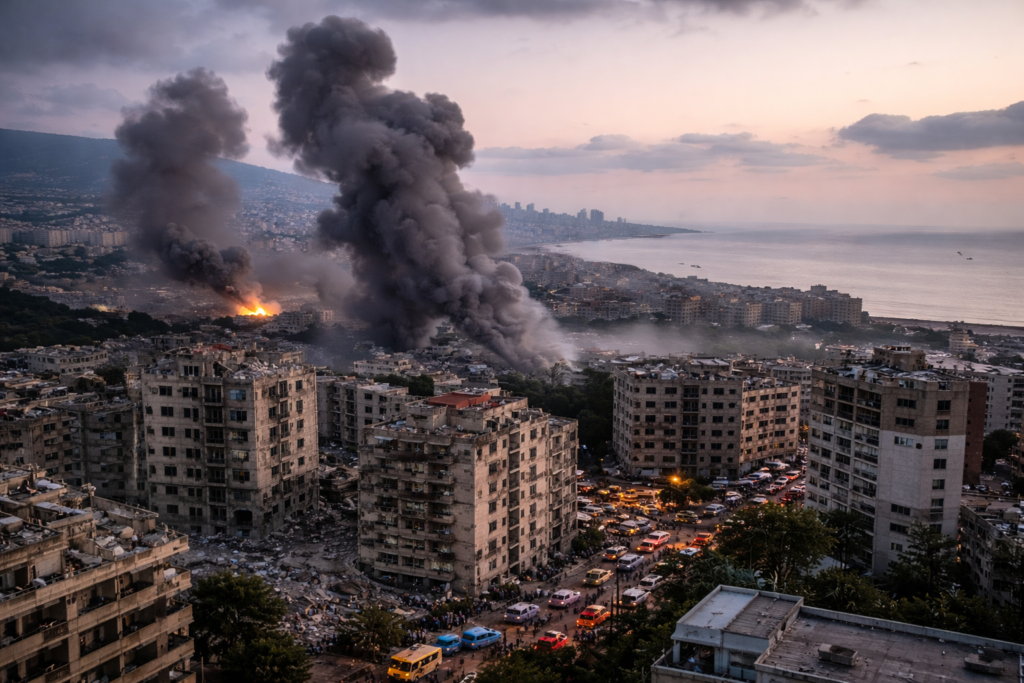
Images from southern Lebanon showed damaged apartment blocks, burning vehicles and rescue workers searching through rubble. In parts of Beirut, residents fled their homes as smoke rose over the city.
Israel says it is acting to weaken Hezbollah and prevent further attacks from southern Lebanon. Israeli Prime Minister Benjamin Netanyahu said on Friday that operations against Hezbollah would continue until the group no longer poses a threat.
At the same time, Netanyahu signalled that Israel may be open to future negotiations with Lebanon.
“We are prepared for talks,” he said, “but the ceasefire with Iran does not apply to Hezbollah. There is no ceasefire in Lebanon.”
That disagreement over what exactly the ceasefire covers is now at the centre of the crisis.
Iran Says Lebanon Was Part of the Deal
Iran insists that the ceasefire was meant to halt fighting across the region, including in Lebanon.
Tehran argues that Israel’s continued strikes amount to a violation of the agreement reached after weeks of direct confrontation between Iran, Israel and the United States.
On Friday, Iran’s parliament speaker issued one of the strongest warnings yet.
“Time is running out,” he said, warning that Iran could leave the ceasefire entirely if attacks on Lebanon continue.
Iranian officials say the strikes are making it increasingly difficult for Tehran to justify remaining committed to diplomacy.
Senior figures in Tehran have suggested that if the ceasefire collapses, Iran could resume missile and drone attacks against Israeli targets or once again threaten shipping routes in the Gulf.
So far, however, Iran has not launched any new direct attacks.
Instead, Tehran appears to be trying to use the threat of escalation to pressure the United States into forcing Israel to reduce or stop its operations in Lebanon.
Iran is also demanding the release of frozen Iranian assets, guarantees that the US and Israel will not attack again, and a broader agreement over sanctions and oil exports.
Direct Fighting Has Stopped – For Now
Despite the rising tension, there have been no new direct strikes between Iran and the United States since the ceasefire began on April 8.
The pause followed several weeks of unprecedented confrontation.
Iran had launched missile and drone attacks against Israeli targets after a series of Israeli and American strikes inside Iran. The United States then responded with military action against Iranian facilities, raising fears that the region was moving toward a much larger war.
The ceasefire temporarily halted that cycle.
However, analysts say the agreement was always fragile because it left several major issues unresolved.
There was no final agreement on Lebanon.
There was no clear solution for the Strait of Hormuz.
And there was no guarantee that either side would avoid further military pressure if negotiations failed.
As a result, while the direct war between Iran and the US has paused, the wider regional crisis has continued.
Urgent Talks Planned in Pakistan
The next major test is expected on Saturday, when American and Iranian officials are due to meet in Islamabad.
US Vice-President JD Vance is expected to lead the American side, while senior Iranian diplomats are also due to attend.
Officials familiar with the talks say they are likely to focus on four key demands:
- A reduction or halt to Israeli strikes in Lebanon
- The reopening of the Strait of Hormuz
- The release of frozen Iranian funds
- Guarantees that direct attacks on Iran will not resume
The United States has made clear that it wants shipping through the Gulf restored immediately.
Washington is also trying to prevent Iran from abandoning the ceasefire.
However, US officials are also increasing military pressure.
President Donald Trump said on Friday that American warships are being rearmed and that the US is prepared to respond if Iran fails to comply with the agreement.
“We are loading up the ships,” Trump said.
The statement was widely seen as both a warning and an attempt to strengthen the American position before the talks begin.
Diplomats say the meeting in Pakistan could become the most important moment in the crisis so far.
If the talks fail, there are fears that the ceasefire could collapse within days.
Strait of Hormuz Remains Partly Closed
Even if direct fighting has stopped, the global economy is still feeling the effects of the conflict.
The Strait of Hormuz, the narrow waterway between Iran and Oman, remains partly blocked.
Around one quarter of the world’s seaborne oil normally passes through the strait.
But since the fighting began, many oil tankers have either been delayed or refused to enter the Gulf.
Iran had agreed in principle to reopen the route as part of the ceasefire. Yet on Friday, shipping traffic remained far below normal. Only six ships were reported to have passed through the Strait of Hormuz on Thursday, underlining how close the route remains to a complete shutdown.
Several shipping companies say they still consider the route too dangerous.
Others are reportedly waiting for official guarantees before sending vessels back through the area.
Some reports suggest that Iran is allowing only a limited number of approved ships to pass and may be demanding fees from foreign vessels.
The White House has described any continued restriction on shipping as unacceptable.
US officials argue that Iran must fully reopen the route if it wants the ceasefire to survive.
Iran, however, says there can be no full reopening while Israeli strikes continue in Lebanon.
That means the Strait of Hormuz has become another point of pressure in the wider dispute.
Oil Prices Begin Rising Again
The continued disruption in the Gulf is already affecting global energy markets.
Oil prices rose again on Friday as traders reacted to fears that the Strait of Hormuz could remain blocked and that the ceasefire may soon collapse.
Fuel prices have already begun rising in several countries.
In Europe and Asia, importers are warning that shortages could develop if oil shipments remain disrupted.
In Britain, analysts say petrol and heating costs may increase over the coming weeks if the crisis continues.
The impact is also being felt across global shipping and trade.
Cargo companies are facing delays, insurance costs are rising, and ports are preparing for possible further disruption.
For governments already struggling with inflation, the conflict is creating a new economic risk.
Three Possible Outcomes
As the crisis enters a new phase, there are now three possible paths.
The first is that the talks in Pakistan succeed.
Under this scenario, Israel would reduce its attacks in Lebanon, Iran would remain inside the ceasefire, and shipping through the Strait of Hormuz would gradually return to normal.
The second possibility is that the ceasefire technically survives, but only in a limited form.
Fighting in Lebanon would continue, the Gulf would remain tense, and the region would remain trapped in a dangerous stalemate.
Many analysts believe this is currently the most likely outcome.
The third and most dangerous possibility is that Iran decides the agreement has failed.
If that happens, Tehran could restart direct attacks, the United States could respond, and Israel could launch new strikes inside Iran.
That would risk turning the present crisis into a much wider regional war involving multiple countries.
A Region Still on the Edge
For now, the ceasefire still exists.
But the events of Friday show just how fragile it has become.
Israel continues to strike Lebanon.
Iran says it may no longer remain bound by the agreement.
The Strait of Hormuz is still not fully open.
And the United States is preparing both for diplomacy and for the possibility of renewed military action.
The next 24 hours may now determine whether the Middle East moves back from the edge – or slips once again toward open conflict.