Trump’s Strait of Hormuz Ultimatum Pushes Middle East Crisis to the Brink
The Strait of Hormuz ultimatum has intensified tensions in the Middle East after President Trump demanded Iran reopen the vital shipping route, raising fears of further escalation.
The Middle East conflict has reached its most dangerous stage yet. President Donald Trump issued an ultimatum to Iran over the reopening of the Strait of Hormuz. The United States has set a deadline for Tuesday. It has threatened the “complete demolition” of Iranian infrastructure. This will happen if Tehran does not capitulate. The crisis, now in its 39th day following a widespread U.S. and Israeli bombing campaign, has effectively choked off one of the world’s most vital energy arteries. As the clock ticks down, the likelihood of a devastating regional war grows. Additionally, a corresponding global economic shock seems more likely now than at any point in recent history.
This moment represents a critical juncture. The U.S. military reports attacking more than 13,000 Iranian targets. Yet Iran remains defiant. It dismisses Trump’s threats as “delusional.” Iran is pushing forward a 10-point proposal. This proposal demands a permanent end to the war. It also calls for the lifting of sanctions. Additionally, it seeks a new order in the Strait of Hormuz .
Why the Strait of Hormuz Matters
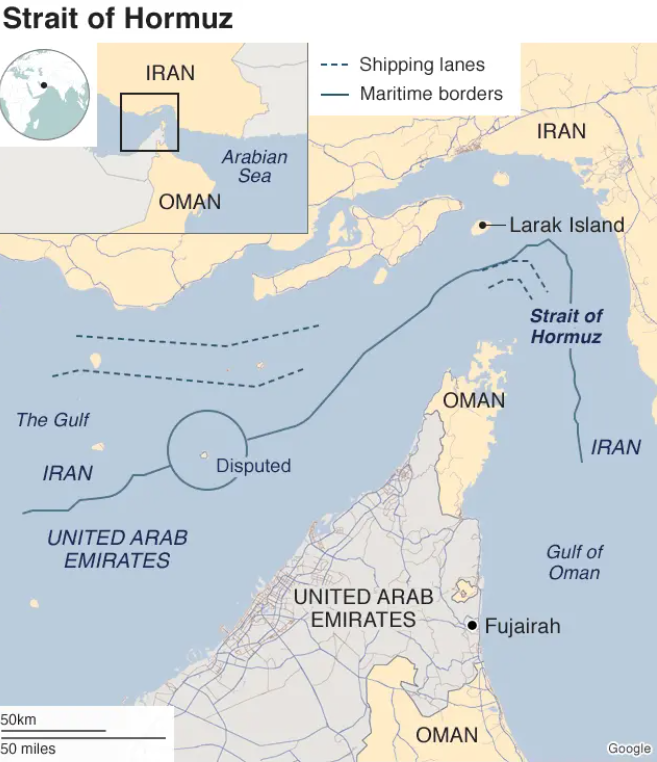
The Strait of Hormuz is the world’s most important oil chokepoint. Located between Oman and Iran, it connects the Persian Gulf with the Gulf of Oman and the Arabian Sea. Prior to the current war, approximately a fifth of the world’s oil consumption passed through this narrow waterway .
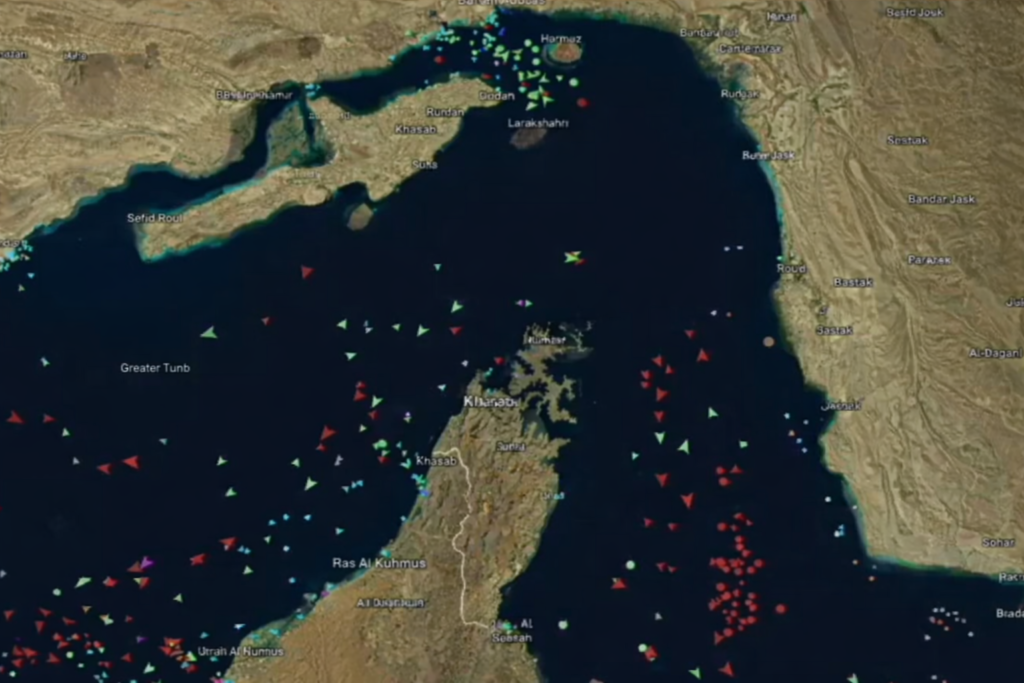
Following the initial strikes, Iran declared the strait “closed” to the U.S., Israel, and countries supporting their attacks . This selective closure has drastically reduced traffic, with only 116 total crossings recorded between March 1 and March 25.
The strait is the only sea passage from the Persian Gulf to the open ocean. Disruption immediately affects international markets, creating supply shortages, fuel rationing, and inflation worldwide. For the United States, keeping the strait open is essential for global economic stability. For Iran, the ability to close or restrict access is its most potent asymmetrical weapon.
Trump’s Ultimatum and the Shift in US Policy
President Trump’s approach to the crisis has been characterized by oscillating deadlines and escalating rhetoric. Earlier reports suggested the timeline of the conflict had already begun to shift. Trump initially set a 48-hour deadline on March 21. He subsequently delayed action several times. He ultimately declared Tuesday evening as the final cutoff.
His latest statements mark a significant intensification. In social media posts, Trump warned that without a deal, “Hell will reign down on them,” specifically threatening to target Iran’s power plants, bridges, and oil infrastructure . He further suggested that “the entire country can be taken out in one night” . This rhetoric indicates a potential shift from limited military objectives toward a strategy aimed at crippling the Iranian state or forcing regime change .
The Expanding Military Conflict
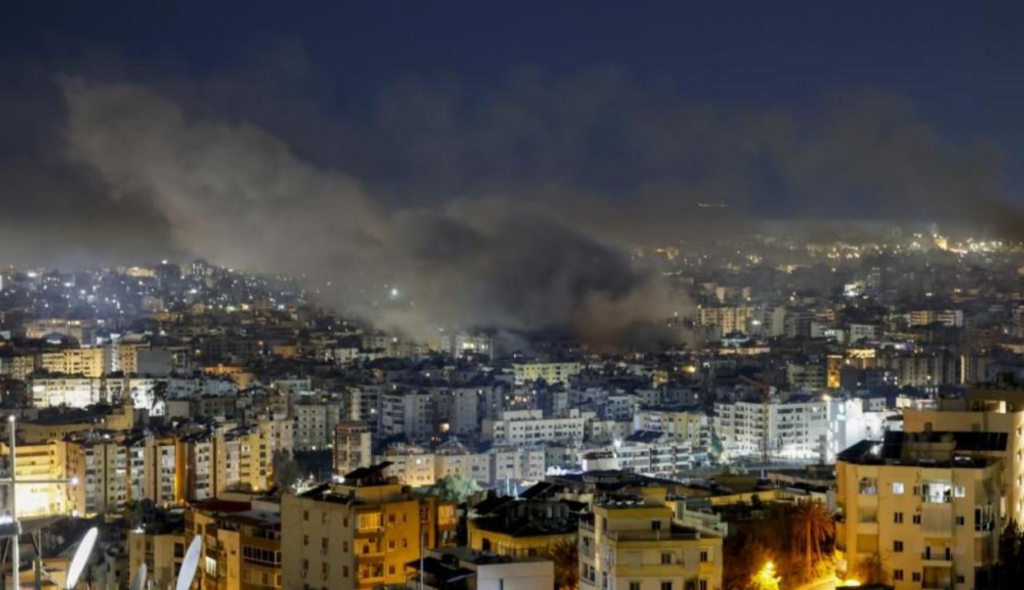
The military reality on the ground reflects this escalation. Recently, the U.S. military conducted strikes on targets on Iran’s Kharg Island, the export hub from which almost all of the country’s oil is shipped . Concurrently, Israel’s military reported striking three airports in Tehran, Iran’s largest petrochemical complex serving the South Pars gasfield, and a petrochemical compound in Shiraz .
The conflict is not one-sided. Iran has maintained a steady barrage of missile and drone attacks. A recent Iranian missile strike on a residential building in the Israeli port city of Haifa killed at least four people . Furthermore, Iran has targeted U.S. interests directly, with a drone strike on the Ali Al Salem Air Base in Kuwait reportedly wounding 15 Americans .
Iran’s Strategy and Possible Next Moves
Despite the immense pressure, Iran has shown no signs of capitulation. The Iranian government rejected a U.S. proposal for a temporary ceasefire, arguing it would merely give the U.S. and Israel time to regroup . Instead, Tehran appears to be pursuing a multi-faceted strategy.
One scenario is that Iran continues its limited missile retaliation against Israel and U.S. bases, aiming to inflict costs while avoiding actions that would trigger a full-scale invasion.
Alternatively, Iran could double down on its disruption of shipping in the Strait of Hormuz. By implementing a “selective closure,” Iran allows friendly nations to transit while blocking Western vessels . Analysts believe this strategy aims to fracture the international community and force countries to negotiate directly with Tehran .
What the United States and Israel Do Next
As the deadline passes, the actions of the U.S. and Israel will dictate the trajectory of the crisis. Several scenarios are plausible.
The most immediate possibility is the execution of Trump’s threats: massive strikes on Iranian military installations, power grids, and crucial oil infrastructure like Kharg Island. The objective would be to paralyze the Iranian economy and degrade its military capacity to the point where the leadership is forced into negotiations on U.S. terms.
Alternatively, the U.S. might continue its high-pressure tactics. It could combine these with back-channel diplomacy. This approach attempts to force Iran into a comprehensive agreement. This agreement would address not only the Strait of Hormuz but also Iran’s nuclear program and regional proxies.
Oil Prices, Global Markets and the Wider Economy
The economic fallout from the crisis is already severe. The disruption in the Strait of Hormuz has sent oil prices soaring. Crude is trading at more than $110 a barrel. Then it dipped in volatile trading. Some analysts warn that if the strait is completely closed, prices could surge toward $150 a barrel. Prices could also increase if Iranian oil infrastructure is destroyed.
The effects are rippling through the global economy. The cost of jet fuel in the U.S. has surged by 95% since the war began, prompting airlines to cancel flights and raise ticket prices . In the United States, gasoline prices have topped $6.00 a gallon in some areas .
Globally, the situation is prompting extraordinary measures. South Korea’s president has urged citizens to “save every drop of fuel.” The Philippines has declared a national emergency due to high oil prices [25].
International Reaction
The international community is watching with growing alarm, yet remains divided on how to respond. The United Nations Security Council is holding emergency meetings. Secretary-General António Guterres warns of a “wider war.” He notes that attacks on civilian infrastructure violate international law.
European nations have expressed deep concern over the escalation. Countries like France and Italy have reportedly started independent talks with Iran. Their goal is to secure passage for their vessels. This action highlights a divergence from the U.S. approach. Asian countries, heavily dependent on Middle Eastern oil, are scrambling to secure alternative supplies and negotiate transit deals with Tehran.
Russia and China, while criticizing the U.S. and Israeli strikes, have largely remained on the sidelines militarily. Most of Moscow’s military resources are tied up in Ukraine. Beijing prioritizes its economic ties. It seeks to avoid a direct confrontation with the United States.
What Could Happen in the Next Few Days
The situation is highly volatile, and the next few days will be decisive. A balanced analysis suggests several realistic scenarios:
•A temporary de-escalation after back-channel negotiations.
•A wider regional war involving Lebanon, Iraq and Gulf states.
•Continued limited strikes without a full war.
•A serious global economic crisis if energy exports are disrupted.
The next 24 to 48 hours could determine whether the conflict remains limited or becomes a far larger regional confrontation. This is a very, very, very, very critical moment for the entire world.
Related Coverage
- Trump threatens Iran over Strait of Hormuz
- Trump’s Iran War Timeline Shifts Again