France in Crisis as Thousands Arrested in Violent Protests
Nationwide demonstrations against rising living costs and deteriorating public services rose in France. They descended into violent clashes, looting, and attacks on government buildings. Cities have seen nights of tense demonstrations and sporadic clashes that stretch police resources. Residents fear further escalations if economic pressures persist.
The government has pledged to restore order while addressing long standing grievances. Analysts say the phase resembles France riots 2026 in scale and persistence. Public services remain strained, transport networks face disruption, and communities await relief. Authorities have urged calm while investigations into violence continue.
During the France riots 2026 weekend, more than 2,400 people were arrested.
Moreover, the disorder left streets damaged, vehicles burning, and thousands of businesses affected across several major French cities.
The violence followed weeks of student-led demonstrations over school conditions. It quickly broadened into unrest among broader groups. Authorities faced clashes, property damage, and disrupted transport. The events reflected growing frustration beyond classrooms. The public demonstrations continued despite arrests and curfews.
The protests also highlighted concerns about the cost of living, wages, pensions, and the direction of the country. Many observers noted that discontent extended beyond education issues to economic policy. Analysts described a climate of anger that could influence future elections. This broader surge is what historians may label France riots 2026.
Paris, Marseille, Lyon, Lille and several other cities experienced serious disturbances. As groups of masked rioters clashed with police, they damaged commercial properties and targeted public buildings.
President Emmanuel Macron condemned the violence and promised that those responsible would face prosecution, while acknowledging the growing public frustration behind the demonstrations.
The government has since introduced targeted overnight curfews and ordered a review of its security response after senior officials admitted that police had lost control in parts of several cities.
Although relative calm returned overnight on Monday, 19 October, further demonstrations are being organized, raising concerns that France could face another wave of unrest before the end of the week.
How the Protests Escalated into Nationwide Violence
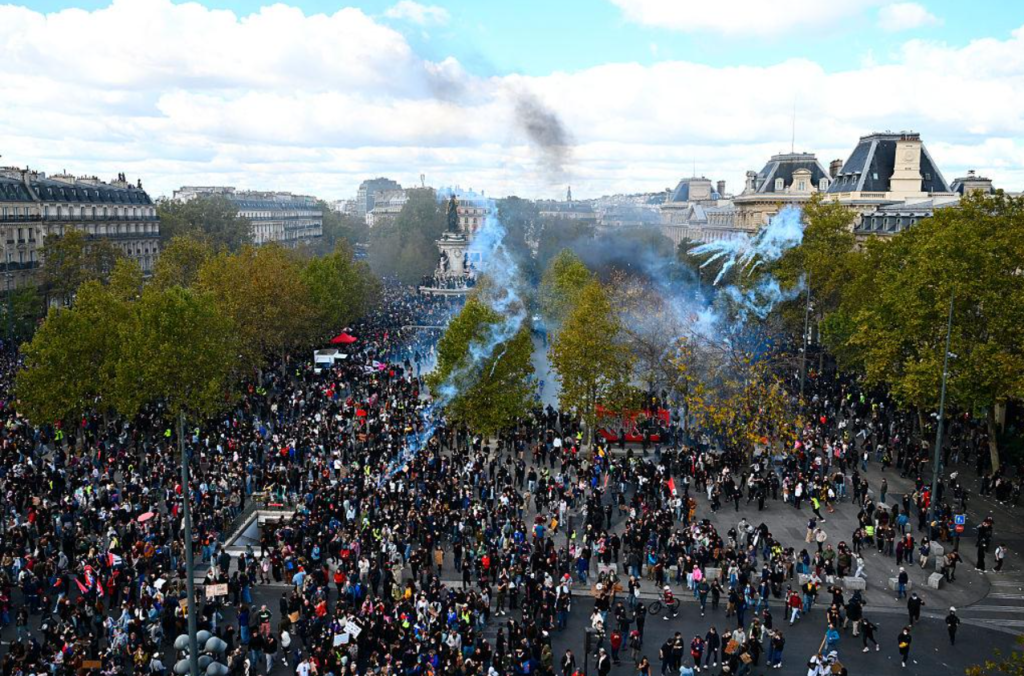
The latest disturbances reached a critical point on Saturday, 17 October, when hundreds of thousands of people joined demonstrations organized across France.
According to the French Interior Ministry, approximately 550,000 demonstrators participated in 110 marches nationwide. Trade unions and protest organizers placed the number considerably higher, estimating attendance at around 800,000.
The demonstrations brought together students, workers, trade union members and people concerned about the rising cost of everyday necessities.
Many participants marched peacefully, carrying placards and French flags while demanding improvements to public services and greater financial security.
However, the atmosphere changed in several major cities as confrontations developed between police and groups of protesters.
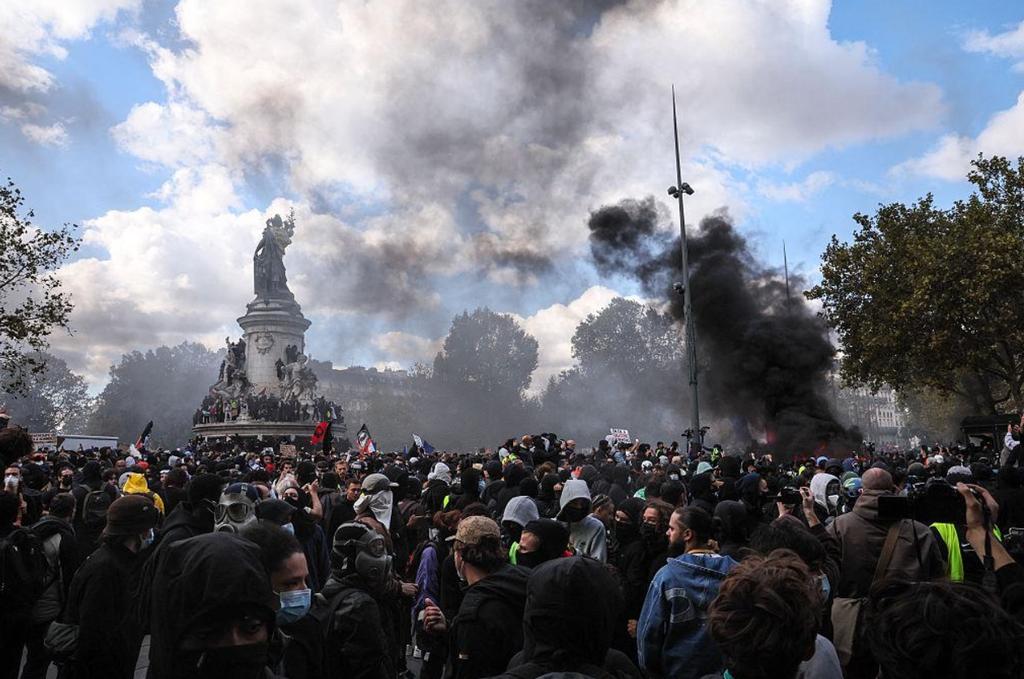
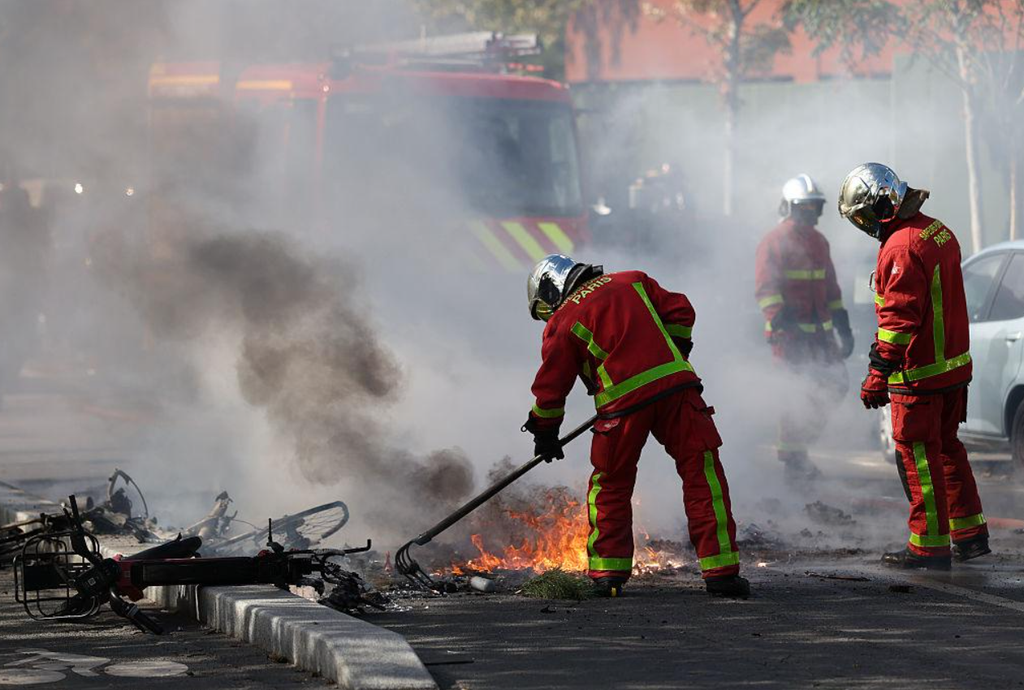
In Paris, officers deployed tear gas and water cannons after masked individuals threw projectiles, fireworks and paving stones towards security forces.
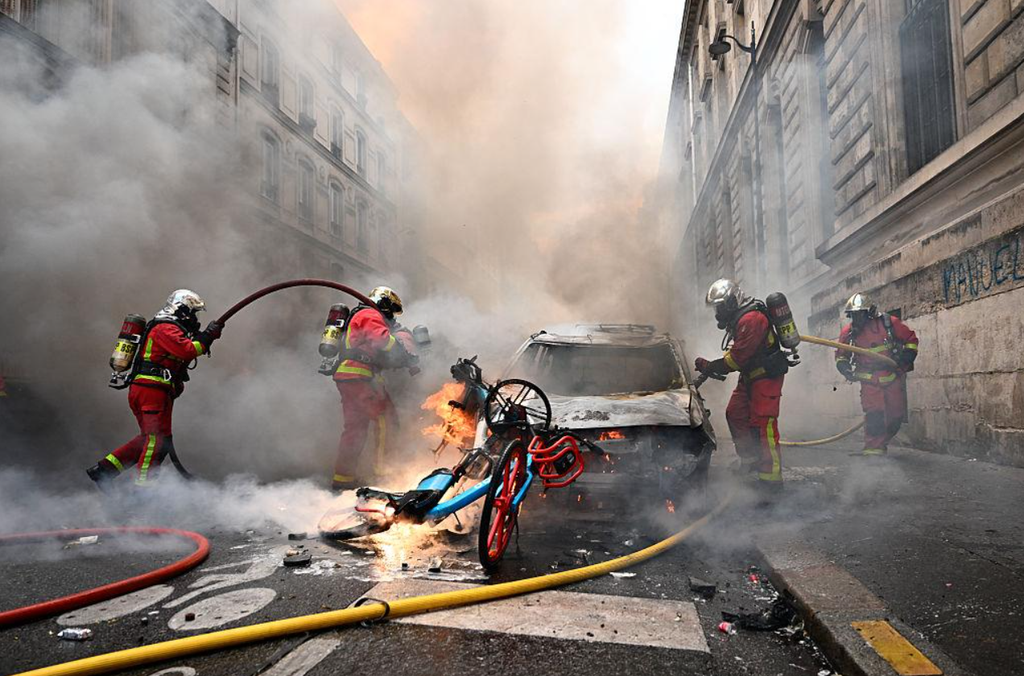
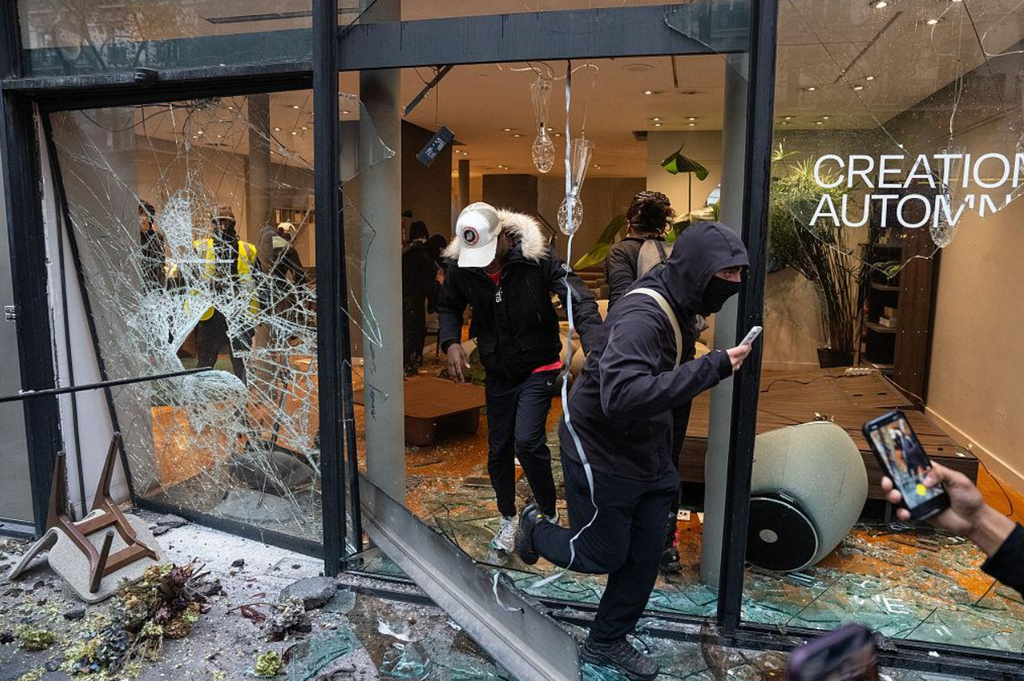
Vehicles and rubbish bins were set alight, shop windows were smashed, and businesses were targeted by looters.
Similar incidents occurred in Lyon, Marseille, Lille, Bordeaux and other locations.
By Saturday evening, images of burning vehicles and damaged public buildings had become a defining feature of a day that had originally been intended to draw attention to economic and social concerns.
The disorder continued into Sunday, placing further pressure on police forces already stretched by weeks of demonstrations.
Why Are People Protesting in France?
The demonstrations are rooted in several overlapping problems affecting French society.
One of the earliest causes was growing dissatisfaction among students over conditions in the country’s education system.
Since September, secondary school students have organized walkouts, demonstrations and school blockades, demanding action to address overcrowded classrooms, teacher shortages and deteriorating school buildings.
Students argue that insufficient investment is damaging educational standards and creating increasingly difficult learning environments.
Their protests attracted support from university organizations and other groups concerned about the future of public education.
However, the movement expanded as families, employees and trade unions began expressing their own concerns about living standards.
Rising food, fuel and energy costs have increased pressure on household finances, particularly among lower-income families.
For many demonstrators, the problem extends beyond inflation. There is a growing belief that essential services, including healthcare, housing, education and social support, are failing to meet public needs.
Trade unions have called for higher wages, improved pensions and stronger protection for services that many households depend upon.
The demonstrations have therefore become more than a dispute about schools or individual government policies.
They reflect dissatisfaction among different sections of society who believe their financial circumstances are becoming increasingly difficult while political leaders have failed to deliver meaningful improvements.
Paris Becomes a Centre of the Unrest
Some of the most serious disturbances occurred in the French capital, where large crowds gathered during Saturday’s demonstrations.
The Place de la République became a focal point for confrontations between police and groups of masked individuals.
Security forces used tear gas and water cannons as projectiles were thrown and fires spread through parts of the surrounding area.
Several vehicles were burned, while shops and other commercial premises suffered damage.
Police also closed several Metro stations around sensitive locations, including areas near the Champs-Élysées, government buildings and the presidential palace.
The disruption affected movement through central Paris, although much of the capital remained outside the areas experiencing serious violence.
While disorder developed in some locations, large numbers of protesters continued to march peacefully elsewhere.
Paris Mayor Emmanuel Grégoire described extensive damage to streets and commercial areas, with businesses facing broken windows, theft and costly repairs.
The disturbances continued into Sunday, when further shops were targeted.
The events raised questions about whether authorities had deployed sufficient police officers to protect commercial districts while also allowing peaceful demonstrations to take place.
Fires and Attacks on Public Buildings Across France
The unrest was not confined to Paris.
In Lyon, where approximately 20,000 people participated in Saturday’s demonstration, a tourist office was set on fire.
The damage became one of the most visible examples of the destruction affecting French city centers.
In Marseille, shops and municipal facilities were damaged, while demonstrators briefly entered the lobby of the city’s town hall.
Violence was also reported in Bordeaux, Lille, Nice, Rennes, Toulouse, Montpellier, Grenoble and other cities.
One of the most serious incidents occurred in Limoges, central France, where the historic 19th-century town hall was engulfed by flames.
The fire caused extensive damage to the building, including the collapse of its roof.
The destruction of a prominent public building prompted renewed condemnation from political leaders and raised concerns about the protection of historic and civic landmarks during periods of disorder.
Elsewhere, rioters attempted to enter local government buildings and police facilities.
The geographical scale of the disturbances demonstrated that the unrest had developed into a nationwide security challenge rather than a series of isolated incidents.
Nevertheless, authorities have emphasized that the individuals responsible for arson, looting and attacks on police represent only part of the much larger protest movement.
More Than 2,400 Arrests as Police Investigations Continue
French authorities carried out a large-scale security operation during the weekend, arresting approximately 2,400 people amid widespread disturbances.
The number increased as police continued responding to incidents and identifying suspected offenders.
By Tuesday, 20 October, Justice Minister Gérald Darmanin said 123 people detained during the weekend were being held pending trial.
Authorities were continuing to question large numbers of suspects in connection with the unrest.
Many investigations involve allegations of theft, criminal damage, violent disorder and assaults on police officers.
Officials have also expressed concern that some individuals took advantage of large demonstrations to commit offenses unrelated to the original protest demands.
The Interior Ministry attributed part of the violence to radical far-left groups, together with individuals involved in opportunistic looting.
However, the precise involvement of different groups remains the subject of investigation and debate.
Political violence and criminal theft may have occurred alongside one another, but they do not necessarily share the same motivations.
The scale of the arrests also creates challenges for the justice system, which must process cases while distinguishing suspected criminal activity from lawful participation in demonstrations.
An arrest does not itself establish guilt, and those accused of offenses remain entitled to due legal process.
Serious Injuries Raise Questions About Police Tactics
Alongside the destruction of property, the demonstrations have renewed scrutiny of France’s methods of crowd control.
Several protesters and police officers were injured during confrontations.
One particularly serious incident occurred in Saint-Étienne, where a young demonstrator lost a hand during Saturday’s unrest.
Authorities opened an investigation into the circumstances.
Reports suggested that a police crowd-control grenade may have been involved, although the cause had not been conclusively established in the initial official account.
The incident followed other serious injuries during the preceding weeks of demonstrations.
The use of grenades and other crowd-control weapons has become an increasingly contentious issue, particularly when demonstrations involve young people.
Police argue that officers require effective equipment to respond to violent attacks and protect members of the public.
Critics question whether certain weapons create disproportionate risks of permanent injury, especially in crowded urban environments.
The latest incidents have intensified demands for greater transparency over how such weapons are deployed and how serious injuries are investigated.
The debate presents a difficult challenge for the authorities: maintaining public order without unnecessarily restricting the right to peaceful protest or exposing demonstrators to avoidable harm.
Government Admits Failures in Security Planning
The violence has triggered a political crisis over the government’s handling of the demonstrations.
Interior Minister Laurent Nuñez acknowledged that police had lost control of certain areas during Saturday’s disturbances.
He also admitted shortcomings in planning and the deployment of security forces.
Approximately 60,000 law enforcement personnel had been mobilized nationally, but authorities were unable to prevent significant damage in several major urban centers.
The scale and speed of the disorder appeared to exceed preparations for the demonstrations.
Nuñez offered his resignation following the events, but President Macron refused to accept it.
The president said maintaining continuity within the security services was essential during the crisis.
He also ordered a review of intelligence gathering and operational planning to determine why authorities had underestimated the risk of widespread violence.
Prime Minister Sébastien Lecornu acknowledged mistakes in the government’s response and promised stronger measures to prevent further destruction.
The admissions have increased pressure on ministers, particularly as business owners and local officials demand explanations for the failure to protect commercial districts.
Opposition politicians have also questioned whether the government remains capable of managing a rapidly developing social and security crisis.
Curfews Introduced in Paris and Other Cities
Following the disturbances, the government announced targeted curfews designed to reduce the risk of further violence.
The measures were introduced in selected urban areas rather than across the whole country.
In Paris, overnight restrictions applied to areas around Place de la République and Les Halles from 11pm on Monday, 19 October, until 6am the following morning.
Additional restrictions on gatherings and demonstrations were also introduced.
Similar measures were announced in cities including Lyon, Lille and Nice, with some restrictions applying specifically to minors.
Prime Minister Lecornu argued that localized curfews were a more proportionate response than placing entire cities under restrictions.
The government has also considered the possibility of stronger emergency measures if violence escalates.
However, no nationwide state of emergency had been declared as of Tuesday, 20 October.
The overnight situation was considerably calmer following the introduction of the restrictions.
Lecornu said targeted curfews had helped restore calm and indicated that they could be extended in areas where authorities considered them necessary.
The measures remain controversial.
Supporters believe temporary restrictions can protect residents and businesses from further attacks.
Critics argue that curfews do little to address the economic and social grievances driving the demonstrations and may place additional restrictions on people who have not participated in any violence.
Thousands of Businesses Face Financial Losses
The destruction has created serious financial consequences for businesses across France.
By Monday, government estimates indicated that at least 3,000 businesses had suffered damage or looting since the weekend disturbances began.
The figure was considerably higher than earlier assessments, reflecting the scale of incidents reported as business owners inspected their premises.
Retailers have described broken windows, damaged interiors, stolen stock and disruption to normal trading.
Some businesses have been unable to reopen immediately because of structural damage or the need for urgent repairs.
Industry representatives have suggested that losses could amount to several hundred million euros, although the full financial cost remains uncertain.
Insurance companies are assessing claims, but businesses may face additional difficulties if their policies do not cover every form of damage or lost income.
The financial impact is particularly worrying for smaller shops, which may lack the resources to recover quickly from a major incident.
For employees, extended closures could also create uncertainty about working hours and wages.
The government has promised specific financial assistance for affected businesses.
Nevertheless, questions remain about how quickly support will become available and whether compensation will cover the full extent of the losses.
The disturbances have also created concerns about consumer confidence and commercial activity in areas affected by repeated demonstrations.
Political Pressure Mounts on President Macron
The unrest comes at a sensitive moment for French politics.
France is preparing for its next presidential election in April and May 2027, with the political environment already marked by disagreements over public spending, taxation and economic reform.
The demonstrations have increased scrutiny of President Macron’s administration and its ability to respond to public dissatisfaction.
Opposition figures have criticized both the government’s economic policies and its handling of the disturbances.
On the political right, concerns about public safety and the restoration of law and order have become increasingly prominent.
Meanwhile, politicians on the left have emphasized the underlying social grievances, including public service funding and household financial difficulties.
Jean-Luc Mélenchon, a leading figure on the French left, has supported the student protest movement.
Far-right leader Marine Le Pen has also sought to capitalize on widespread dissatisfaction with living costs and the government’s record.
The crisis presents two separate political challenges.
The government must demonstrate that it can prevent further violence while also responding to demands for improvements in education, living standards and public services.
Focusing exclusively on security risks alienating peaceful demonstrators, while failing to prevent further destruction could undermine public confidence in the authorities.
With the presidential election approaching, the government’s handling of the unrest is likely to influence the wider political debate.
The Return of the Yellow Vest Movement
The latest demonstrations have also revived memories of the yellow vest movement, which emerged in France in 2018.
Initially organized in opposition to proposed increases in fuel taxes, the movement developed into a broader campaign against economic inequality and government policies.
Participants became known for wearing fluorescent yellow safety vests, a symbol that quickly became associated with public anger over living standards.
Demonstrations continued for months, with some turning violent and causing extensive damage in Paris and other cities.
The current protests share several similarities with that earlier movement.
Both involve concerns about fuel costs, household finances and the belief that political decision-makers are disconnected from everyday economic pressures.
However, the present demonstrations also have a significant student-led component, with education emerging as one of the central issues.
Groups identifying themselves with the yellow vest movement have called for renewed demonstrations on Saturday, 24 October.
Their involvement could broaden the protests further, although it remains uncertain how many people will participate or whether the planned gatherings will remain peaceful.
Further Protests Planned as France Faces an Uncertain Week
Despite the return of relative calm overnight, the protest movement shows no indication of ending immediately.
Student organizations have called for additional demonstrations on Thursday, 22 October, and Saturday, 24 October.
The UNEF student union has pledged to continue pressing the government over conditions and funding within the education system.
Groups associated with the yellow vest movement are also preparing separate actions against rising fuel costs.
The country’s major trade unions have not all endorsed the latest calls for Saturday’s demonstrations, suggesting that participation may differ from the previous weekend.
Authorities are reviewing security plans and preparing for the possibility of renewed disturbances.
The experience of 17 and 18 October has increased pressure on the government to anticipate potential violence while ensuring that peaceful protests can continue.
Local officials and business owners are seeking stronger protection, particularly in commercial districts targeted during the previous disturbances.
For residents and visitors, the situation remains dependent on developments in individual cities.
There is no nationwide curfew, and the restrictions imposed so far have been targeted at specific locations and times.
Further security measures could nevertheless be introduced if authorities receive information suggesting a renewed risk of serious disorder.
What Happens Next for France?
France now faces a difficult task: restoring public confidence in security while addressing the wider grievances that brought hundreds of thousands of people onto the streets.
The government has promised investigations into security failures, financial support for damaged businesses and stronger protection against further violence.
However, the demands behind the demonstrations extend well beyond policing.
Students continue to seek better educational conditions, workers are concerned about wages and pensions, and households remain under pressure from the cost of living.
These issues cannot be resolved through arrests and curfews alone.
For the authorities, the immediate priority is preventing further destruction and ensuring that planned demonstrations do not develop into another weekend of violence.
For protest organizers, the challenge is maintaining public support while preventing their demands from being overshadowed by criminal activity.
The events have also exposed deeper questions about public trust, political accountability and the effectiveness of essential services.
Although France experienced a calmer night on Monday, the underlying tensions remain.
The coming days will provide an important indication of whether the government can contain the crisis or whether the demonstrations will develop into a more prolonged period of national unrest.
For now, France remains on alert, with further protests planned and political pressure increasing as the country approaches a crucial presidential election.