Flydubai FZ1073: What Happened During the Cockpit Attack?
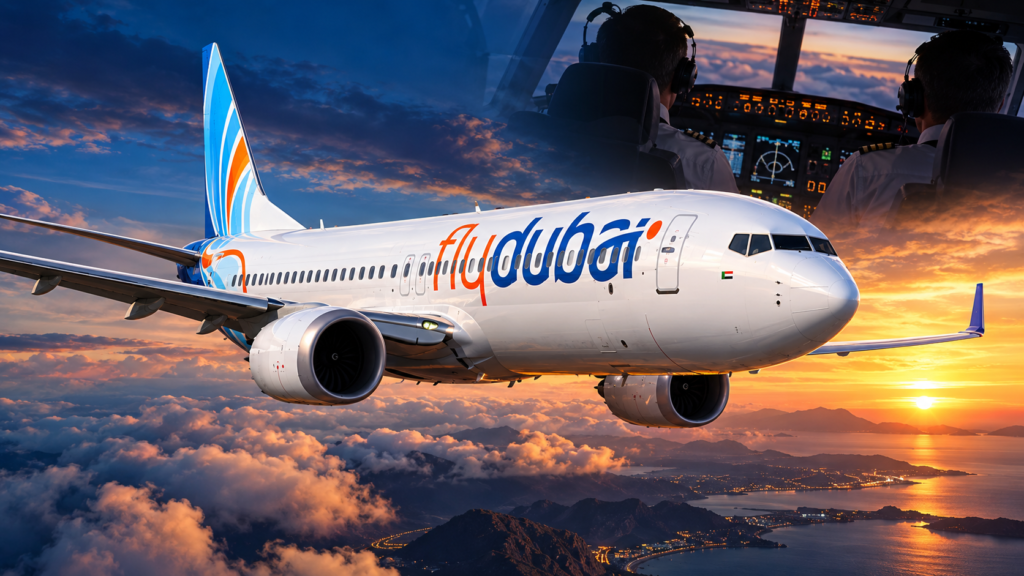
A Flydubai passenger jet travelling from Dubai to Tel Aviv was forced to make an emergency landing in Saudi Arabia after its co-pilot attacked the captain with a cockpit crash axe and attempted to seize control of the aircraft, UAE prosecutors have said.
Flight FZ1073 was carrying 182 people, most of them Israelis, when the incident unfolded on 30 September.
The Boeing 737 MAX 8 suddenly lost more than 16,000ft of altitude during the most dramatic stage of the emergency as passengers, crew and other pilots on board fought to regain control.
The injured captain managed to open the cockpit door, allowing people outside to enter and overpower the co-pilot.
A reserve Flydubai pilot then took control of the aircraft and safely landed at Tabuk in north-western Saudi Arabia.
No passengers were killed.
UAE prosecutors have described the incident as an attempted terrorist attack, while a wider investigation into the motive, the co-pilot’s background and possible links to other individuals remains under way.
What happened to Flydubai flight FZ1073?
Flight FZ1073 departed Dubai International Airport at about 03:05 GMT on Wednesday, 30 September, bound for Ben Gurion International Airport near Tel Aviv.
For more than two hours, the flight appeared to proceed normally.
The first indication of serious trouble came shortly after 05:21 GMT, when the aircraft began rapidly descending from its cruising altitude of about 34,000ft.
Flight-tracking data show that the aircraft fell to around 16,600ft, losing more than half its altitude during the sharpest stage of the descent.
It briefly climbed again before falling to about 15,000ft.
The aircraft then transmitted a 7700 emergency code, used by pilots to indicate a general emergency.
Several minutes later that changed to 7500 — the internationally recognised transponder code for unlawful interference with an aircraft, including a possible hijacking.
The jet briefly entered Jordanian airspace before turning back towards Saudi Arabia.
At approximately 05:46 GMT, it began heading towards Tabuk.
The aircraft eventually landed safely at 06:58 GMT, almost four hours after leaving Dubai.
Captain attacked inside the cockpit
The United Arab Emirates later revealed what investigators believe happened inside the cockpit.
UAE Prosecutor General Hamad Saif Al Shamsi said the co-pilot attacked the captain using a crash axe stored inside the cockpit.
Crash axes form part of emergency equipment carried on some commercial aircraft and are intended to help crew members gain access through panels or other structures during an emergency.
The prosecutor general said the co-pilot then attempted to take control of the aircraft.
Investigators are examining physical and digital evidence as they work to establish the full motive and whether anyone else was connected to the attack.
The UAE is leading the investigation.
Plane plunges more than 16,000ft
What was happening inside the cockpit was accompanied by an extraordinary change in the aircraft’s flight path.
The plane lost more than 16,000ft during its most dramatic descent.
At its steepest point, the aircraft was losing altitude at approximately 544ft — or 166 metres — every second.
Flight data show that the aircraft’s altitude changed repeatedly over a period of several minutes before it was stabilised.
The extreme descent would have placed passengers and crew under powerful forces and made moving around the cabin considerably more difficult.
The Boeing eventually levelled at around 15,000ft while those on board attempted to bring the situation under control.
Injured captain manages to open cockpit door
Captain Smit Machchhar, an Indian national, was seriously injured during the confrontation.
Despite his injuries, he managed to open the cockpit door while the aircraft was in distress.
That proved to be a critical moment.
Once the door opened, passengers and others aboard the aircraft were able to reach the cockpit.
At least several passengers rushed forward and helped overpower and restrain the co-pilot.
Footage recorded aboard the aircraft after the incident showed injuries and signs of the violent confrontation.
The actions of the captain, passengers and other crew members allowed control of the aircraft to be recovered.
Reserve pilot takes control
There were other qualified Flydubai pilots travelling aboard FZ1073.
After the co-pilot had been subdued, a reserve Flydubai pilot took control of the Boeing 737 MAX 8.
The aircraft diverted towards Tabuk, where Saudi authorities were waiting.
It landed safely at the regional airport shortly before 07:00 GMT.
The suspected attacker was detained by Saudi authorities following the landing.
He was subsequently transferred to Abu Dhabi in the United Arab Emirates, where the investigation is being led.
The captain received hospital treatment for his injuries.
UAE calls it an attempted terrorist attack
In the hours immediately following the emergency landing, there was considerable uncertainty about exactly what had happened.
Early information described a serious cockpit security incident.
UAE investigators later went significantly further.
The country’s prosecutor general said the investigation had found that the co-pilot had attempted to carry out a terrorist attack.
Authorities have not yet publicly released their complete findings or detailed the evidence behind the suspected motive.
They say the investigation remains active and that final results will be announced once the necessary procedures have been completed.
Who is the suspected co-pilot?
UAE authorities and Flydubai have not publicly named the co-pilot.
However, sources with direct knowledge of the investigation have identified him as Hammam al-Hammami, an Omani national.
Israeli officials have also confirmed that the co-pilot is from Oman.
He remains in UAE custody.
As of 5 October, UAE authorities had not announced formal criminal charges, and it was not publicly known whether he had appointed a lawyer.
Oman has not publicly commented on the case.
For those reasons, reports concerning his identity and background should still be treated separately from information formally confirmed by UAE investigators.
Questions over his aviation background
The incident has raised major questions about how the co-pilot was recruited and cleared to operate the Tel Aviv route.
Officials familiar with his background have said he had previously been prevented from flying in Oman because of concerns about extremist views.
Royal Air Maroc has also confirmed that he underwent approximately three months of training with the Moroccan airline in 2025 but was not subsequently employed by the carrier.
It remains unclear what information was available to Flydubai before he was hired.
The question is likely to become a central part of the investigation.
Why was an Omani pilot assigned to a Tel Aviv flight?
Another issue being examined is why an Omani citizen was operating a flight to Israel.
Oman and Israel do not have formal diplomatic relations.
Israeli Prime Minister Benjamin Netanyahu has said arrangements with foreign airlines prevent pilots who are citizens of countries without diplomatic relations with Israel from operating flights into the country.
It remains unclear how the co-pilot was assigned to FZ1073.
Netanyahu has ordered a review of security arrangements involving foreign airlines flying to Israel.
UAE had supplied crew information before departure
Details released since the incident have added another layer to the security questions.
Regional officials say the UAE supplied Israel with information about the flight’s passengers and crew before the aircraft left Dubai.
That information included crew nationalities.
The sharing of passenger and crew information forms part of standard aviation procedures.
Israel did not raise a security warning about the co-pilot or other members of the flight before departure, according to officials familiar with the process.
Exactly where responsibility for identifying the potential risk should have rested is now being debated among Israeli authorities.
Australian authorities investigating past connections
The investigation has also expanded to Australia.
The co-pilot previously spent time studying there, and a multi-agency Australian counterterrorism unit is examining his connections to the country.
RMIT University in Melbourne has confirmed that the individual under investigation had previously been enrolled there but did not successfully complete an engineering qualification.
Australian authorities have not said that his time in the country was directly connected to the attack.
Investigators are instead attempting to reconstruct his background and determine whether there were warning signs before he became a commercial pilot.
New claims suggest attack may have been planned before he joined Flydubai
A significant new development emerged on 5 October.
Two Israeli officials with knowledge of the UAE investigation told Reuters that the co-pilot had allegedly told investigators he began planning an attack before he was employed by Flydubai.
According to those officials, he allegedly searched for employment with airlines operating services to Tel Aviv.
A third source briefed on the investigation said the intended target was Ben Gurion International Airport.
The same source alleged that the co-pilot had previously operated another flight to Tel Aviv and had considered carrying out an attack on that occasion but did not go through with it.
These claims are among the most serious to emerge from the investigation, but they have not been publicly confirmed by UAE authorities or Flydubai.
They should therefore be treated as allegations while the investigation continues.
Was another country involved?
Investigators are also trying to establish whether the co-pilot acted alone.
There has been speculation about possible outside involvement, but no government has publicly presented evidence showing that another state organised the attack.
The UAE investigation is examining the suspect’s motive, communications and possible connections.
Until investigators release further evidence, claims that another country directed the incident remain unproven.
What happened to the passengers?
The passengers survived the incident and were eventually able to continue their journeys.
Most of those aboard the aircraft were Israeli nationals.
Passengers who helped regain control of the cockpit have since received considerable attention in Israel, where their intervention has been credited with preventing a potentially catastrophic outcome.
The most important factor, however, appears to have been a combination of actions: the captain managing to open the cockpit door despite being injured, passengers helping restrain the co-pilot, and qualified pilots aboard the aircraft taking control and completing the emergency landing.
Flydubai faces questions over security procedures
Flydubai has confirmed that the aircraft diverted because of a safety incident in the cockpit.
The Dubai-owned airline has said the circumstances remain under investigation.
The case is now likely to lead to scrutiny of several areas of international aviation security, including pilot recruitment, background checks, information-sharing between countries and the procedures used for assigning crews to sensitive international routes.
The airline’s recruitment procedures are particularly important because of claims that concerns had previously been raised about the co-pilot.
Investigators will need to determine whether such information was available, whether it could legally have been shared and whether Flydubai could reasonably have known about it before employing him.
What investigators still need to establish
Despite the amount of information released since the emergency landing, several important questions remain unanswered.
Investigators still need to establish the co-pilot’s precise motive, whether he acted alone, whether anyone helped him plan the attack, what information existed about his past and whether relevant warnings were shared with the airline.
Authorities are also examining how he came to be assigned to a Tel Aviv service despite his Omani nationality.
The latest allegation is that the attack was planned before he joined Flydubai. This could significantly change the understanding of the case if UAE investigators eventually confirm it.
For now, it remains part of an ongoing investigation rather than an established official finding.
A disaster narrowly avoided
Flight FZ1073 landed safely after one of the most dramatic aviation security incidents in recent years.
The aircraft survived an exceptionally rapid loss of altitude, the captain survived a violent attack and all those aboard escaped a situation that could have ended very differently.
The investigation has now moved beyond what happened inside the cockpit to a broader question: how was the suspected attacker able to reach that cockpit in the first place?
That question is likely to remain at the centre of the inquiry as authorities in the UAE, Israel, Australia and other countries examine the co-pilot’s history and the security procedures that preceded the flight.