
Andrew Mountbatten-Windsor Trade Envoy Files: Parliament Demands Answers
For more than a decade, Andrew Mountbatten-Windsor operated at the intersection of royalty, diplomacy and global business, holding a government-backed role that granted him extraordinary access with minimal public accountability.
Following his arrest on suspicion of misconduct in public office, Parliament has taken decisive action. The release of US court documents linked to Jeffrey Epstein has renewed scrutiny. Parliament has now voted to force the release of long-sealed files. These files detail how Andrew was appointed, what he was permitted to do, and who, if anyone , was monitoring him.
The decision marks a rare rupture in Britain’s traditional reluctance to scrutinise the conduct of senior royals when they intersect with state power.
A role built on influence, not oversight
Andrew was appointed a UK trade envoy in 2001, a position he would hold until 2011. While unpaid, the role carried significant influence: access to ministers, ambassadors, heads of state, multinational executives and confidential briefings tied to British commercial strategy.
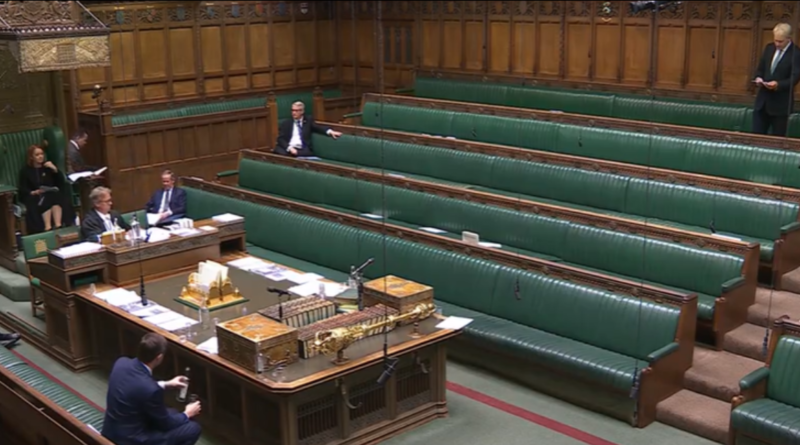
During Commons debate, MPs repeatedly asked the same question in different forms: how did someone with no formal trade background acquire such latitude, and why did it persist for ten years?
Trade minister Chris Bryant, speaking for the government, broke with years of careful language, describing Andrew as “rude, arrogant and entitled”. The comment was not rhetorical flourish; it was a signal that ministers are no longer willing to shield the process that placed Andrew in the role.
Allegations that changed the equation
The political calculus shifted decisively after Andrew’s arrest last week on suspicion of misconduct in public office. He was later released under investigation by Thames Valley Police.
Police are examining allegations that Andrew may have shared sensitive or privileged information with Epstein while acting in an official trade capacity. Andrew has previously denied this allegation. He has not responded to detailed questions following the January release of US documents referencing Epstein’s contacts.
While the Department for Business and Trade has not disputed claims about Andrew’s conduct as envoy, it has declined to comment further, citing the live police investigation.
Parliament demands the paper trail
The Liberal Democrats’ motion was passed without a vote. It compels the government to release documents related to Andrew’s appointment and tenure. MPs are also demanding disclosure of any communications in which Peter Mandelson expressed views on Andrew’s suitability.
Bryant confirmed the government will comply “as soon as practicable and possible within law”, while warning that documents relevant to criminal proceedings may be withheld temporarily.
Critics argue this caveat risks turning transparency into delay.
“We are not asking for speculation,” one MP said. “We are asking for evidence.”
A system designed to defer
Beyond Andrew himself, MPs focused on the system that insulated him. Several speakers criticised constitutional conventions that discourage parliamentary criticism of the Royal Family, alongside Freedom of Information exemptions covering royal communications.
Green MP Sian Berry described the framework as a “transparency loophole”, arguing that deference — not law — has long protected royals from the scrutiny routinely applied to ministers and civil servants.
The debate revealed a broader concern: that influence can be as dangerous as authority when left unchecked.
The line of succession and legislative consequences
Pressure is also mounting to remove Andrew from the royal line of succession. Bryant confirmed the government is working “at pace” on legislation to enable this, though he gave no timetable.
Such a move would require parliamentary approval and the consent of Commonwealth nations where the monarch remains head of state — a politically and diplomatically complex process.
Meanwhile, Liam Byrne, chair of the Business and Trade Committee, confirmed that any formal inquiry into the trade envoy system must wait until legal proceedings conclude. Preparatory work, however, is already under way.
Buckingham Palace has declined to comment while investigations continue.
Timeline: Andrew Mountbatten-Windsor and the Trade Envoy Role (2001–2025)
2001
Andrew Mountbatten-Windsor is appointed UK trade envoy.
2001–2011
Serves for a decade, undertaking overseas visits and engaging with senior political and commercial figures.
2011
Photographs emerge of Andrew walking with Jeffrey Epstein in New York. Public scrutiny intensifies, but Andrew continues to defend his conduct.
2019
Andrew withdraws from public royal duties following a widely criticised BBC interview (outside the trade envoy period but relevant to scrutiny of conduct).
January 2025
US authorities release court documents linked to Epstein, reigniting questions about his network and past associations.
February 2025
Andrew is arrested on suspicion of misconduct in public office and released under investigation.
February 2025
House of Commons passes a motion demanding the release of files relating to Andrew’s trade envoy appointment.
2025 (ongoing)
Police investigation continues; government prepares document disclosures and explores legislation affecting the line of succession.
What we still don’t know
Despite years of reporting and a major parliamentary intervention, critical questions remain unanswered:
- Vetting
Was Andrew formally vetted before his appointment — and if so, by whom and under what criteria? - Warnings
Were concerns raised internally about his behaviour, judgement or associations while serving as trade envoy? - Information flow
What information did Andrew have access to, and were safeguards in place to prevent inappropriate sharing? - Oversight
Which department monitored his activities, travel and expenses — and how rigorously? - Accountability
If failures occurred, were they individual lapses or systemic weaknesses built into the role itself? - Political responsibility
Which ministers approved, renewed or defended Andrew’s position during his tenure? - Transparency limits
Will documents be released in full, or will redactions obscure decision-making at senior levels?
Why this matters
This case is no longer only about one royal figure. It is about how power operates without scrutiny, how public roles are conferred without clear accountability, and whether Britain’s constitutional culture is equipped to confront privilege when it collides with the law.
The files Parliament has demanded may not answer every question. But for many MPs, victims’ advocates and constitutional critics, they represent a first test of whether transparency can finally reach places long protected by silence.