
Nipah Virus Cases in India Lead to Airport Health Checks Across Asia
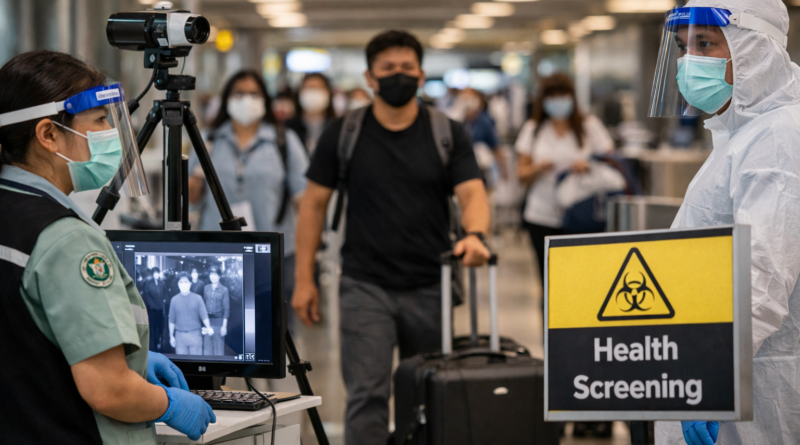
Health authorities in several Asian countries have introduced tighter airport screening. This action comes after new cases of the deadly Nipah virus were confirmed in eastern India.
India’s health ministry has reported two confirmed infections in West Bengal since December, both involving healthcare workers. Officials say 196 people who had contact with the patients have been traced. They have all been tested. All results so far have been negative.
Although no cases have been detected outside India, neighbouring countries are taking precautionary steps to prevent potential spread.
Airports Begin Screening Travellers
Thailand has started screening passengers arriving from West Bengal at three major airports, including in Bangkok and Phuket. Travellers from affected regions are now required to complete health declarations. Officials are carrying out thermal monitoring at arrival gates.
Nepal has also launched screening procedures at Kathmandu’s international airport and at several land border crossings with India.
In Taiwan, health authorities have proposed placing Nipah virus on the country’s Category 5 disease list. This classification is reserved for rare or emerging infections. These infections pose serious public health risks. They require immediate reporting and special controls.
Thailand’s Department for Disease Control said it remains “fairly confident” in its ability to detect any potential imported cases. It is also confident in its ability to contain them.
What Is the Nipah Virus?
Nipah virus is a zoonotic disease, meaning it can be transmitted from animals to humans. It is most commonly linked to fruit bats and pigs. However, it can also spread between people through close contact. Additionally, transmission can occur through contaminated food.
The World Health Organization has listed Nipah among its top priority pathogens. This is due to its ability to cause outbreaks with high fatality rates. Additionally, there is currently no approved vaccine or specific treatment.
The virus has a fatality rate of between 40% and 75%, depending on the outbreak and healthcare response.
Symptoms and Incubation Period
The incubation period for Nipah virus ranges from four to 14 days, though in some cases it is longer.
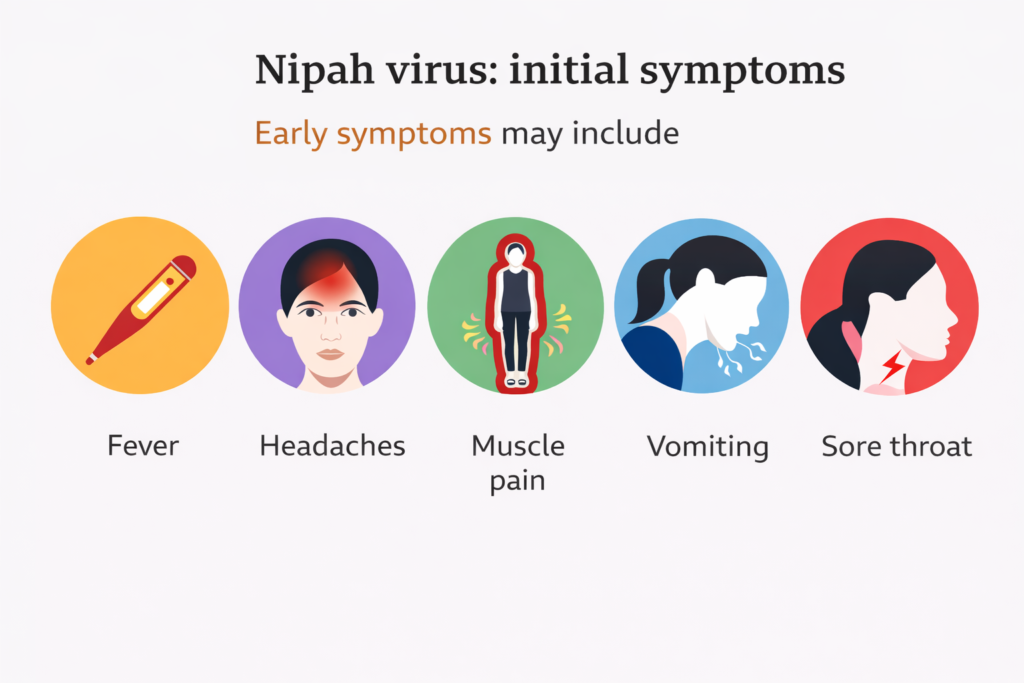
Symptoms vary and can be mild or severe. Early signs include:
- Fever
- Headache
- Muscle pain
- Vomiting
- Sore throat
In more serious cases, patients may develop:
- Drowsiness or confusion
- Breathing difficulties
- Pneumonia
- Encephalitis (inflammation of the brain), which can be fatal
Some infected individuals show no symptoms at all, making detection more difficult.
Previous Outbreaks
Nipah virus was first identified in Malaysia in 1998, mainly among pig farmers. The outbreak later spread to Singapore. More than 100 people died, and about one million pigs were culled to stop the spread, causing major economic damage.
Since 2001, Bangladesh has recorded over 100 Nipah-related deaths, with outbreaks occurring almost annually.
India has seen sporadic outbreaks, including in West Bengal in 2001 and 2007. In recent years, the southern state of Kerala has been most affected. In 2018, 17 of 19 confirmed patients died. In 2023, two of six confirmed cases were fatal.
Current Situation in India
India’s health ministry says all contacts of the infected healthcare workers have been identified. They have been monitored and tested. None have shown symptoms so far.
Officials added that the situation is being closely observed and that all standard public health measures are in place.
So far, there is no evidence of international spread. The regional response highlights concern about how quickly the virus travel through air routes if it remains undetected.
Why Authorities Are Acting Quickly
Nipah virus can spread through human contact. It has no known cure. Even a small number of cases can cause alarm. Airport screenings, health declarations, and early isolation are seen as key tools to prevent wider transmission.
Public health experts say rapid action is essential, especially in densely populated regions and busy transport hubs.