Protests Around the World: Why People Take to the Streets
Education, housing, living costs, and demands for political change are driving protests around the world across several continents.
Students, workers and campaign groups are taking to the streets over the cost of everyday life and the condition of public services. They also protest the decisions of political leaders.
Recent demonstrations have brought together university communities, trade unions and people demanding greater political accountability for budget choices, public service levels and transparency. Analysts describe these mobilizations as part of a broader pattern, with protests around the world documented across Europe, Africa, Asia and the Americas.
The grievances vary by country. Some demonstrators want better schools or affordable housing. Additionally, these issues reflect local priorities and social conditions. For some, education policy dominates; for others, housing costs constrain families. The breadth of concerns shows a global pattern in the movement.
Others challenge electoral institutions, demanding changes in government or seeking robust protection for civil rights. The following developments were verified as of 21 October. They cover both recent street protests around the world and the next stages of continuing campaigns.
France prepares for further protests after nationwide marches
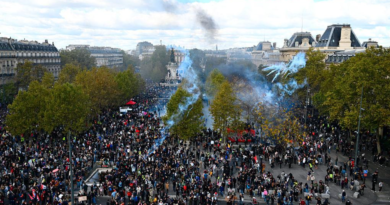
Hundreds of thousands demonstrated across France on 17 October over living costs and public services. Interior Minister Laurent Nuñez put participation at about 550,000, while the CGT union estimated 800,000. Large numbers marched peacefully, but violent groups attacked buildings, looted shops and clashed with police in several cities, including Paris, Marseille and Lyon. The mobilization brought together students, workers and Yellow Vest supporters around concerns about education and household finances.
Prime Minister Sébastien Lecornu subsequently announced localized curfews, a stronger judicial response and support for traders affected by damage and looting. These measures formed part of the government’s effort to restore order following the weekend’s violence.
On 21 October, President Emmanuel Macron pledged to prevent a repeat of the disorder. Yellow Vest representatives had submitted plans for a Paris march on 24 October, while student groups also called for demonstrations that day. Lecornu met union leaders as the government faced pressure to address the underlying grievances. Main unions have separately called for mobilization on 5 November.
Greece: students and teachers demand more education funding
Thousands of students and teachers demonstrated across Greece on 21 October, demanding better school facilities, smaller classes and increased education funding. Police estimated about 10,000 participants in central Athens and its suburbs. Some teachers and doctors also stopped work over pay and staffing. Education Minister Sofia Zacharaki acknowledged pressure from housing costs and said projects worth more than €733 million were under way for student residences and facilities. The protests highlighted the connection between education costs and the wider strain on family budgets.
Spain and Portugal: housing remains a central grievance
Spain’s housing protests have focused on rents, evictions and the difficulty of finding an affordable home. Demonstrators have occupied Madrid’s Puerta del Sol, with other camps appearing elsewhere. The eviction and subsequent death of 87-year-old Maricarmen Abascal became a rallying point. Prime Minister Pedro Sánchez has introduced emergency housing measures and called an election for 29 November, placing housing at the centre of the political debate.
In Portugal, police dismantled protest camps in Lisbon and Porto before dawn on 20 October. Fifty-five people were detained in Lisbon and subsequently released. Demonstrators returned for rallies that evening, while solidarity gatherings took place in other cities, including Coimbra, Braga and Évora.
Lisbon organizers planned to bring tents back to Rossio square on 21 October. Porto organizers announced a pause before returning on 24 October, signaling further action after the clearances. Housing campaigners are pressing for changes that would make accommodation more secure and affordable.
Italy and Belgium: living costs and education bring crowds out
A demonstration in Milan on 17 October against wars and rising living costs began peacefully before masked participants attacked police and property. Shops were looted and fires were set, while police used tear gas and water cannon. Prime Minister Giorgia Meloni condemned the violence. Milan’s mayor, Giuseppe Sala, said the grievances behind the protest were understandable but that attacks and damage were unjustifiable.
The Italian government approved an additional 500 troops for Milan on 20 October as part of its security response following the unrest.
Belgium also saw demonstrations in Brussels and Liege on 17 October. Education costs and wider financial pressures featured among protesters’ concerns, following weeks of student opposition to higher university registration fees. Police used tear gas during clashes. The verified weekend events form part of a continuing dispute over access to education and government policy.
Albania and Serbia: demands for accountability take different forms
Anti-government demonstrations in Tirana reached an eighth consecutive day on 20 October. Albanian protesters demanded changes in education, action against alleged corruption and the resignation of Prime Minister Edi Rama. Some threw rocks and fireworks, while police used tear gas and water cannon. Rama acknowledged concerns over living costs, housing and opportunities but accused those involved in the unrest of exploiting them to pursue political extremism.
Serbia’s student movement is entering an electoral phase. It emerged after the November 2024 railway-station canopy collapse in Novi Sad, which killed 16 people, and demanded accountability and action against corruption. It is now contesting the 25 October parliamentary election. Aleksandar Vučić stepped down as president in September and is seeking to become prime minister. The immediate test is whether the movement can translate sustained public mobilization into parliamentary representation.
India: electoral disputes and the treatment of protesters
India’s protest movement has centered on demands for electoral accountability. On 16 October, police detained Abhijeet Dipke, founder of the youth movement known as the Cockroach Janta Party, ahead of a planned demonstration in New Delhi’s Connaught Place. The proposed action supported two detained movement leaders and formed part of a wider challenge to the election authorities.
On 20 October, independent UN human-rights experts urged an investigation into the handling of protests and an end to excessive force. Demonstrators allege that revisions to voter lists favored the ruling BJP. The Election Commission denies favoritism, saying it removed ineligible entries and that errors can be appealed. India’s government says law enforcement acted according to law. These competing accounts place both electoral confidence and freedom to demonstrate at the centre of the dispute.
Indonesia: environmental and economic concerns meet
Demonstrations in Jakarta on 20 October marked President Prabowo Subianto’s second anniversary in office. Greenpeace Indonesia confirmed that its activists staged a peaceful protest at the Hotel Indonesia Roundabout, unfurling banners from the Welcome Statue and calling for stronger action on climate change and living costs.
The organization linked prolonged haze, forest fires and extreme weather to disrupted livelihoods and pressure on household budgets. Its campaign argues that environmental policy should be judged partly by its effects on work, food prices and daily life. The action illustrated how climate demands can overlap with concerns about economic security, rather than remaining a separate debate about conservation.
Ahead of the demonstrations, Jakarta police announced plans to deploy roughly 9,500 officers at several locations. Student groups had also raised concerns about forest fires and economic conditions as the administration marked two years in power.
United States: No Kings demonstrations turn towards voting
The No Kings movement held demonstrations across the United States on 17 October, with participants challenging what they described as threats to democracy, civil rights and government accountability. In Connecticut, hundreds attended dozens of gatherings. Speakers and participants raised concerns about immigration enforcement, education funding and voting rights, alongside criticism of President Donald Trump’s policies.
The movement is now concentrating on voter participation and preparations for possible peaceful responses to election disruption. Organizers scheduled an online meeting for 21 October to discuss turnout and their plans for protecting election results. Their stated commitment is to nonviolent action. The shift towards voting shows how a protest campaign can combine public demonstrations with efforts to influence an approaching election.
Argentina: university communities demand funding
Thousands of students, graduates, teachers and university employees marched towards Congress in Buenos Aires on 15 October, demanding implementation of Argentina’s University Funding Law. The demonstration brought together university communities, unions and social organizations seeking resources for teaching, staff salaries and student scholarships.
The dispute remained unresolved after a court ordered the government to implement the law and update salaries and scholarships. President Javier Milei’s administration appealed the decision. Security forces erected barriers and restricted traffic around Congress during the mobilization. The protest’s central demand was specific: that funding commitments be implemented so public universities could operate and students and employees receive the support provided for in the law.
Tunisia: political freedoms and economic hardship
Thousands marched in Tunis on 17 October in a demonstration led by the UGTT labor federation and civil society groups. Participants challenged President Kais Saied’s concentration of power and criticized deteriorating living conditions and public services. Lawyers, doctors, journalists and unemployed people were among those taking part. Saied rejects accusations of dictatorship and has accused opponents of aggravating economic problems. The mobilization combined demands for democratic freedoms with frustration over shortages and the difficulties of everyday life.
Kenya: students protest disruption to their studies
University of Nairobi students demonstrated along Waiyaki Way on 21 October, blocking sections of the road and burning tires as they demanded a settlement of the lecturers’ strike. Students said the prolonged stoppage had disrupted lectures and examinations and created uncertainty over their studies.
The nationwide staff strike began on 2 October. University unions are demanding progress on an agreement covering salaries, allowances and employment conditions. Student leaders had warned that they would demonstrate if the dispute remained unresolved. Their immediate demand is a return to teaching, making the government’s negotiations with university staff central to resolving the campus unrest.
South Africa: fuel-price demonstrations and relief measures
Fuel-price protests disrupted the N12 near Lenasia on 19 October, with Johannesburg metro police confirming that the road had been closed in both directions. Campaigners demanded reductions in fuel taxes and levies, arguing that expensive transport also raised the cost of food and other essentials. The road closure was one confirmed disruption in a campaign organizers called a national shutdown.
On 21 October, Finance Minister Enoch Godongwana announced two months of additional fuel-price relief, costing an estimated 10 billion rand in forgone revenue. He said the government’s stronger financial buffers allowed it to provide temporary relief.
Senegal: workers march ahead of a strike call
Workers marched in Dakar on 20 October, calling for protection of purchasing power and implementation of earlier agreements. Unions maintained a call for a 72-hour general strike covering 21–23 October. The dispute involves workers in sectors including education, healthcare and transport, raising the prospect of disruption to important services.
Authorities urged unions to withdraw the strike call, citing the school term and preparations for the Youth Olympic Games. The labor ministry also challenged its procedural legality. The strike announcement signals continuing confrontation, while its actual impact depends on participation across workplaces.
Israel: demonstrations against government policy and settler violence
Demonstrators gathered in Tel Aviv on 17 October to oppose the government of Prime Minister Benjamin Netanyahu and protest settler violence in the occupied West Bank. Participants called for protection of Palestinians, equal rights and greater accountability. Others emphasized democratic checks and balances and their hopes for political change through the coming election. The gathering combined criticism of government policy towards Palestinians with concerns about Israel’s democratic institutions.
Further demonstrations are being planned
Germany is among the countries where organizers have announced a new mobilization. A student initiative has called for demonstrations on 31 October in cities including Berlin, Hamburg, Cologne, Frankfurt and Munich. Its demands concern education and social spending, living costs and plans for military conscription. Organizers say the forthcoming events should be peaceful.
Taken together, the recent movements suggest several recurring pressures: the affordability of basic needs, access to education and public services, and confidence in political institutions. Their aims and political contexts differ, leaving the next steps dependent on local negotiations, policy decisions and elections.
Responding to demonstrations in several European countries on 20 October, UN human-rights chief Volker Türk condemned violence, expressed concern about reports of excessive force and urged dialogue. His intervention underlined the challenge facing governments: protecting peaceful assembly and public safety while addressing the grievances that brought people onto the streets.