Trump Denies Iran’s Seven-Day Plan to Reopen Strait
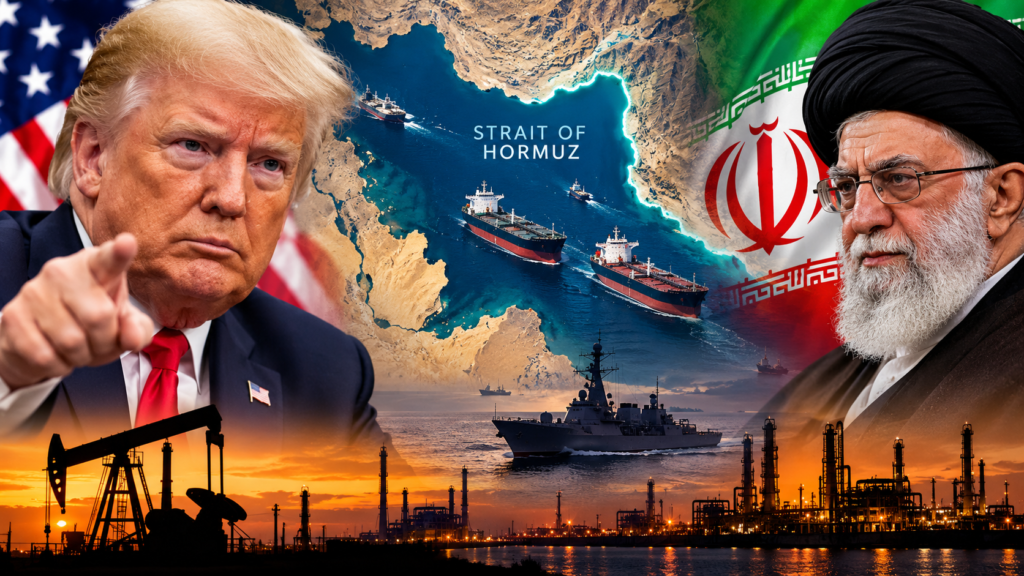
Additionally, Trump Iran Strait of Hormuz concerns arose as US President Donald Trump rejected an Iranian proposal.
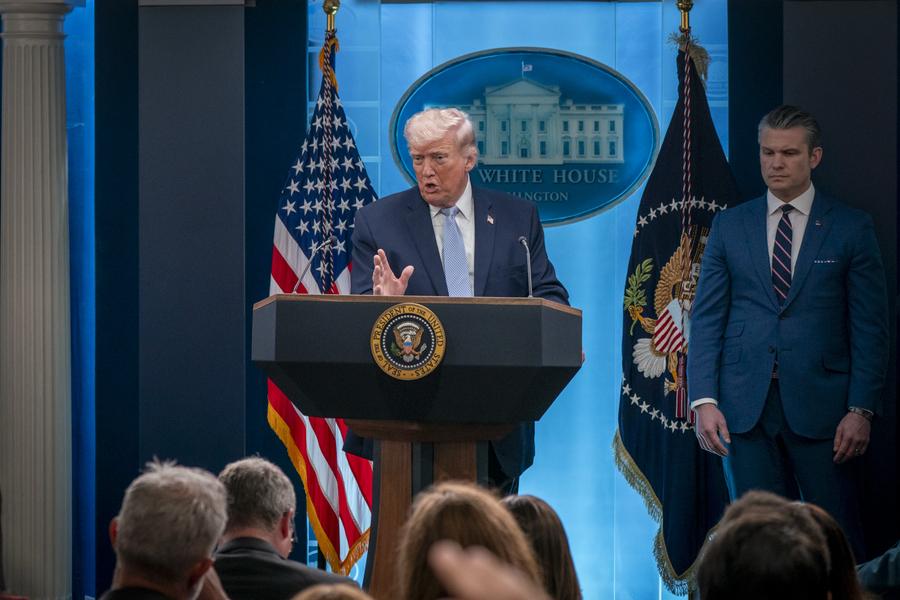
Tehran said the plan could reopen the Strait of Hormuz to commercial shipping within seven days.
It would place a key energy route at the center of a growing regional confrontation.
Speaking to reporters at the White House on Saturday, Trump said Iran sought an agreement. This was due to the growing economic pressure caused by the conflict.
“They made a proposal but I reject it,” Trump said.
He argued that the United States was in a strong position and claimed Washington already exercised what he described as “total control” over the strategic waterway.
The comments came a day after Iranian Foreign Minister Abbas Araghchi told reporters at the United Nations in New York that Tehran was prepared to restore normal maritime traffic through the strait within a week if Washington accepted conditions that Iran says were already contained in a memorandum of understanding agreed earlier this year.
The proposal represented one of the clearest diplomatic attempts in recent weeks to reduce tensions surrounding the Strait of Hormuz, where commercial traffic has fallen dramatically since the conflict involving Iran, the United States and Israel escalated in February.
However, Trump’s rejection has raised further questions about whether diplomacy can prevent another round of military escalation.
Reuters reported on Saturday that Iran was waiting for Washington’s response to its proposal, while Trump publicly confirmed that he had turned it down.
What Iran offered
Araghchi told reporters in New York that Iran could restore what he called normal maritime passage through the Strait of Hormuz within seven days.
“If the necessary conditions are met, the strait can be reopened,” he said.
The Iranian foreign minister did not publicly set out a completely new list of demands. Instead, he said the measures required from Washington had already been included in the memorandum of understanding negotiated between Iran and the United States in June.
According to Araghchi, Tehran had not introduced additional conditions.
Iran’s position is that the United States must demonstrate that it is prepared to implement previously agreed commitments, rather than seeking an entirely new arrangement.
Reuters reported earlier this week that Iran had indicated it was prepared to reopen the strait if the United States reduced military pressure and lifted its blockade on Iranian ports.
Araghchi presented the proposal as one that Washington could act upon quickly.
“The choice now rests with the United States,” he said.
Iranian President Masoud Pezeshkian has also supported returning to the framework negotiated earlier in the year.
In an interview with CBS News recorded during his visit to New York, Pezeshkian said Iran would comply with an agreement if Washington returned to the earlier framework.
He also said Tehran was prepared to allow UN nuclear inspectors to return to Iran as part of renewed negotiations.
Additionally, Trump Iran Strait of Hormuz shapes talks, and Pezeshkian said inspectors from the IAEA could resume inspections under negotiations.
That offer could prove significant because Iran’s nuclear program remains one of the biggest obstacles to a broader settlement.
Trump says proposed agreement is not acceptable
Trump acknowledged that Iran wanted negotiations but said the proposal presented by Tehran was not acceptable to him.
“They want to make a deal, and I think that’s fine,” he told reporters. “I like making a deal, too.”
But he added that the particular agreement being proposed would not be accepted.
Trump has repeatedly argued that Iran is under severe economic and military pressure and that Washington should not agree to terms simply to reopen the strait.
His administration has maintained that any lasting settlement must also address Iran’s nuclear program and the security of Gulf shipping.
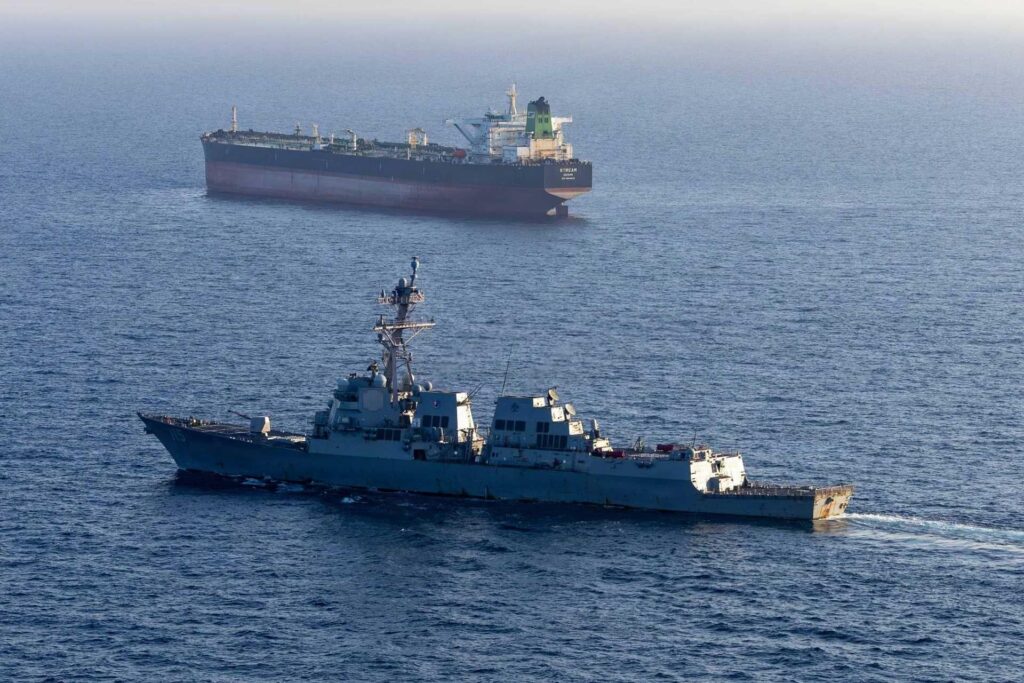
The Wall Street Journal reported, citing unnamed US officials, that Trump remained skeptical that Tehran would meet American demands and had told advisers that renewed military action remained possible.
Reuters separately reported that the US president had rejected the Iranian initiative and that the dispute over Hormuz remained unresolved.
The possibility of further US strikes is therefore likely to remain a major source of uncertainty even while diplomatic contacts continue through intermediaries.
What was in the June agreement?
The latest dispute centers largely on a 14-point memorandum of understanding negotiated earlier this year.
The framework was intended to halt military operations temporarily while creating a period for wider negotiations between Washington and Tehran.
Reuters reported in June that the agreement included provisions covering the Strait of Hormuz, Iran’s nuclear program, sanctions, military operations and future economic arrangements.
Among its central objectives was an agreement that Iran would not develop a nuclear weapon.
The framework also provided for a halt in military operations and talks about restrictions on Iran’s nuclear activities under international supervision.
Another important part concerned commercial shipping.
Iran agreed to facilitate the safe passage of commercial vessels through the Strait of Hormuz while discussions continued over longer-term arrangements.
Reuters reported at the time that the agreement envisaged toll-free commercial passage during an initial negotiation period and future discussions involving Oman and other Gulf states over how shipping through the waterway would be managed.
In return, Iran expected economic measures from Washington, including sanctions relief and an easing of restrictions affecting Iranian oil exports.
The agreement was intended to create a 60-day window for further negotiations.
But the ceasefire eventually unraveled as both sides accused the other of failing to respect the arrangement.
Military action resumed, maritime restrictions returned and the Strait of Hormuz again became one of the main pressure points in the conflict.
That history helps explain why distrust remains so high.
Pezeshkian told CBS that Iran was reluctant to rely on American promises because previous negotiations had been followed by new sanctions and attacks.
Washington, meanwhile, has questioned whether Tehran would implement commitments covering shipping and nuclear activity.
Why the Strait of Hormuz matters so much
The importance of the Strait of Hormuz extends far beyond Iran and the United States.
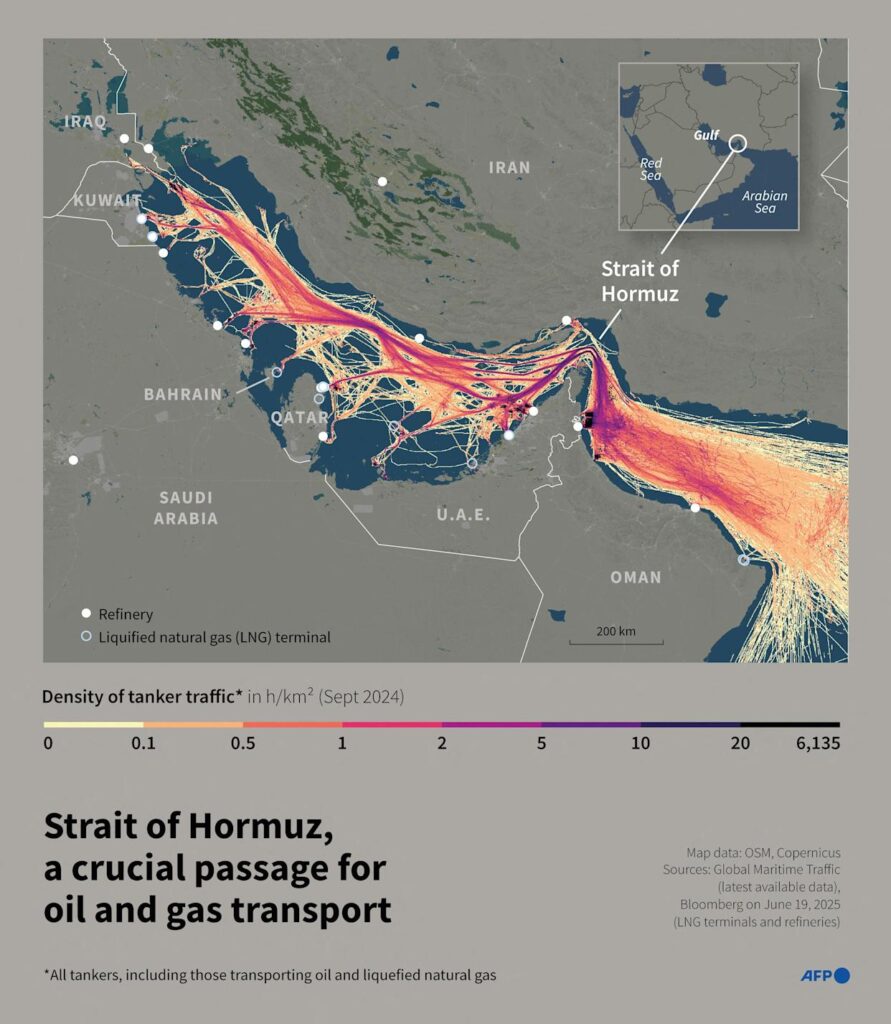
The narrow waterway separates Iran from Oman and links the Persian Gulf with the Gulf of Oman and the Arabian Sea.
At its narrowest point, it is about 21 nautical miles, or 39km, wide.
Within that relatively small space are designated shipping channels used by some of the world’s largest oil and liquefied natural gas tankers.
Before the current conflict, the Strait of Hormuz was carrying about 20 million barrels a day of crude oil and petroleum products.
The International Energy Agency says approximately 25% of the world’s seaborne oil trade passed through Hormuz in 2025. Around 80% of those flows were destined for Asia.
China, India, Japan and South Korea are among the major economies heavily exposed to disruption in Gulf energy supplies.
The strait is equally important for natural gas.
Around 93% of Qatar’s liquefied natural gas exports and 96% of those from the United Arab Emirates normally use the route, according to the IEA.
Together, those flows represented roughly 19% of global LNG trade before the conflict.
That means disruption in Hormuz can rapidly affect energy markets thousands of kilometers away.
Higher transport and insurance costs can eventually feed into fuel bills, electricity prices, industrial costs and the price of transported goods.
Shipping has fallen sharply – but has not completely stopped
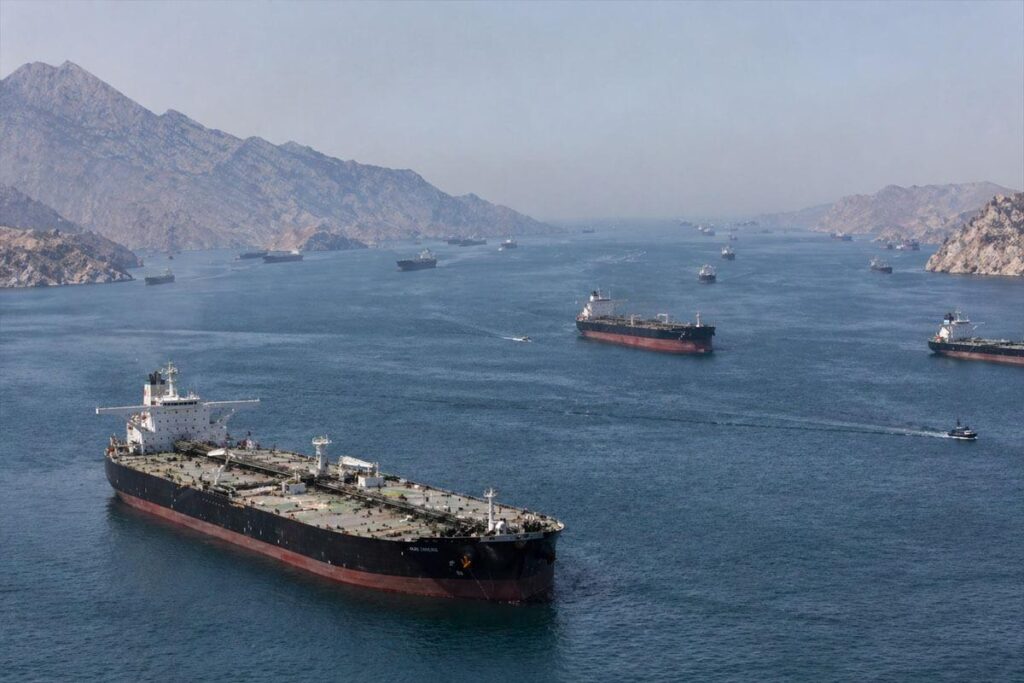
Although the strait is frequently described as closed, some ships continue to make the crossing.
The more accurate picture is of a waterway operating at only a fraction of its normal capacity, with traffic fluctuating sharply depending on security conditions.
Ship-tracking data cited by Reuters has shown commodity-vessel crossings falling into single digits on some days.
On Thursday, 24 September, preliminary data showed only nine commodity vessels passing through the strait, compared with 14 the previous day.
Earlier in September, Reuters reported some days with only four crossings.
Before the war, overall shipping traffic was vastly higher, with about 125 vessels a day crossing the waterway when different categories of commercial traffic were included.
Some vessels may also operate with their tracking transponders switched off, meaning publicly available shipping figures do not necessarily provide a complete picture.
Oil exporters have meanwhile developed increasingly complicated ways of moving cargo despite the disruption.
Ship-to-ship transfers near Oman have become more important, allowing oil to be transferred from vessels operating within the Gulf to tankers positioned outside the most dangerous areas.
Reuters reported that such transfers reached roughly 2.5 million barrels a day in September, compared with about 1.4 million barrels a day in August.
But these operations are expensive.
They require additional vessels, longer journeys, more complicated logistics and significantly higher insurance and freight costs.
The arrangements have helped prevent a total interruption of Gulf energy exports, but they are not considered an efficient long-term substitute for normal shipping through Hormuz.
An energy shock felt around the world
The collapse in normal Hormuz traffic has had major consequences for international energy markets.
The International Energy Agency described the initial disruption earlier this year as the largest oil-supply disruption in the history of the global market.
Before the war, around 15 million barrels of crude oil and five million barrels of petroleum products normally crossed Hormuz each day – an amount equivalent to roughly 20% of global oil consumption.
When those flows fell sharply, energy prices rose.
Oil prices have since moved up and down according to military developments, shipping movements and signs of possible diplomacy.
On 20 September, for example, Brent crude fell towards $100 a barrel as markets reacted to hopes of renewed US-Iran talks and signs that some Saudi exports were recovering.
That illustrates how sensitive prices have become to diplomatic developments.
Even a suggestion that Hormuz could reopen can reduce prices, while renewed military action or attacks on energy infrastructure can push them higher again.
For governments around the world, this volatility presents a difficult economic problem.
Expensive oil increases transport costs.
Expensive gas can raise electricity and heating prices.
Airlines face larger fuel bills, shipping companies pay higher insurance premiums and businesses may pass additional costs on to consumers.
Countries that rely heavily on imported energy are particularly vulnerable.
Few alternatives to Hormuz
One of the reasons the waterway has such influence over international markets is that there are relatively few alternatives.
Saudi Arabia operates an East-West pipeline capable of moving oil from fields in the east of the country towards the Red Sea.
The United Arab Emirates also has pipeline capacity allowing some crude to reach the port of Fujairah without passing through Hormuz.
But those routes cannot replace all the oil that would normally move through the strait.
The IEA estimates that only around 3.5 million to 5.5 million barrels a day could potentially be redirected through alternative pipelines, compared with approximately 20 million barrels a day of normal oil and petroleum-product traffic through Hormuz.
Other producers have even fewer options.
Iraq, Kuwait, Qatar and Bahrain rely heavily on access through the waterway.
For Qatar, the problem is particularly important because most of its LNG exports leave the Gulf by ship.
The US Energy Information Administration said the disruption to Hormuz since February had effectively removed around a fifth of normal global LNG supplies passing through the route, forcing Asian and European buyers to compete for alternative cargoes.
Nuclear inspections enter the negotiations
The dispute over Hormuz cannot easily be separated from the much older confrontation over Iran’s nuclear program.
Washington says any durable agreement must prevent Iran from developing nuclear weapons.
Iran insists that its nuclear program is intended for peaceful purposes.
Tehran has enriched uranium to levels far above those permitted under the 2015 nuclear agreement, although Iran continues to deny that it is seeking a nuclear weapon.
Trump has demanded much stricter restrictions than those contained in the earlier nuclear deal.
Iran, however, has resisted demands that would permanently remove its ability to enrich uranium.
Pezeshkian’s statement that Tehran could again allow UN nuclear inspectors access therefore represents a potentially important diplomatic signal.
He told CBS that inspectors could return if the issue were addressed through negotiations.
But access alone would not necessarily resolve the wider dispute.
The United States would still want clarity over Iran’s enriched uranium stockpile, enrichment facilities and future capabilities.
Iran would seek guarantees over sanctions relief, economic access and protection from further military strikes.
That leaves negotiators facing several interconnected problems rather than a single disagreement over maritime traffic.
War that began with US and Israeli strikes
The present crisis developed after US and Israeli military strikes against Iran began in late February.
Iran responded by launching attacks against Israel and US military facilities in the Gulf.
The fighting subsequently spread to affect several Arab Gulf states and major transport routes.
Hormuz became one of Tehran’s most powerful points of leverage.
By restricting access through the waterway, Iran demonstrated its ability to impose economic costs not only on the United States but on countries across Asia, Europe and the Gulf.
Washington responded with attacks on Iranian military and maritime targets and restrictions on Iranian ports.
The result has been a conflict in which economic pressure, energy supplies and military action are closely connected.
Neither side has achieved a lasting political settlement.
The June memorandum briefly offered the possibility of de-escalation, but its collapse returned the region to uncertainty.
A second shipping crisis is developing in the Red Sea
Complicating the situation further is the escalating conflict involving Yemen’s Houthis.
The Iran-aligned movement has intensified attacks on Saudi targets and has expanded its position along Yemen’s Red Sea coastline.
Reuters reported earlier this month that Houthi forces had advanced towards strategically important areas near the Bab al-Mandab Strait, another of the world’s major maritime chokepoints.
The Bab al-Mandab connects the Red Sea with the Gulf of Aden and the Indian Ocean.
Ships using the Suez Canal between Europe and Asia generally need to pass through it.
That means the Middle East now faces pressure around two crucial maritime routes at the same time: Hormuz in the east and Bab al-Mandab in the west.
The situation has created particular difficulties for Saudi Arabia.
When Hormuz became difficult to use, Saudi Arabia had the option of moving more oil westwards through its East-West pipeline towards Red Sea export terminals.
But Houthi attacks on Saudi infrastructure and growing security concerns in the Red Sea have complicated that alternative.
Reuters has reported attacks affecting Saudi infrastructure as well as growing concern about Houthi territorial gains.
This has made the regional energy network more vulnerable than it would be if only one shipping route were under pressure.
Saudi Arabia seeks greater security
Saudi Arabia and other Gulf countries have repeatedly stressed the need to protect international shipping routes.
Riyadh has faced missile and drone attacks linked to the Houthis while also trying to keep its energy exports moving.
Saudi Crown Prince Mohammed bin Salman sought US military assistance against the Houthis earlier this month, according to Reuters, although Washington did not immediately launch the intervention Saudi Arabia had sought.
Other countries have also become increasingly concerned.
Turkey, Egypt, Pakistan and Saudi Arabia issued a joint statement during the UN General Assembly calling for safe navigation and supporting diplomatic efforts to reduce the conflict.
Russian President Vladimir Putin and the Saudi crown prince have separately emphasized the importance of safe passage through both Hormuz and Bab al-Mandab.
European governments are also concerned because prolonged disruption in the Red Sea and Gulf could affect supply chains, energy markets and shipping costs.
The European Union’s naval mission in the Red Sea has been considering additional resources as security conditions deteriorate.
November elections add another political dimension
The crisis is unfolding as the United States approaches congressional elections in November.
High energy prices are politically sensitive in the US because increases in crude oil costs can eventually affect petrol prices, transportation expenses and inflation.
That creates competing pressures for the Trump administration.
A diplomatic agreement capable of restoring normal traffic through Hormuz could reduce pressure on energy markets.
But Trump has also argued that Washington should use its current military and economic leverage to secure broader concessions from Iran rather than accepting an agreement focused mainly on reopening the strait.
During his address to the UN General Assembly this week, Trump suggested that an agreement with Iran could come after the November elections.
He also used exceptionally strong language about the consequences Iran could face if diplomacy failed. Reuters reported that he warned of devastating action against Tehran while continuing to demand a deal preventing Iran from obtaining nuclear weapons.
Iran condemned those threats.
Araghchi said on Friday that peace could not be established through threats of destruction.
The opposing messages illustrate the unusual state of the negotiations: both sides continue to discuss the possibility of an agreement while simultaneously preparing for the possibility of further military action.
Why Tehran wants the strait reopened
Iran’s decision to offer a seven-day reopening should also be viewed against the pressure on its own economy.
Although restricting Hormuz imposes costs on Washington’s allies and global markets, it also damages Iran.
Iran depends heavily on oil exports.
Restrictions on Iranian ports, attacks on maritime infrastructure and disruption to shipping make it harder for Tehran to sell energy and receive foreign revenue.
The longer the crisis continues, the greater those pressures become.
Trump has repeatedly pointed to Iran’s economic difficulties as evidence that Tehran needs an agreement more than Washington does.
Iran rejects that characterization and argues that it is prepared to continue resisting military and economic pressure.
But its decision to put forward a specific timetable for reopening the waterway suggests that Tehran also sees economic advantages in restoring maritime trade.
What happens next?
The immediate question is whether Trump’s rejection ends the current diplomatic initiative or simply begins another round of bargaining.
The two sides have previously exchanged proposals indirectly before modifying their positions.
Qatar, Oman and other regional governments have played important roles as intermediaries.
Direct US-Iran negotiations remain politically difficult, meaning mediators could again become central if talks continue.
Several issues would have to be resolved before commercial shipping could return to anything approaching normal levels.
Washington and Tehran would need agreement over maritime security, Iranian port restrictions, nuclear inspections and the conditions under which military operations would stop.
Shipping companies would also need confidence that vessels could cross safely.
Even if governments announced an agreement, insurers and shipowners could remain cautious until they saw evidence that attacks had genuinely stopped.
Restoring traffic could therefore take longer than simply issuing an official declaration.
The behavior of the Houthis would also matter because reopening Hormuz would solve only part of the broader regional shipping crisis.
If attacks continued around the Red Sea and Bab al-Mandab, global shipping would remain under pressure.
Diplomacy and military pressure continue side by side
For now, neither Washington nor Tehran appears ready to abandon negotiations completely.
Iran has offered a defined route towards reopening Hormuz and says it is willing to discuss nuclear inspections.
Trump has rejected the current proposal but continues to speak about the possibility of reaching an eventual agreement.
At the same time, both governments continue to use military and economic pressure.
That combination makes the coming weeks particularly uncertain.
A renewed diplomatic breakthrough could allow significantly more energy supplies to move out of the Gulf and ease pressure on global markets.
A new round of strikes could have the opposite effect, potentially reducing shipping again and driving energy and insurance costs higher.
With approximately a quarter of the world’s seaborne oil trade normally passing through Hormuz, the consequences would not be confined to the Middle East.
For the moment, commercial ships continue to cross the strait in limited numbers, diplomats continue to exchange proposals and military forces remain positioned across the region.
Iran says the waterway could begin returning to normal within seven days if an acceptable agreement is reached.
Trump has made clear that the agreement currently on the table will not be that deal.
The question now is whether the rejection leads to a revised proposal – or to another phase of a conflict that has already transformed one of the world’s most important energy routes.